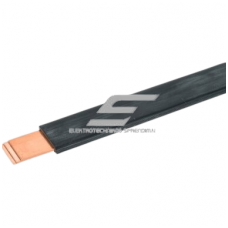
Flexible copper power busbars
-
Flexible Copper Busbars are specially designed electrical conductors composed of numerous thin copper strips or strands, forming a flat, elastic, and mechanically robust structure. Unlike rigid copper busbars, these are intended for installations where flexibility is essential—such as between moving parts, vibrating systems, or hard-to-reach areas. Their structure allows for efficient electrical contact even under constant movement or deformation.
Functions:
Transmission of electrical energy between electrical components (switches, transformers, contactors, etc.)
Compensation for mechanical movements, vibrations, thermal expansion
Ensuring stable contact even with structural displacement
Suitable for both direct and alternating current circuits
Applications:
Industrial electrical distribution panels
DC side of solar power plants (connections between inverters, MPPT, batteries)
UPS systems, frequency converters, transformers
Electric vehicle charging stations and energy storage systems
Maritime, railway, aviation industries (where flexibility and vibration compensation are required)
Electrical test benches and laboratories
Connections between moving machine parts
Recommendations:
Choose terminals with appropriate mounting surfaces and prevent mechanical load on flexible busbars
Use specialized contact heads to ensure proper copper pressure
Do not use busbars for direct cable connections without compression joints
Evaluate current loads and heat dissipation—select busbars with appropriate cross-section
Avoid sharp bends and pressure points during installation to prevent long-term fractures
Advantages:
High electrical conductivity: Copper ensures low losses and high efficiency
Flexibility: Allows installation even in complex or moving structures
Vibration damping: Extends the lifespan of connected components
Easy installation: No need for additional bending or shaping as with rigid busbars
Space-saving: Flat shape allows use in narrow spaces
Disadvantages:
More expensive than standard copper or aluminum busbars
Lower mechanical strength compared to solid copper strips
Requires correct installation—excessive bending or tension can damage contact
Cannot be used as mechanical supports (do not bear structural weight)
Flexible copper busbars are a modern and versatile solution designed to ensure safe and efficient electrical energy transmission in environments where flexibility and durability are essential. Although they are more expensive than conventional busbars, their benefits—longer component lifespan, better vibration resistance, and easier installation—often justify the investment. These busbars are indispensable in industry, renewable energy systems, and electrical installations where quality and safety are priorities.