Gasoline generators – for backup, emergency and temporary power supply
Gasoline generators are autonomous power sources designed to ensure electricity supply when the main grid is interrupted or in places where electrical infrastructure is not installed. They are used in homes, homesteads, construction sites, workshops, garages, farms, service facilities, events and various outdoor works.
Main idea:
A gasoline generator is chosen when it is necessary to quickly restore electricity supply, ensure backup power or have an independent power source at sites without an electrical connection. It is a practical solution for emergencies, outdoor work, construction, farms and household use.
Fuel type
Gasoline
Output voltage
230V AC or 400V AC
Frequency
50 Hz
Starting
Manual or electric
What is a gasoline generator?
A gasoline generator is an autonomous power generation device in which an internal combustion engine drives a generator or alternator that produces electricity. The generator converts the mechanical energy of the gasoline engine into electrical energy and allows household appliances, pumps, heating systems, refrigerators, electric tools, lighting and other equipment to be powered.
Modern generators can be used both as a temporary energy source and as an important part of a backup power supply system.
Important to know:
A gasoline generator is an alternative source of electricity, but it is not green or renewable energy. Electricity is produced by burning gasoline, therefore exhaust gases, CO₂ and noise are generated during operation.
What can be powered by a generator?
-
Refrigerators and freezers.
-
Heating boilers and circulation pumps.
-
Water pumps.
-
Security systems.
-
Lighting.
-
Computers and network equipment.
-
Electric tools.
-
Construction, farm or workshop equipment.
How does a gasoline generator work?
-
The gasoline engine burns fuel.
-
The engine crankshaft drives the generator.
-
The alternator produces electrical energy.
-
The voltage regulation system stabilises the output parameters.
-
Electricity is transferred to sockets or to the connected electrical system.
Generator structure
-
Gasoline engine – the main energy source that generates mechanical energy.
-
Alternator – converts mechanical energy into electrical energy.
-
AVR voltage regulator – helps reduce voltage fluctuations and maintain a more stable output voltage.
-
Fuel tank – used to store gasoline reserves.
-
Control panel – allows the generator to be started, parameters to be monitored and loads to be connected.
-
Protection system – depending on the model, it may protect against overload, short circuit, low oil level or emergency conditions.
Technical data
|
Product type |
Gasoline generator |
|
Fuel type |
Gasoline |
|
Voltage |
230V AC or 400V AC, depending on the model |
|
Frequency |
50 Hz |
|
Starting |
Manual or electric |
|
Cooling |
Air cooling |
|
Use |
Homes, homesteads, construction sites, farms, workshops, garages, service facilities and outdoor work |
|
Protection functions |
Depending on the model: overload, short circuit, low oil level or automatic shutdown protection |
Single-phase or three-phase generator?
|
Type |
Where is it most commonly used? |
|
Single-phase 230V generator |
Homes, homesteads, garages, boilers, refrigerators, lighting and most household appliances. |
|
Three-phase 400V generator |
Industry, farms, workshops, construction sites, three-phase motors, machines and compressors. |
Important:
A common mistake is to think that the full power of a three-phase generator can be taken from one phase. In three-phase generators, the load should be distributed between the phases as evenly as possible, otherwise voltage imbalance may occur and generator efficiency may decrease.
How to choose the right generator power?
When choosing a generator, it is important to evaluate not only the operating power of the devices but also their starting currents. Many electric motors can briefly consume 2–7 times more power during start-up than during normal operation.
|
Use |
Recommended generator power |
|
Lighting and small devices |
1-3 kW |
|
Refrigerator, boiler, pump |
3-5 kW |
|
Small homestead |
5-8 kW |
|
Private house |
6-10 kW |
|
Construction tools |
5-10 kW |
|
Compressors |
8-15 kW |
|
Farm and workshop equipment |
8-20 kW |
Example:
A 1.5 kW pump may briefly require 3–5 kW of power during start-up, therefore it is recommended to choose a generator with a certain power reserve.
Classic or inverter generator?
|
Type |
Advantages |
Disadvantages |
|
Classic generator |
Lower price, higher power for the same price, simple construction. |
Higher noise level, less stable voltage. |
|
Inverter generator |
More stable voltage, cleaner sine wave, lower fuel consumption, lower noise. |
Higher price, lower power compared with classic generators of a similar price. |
What is THD and why is it important?
THD (Total Harmonic Distortion) is the level of harmonic distortion in the electrical network. The lower the THD, the more stable the electricity and the safer the power supply for sensitive electronics.
Lower THD is especially relevant for:
-
Computers.
-
UPS systems.
-
PLC controllers.
-
Servers.
-
Automation systems.
-
Security and network equipment.
Generator load recommendations
Most generators operate most efficiently at 50-80% load. For example, an 8 kW generator usually runs most economically when loaded at around 4–6 kW. This helps reduce fuel consumption, engine wear and increase service life.
Fuel consumption
|
Generator power |
Average consumption |
|
2-3 kW |
~0.8-1.2 l/h |
|
5-6 kW |
~1.2-2.0 l/h |
|
8-10 kW |
~2-3 l/h |
Note:
Actual fuel consumption depends on the specific generator model, load, engine design and environmental conditions.
Automatic generator start-up (ATS)
Some gasoline generators can be used with an ATS (Automatic Transfer Switch) system. This is a solution that allows the power supply to be switched automatically between the electrical grid and the generator.
-
The grid voltage disappears.
-
The ATS automatically starts the generator.
-
The load is switched to the generator.
-
When the grid supply is restored, the system automatically returns to normal mode.
Important:
Not all generators support automatic start-up and operation with an ATS system. Before choosing, it is necessary to check the technical data of the specific model.
Environmental impact and ecology
Gasoline generators are an alternative source of electricity, but they are not classified as renewable or green energy technologies. Unlike solar power plants, wind turbines or hydroelectric plants, generators produce electricity by burning gasoline.
During operation:
-
Fuel is consumed.
-
CO₂ is emitted.
-
Exhaust gases are produced.
-
Noise is generated.
The main advantage of a generator is not ecology, but the ability to ensure power supply regardless of weather conditions, time of day or the condition of the electrical grid.
Noise level
|
Generator type |
Most common noise level |
|
Open-frame generators |
70-100 dB |
|
Inverter generators |
50-70 dB |
Safe use
Gasoline generators must not be used in:
-
Living spaces.
-
Basements.
-
Garages.
-
Warehouses without ventilation.
-
Enclosed spaces.
The generator must be used outdoors or in a well-ventilated area according to the manufacturer’s instructions.
Operating recommendations
-
Check the oil level regularly.
-
Use quality fuel.
-
Start the generator periodically even when it is not in use.
-
Before connecting the load, allow the generator to stabilise its operation.
-
If the generator is not used for a long time, store it according to the manufacturer’s recommendations.
-
Change oil and filters according to the maintenance schedule.
Advantages
-
✅ Independence from the electrical grid.
-
✅ Fast backup power source.
-
✅ Operates independently of weather conditions.
-
✅ Suitable for emergency situations.
-
✅ Wide power selection.
-
✅ Mobility.
-
✅ Suitable for homes, homesteads and construction sites.
-
✅ Can power essential devices.
-
✅ Simple operation.
-
✅ Large selection of models.
Disadvantages
-
❌ Requires gasoline.
-
❌ Produces noise.
-
❌ Emits exhaust gases.
-
❌ Requires regular maintenance.
-
❌ Limited operating time from one tank.
-
❌ Fuel prices affect operating costs.
-
❌ Not suitable for indoor use.
-
❌ Power must be selected correctly.
-
❌ Sensitive electronics may require an inverter model.
-
❌ More powerful models are heavier and less mobile.
Frequently asked questions (FAQ)
Can the generator be connected directly to a house electrical socket?
No. The generator must be connected through suitable transfer equipment or an ATS system, following electrical safety requirements.
How much power is needed for a house?
For minimal backup power, a 5–8 kW generator is usually sufficient, but the exact requirement depends on the devices used and their starting currents.
Is the generator suitable for a heat pump?
Yes, but it is necessary to evaluate the heat pump’s starting currents, sensitivity to voltage quality and the manufacturer’s recommendations.
What is the difference between an inverter generator and a standard one?
An inverter generator provides more stable voltage, lower THD level and is usually better suited for sensitive electronics.
Can the generator run continuously 24/7?
This depends on the model, fuel tank capacity and manufacturer’s recommendations. Some generators are designed for long-term operation, but maintenance intervals must be followed.
Do all generators support ATS?
No. Automatic start is supported only by models designed for it or generators with an additional ATS interface.


 1 - 3 of 3
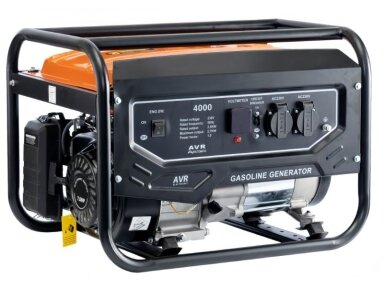
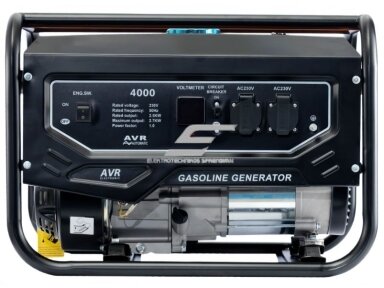 Petrol generator | backup electrical power supply | 2.8-3kW | 230VAC | single-phase | 12lCode: ES-BT3500-3.0
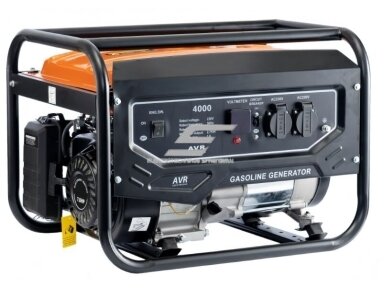
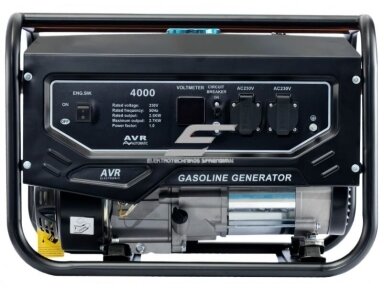 Petrol generator | backup electrical power supply | 2.5-2.8kW | 230VAC | single-phase | 12lCode: ES-BT3500-2.8
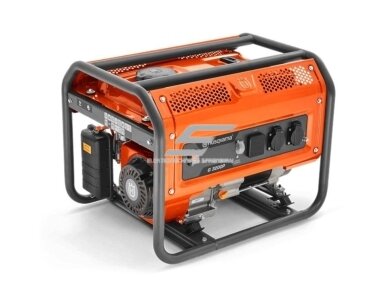
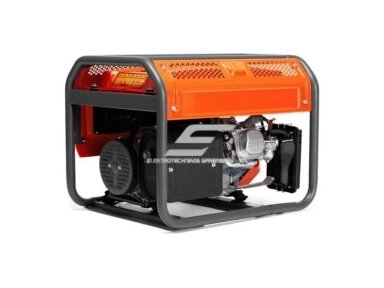 Petrol generator | backup electrical power supply | 2.8-3kW | 230VAC | single-phase | 14l | AVR | Husqvarna | G3200PCode: G3200P


