Mirror heater guide: how to choose the size, where to fit it and how to wire it
Here you will find a quick situation-based selector, a comparison matrix of every pad in this category, a sizing rule, control options, the most common mistakes with a wiring diagram, and answers to practical questions. Exact specifications are given in each product description.
Colour key: ■ information · ■ benefit, solution · ■ ⚠ check · ■ ⚡ safety, mistakes
What do you need? Quick selector
|
Situation |
Solution |
Where to look |
|
Standard rectangular mirror above a washbasin, e.g. 800×600 mm |
A pad covering the face area, wired in parallel with the mirror lighting – it heats only while the light is on |
600×400, 700×500 |
|
Small mirror or mirrored cabinet door (up to ~600×500 mm) |
A low-power pad (9–30 W) – enough for a clear area where you look |
300×200, 400×300 |
|
Narrow, elongated mirror (landscape or portrait) |
An elongated 2:1 pad – fitted along the length of the mirror |
500×250 |
|
Round mirror |
A round pad with a diameter 100–300 mm smaller than the mirror |
Ø400, Ø500, Ø600 |
|
Large mirror over 1200 mm or a double washbasin |
Two pads – one in front of each washbasin, connected in parallel |
2× 600×400 or 2× 700×500 |
|
Mirror with LED lighting and a touch switch |
Keep the pad away from the sensor area; control it via a 230 V output or an intermediate relay, not directly from a 12/24 V switch |
Touch switches, intermediate relays |
|
Hotels, spas, series production of mirrors |
One standard size for all rooms, controlled together with the lighting – lower running costs and simpler maintenance |
Ask for volume pricing |
Rectangular or round pad?
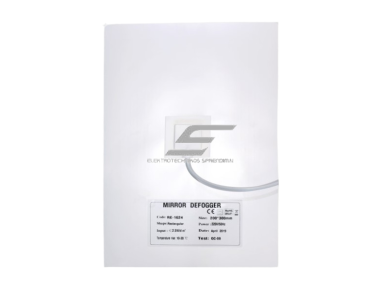
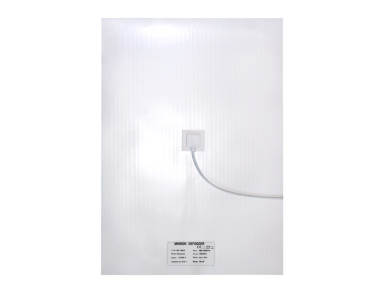
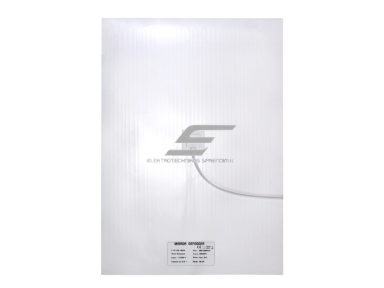
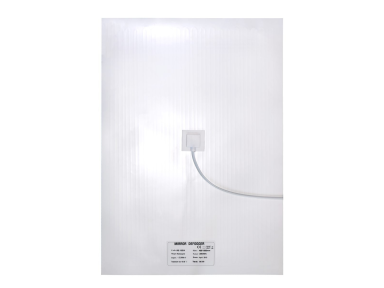
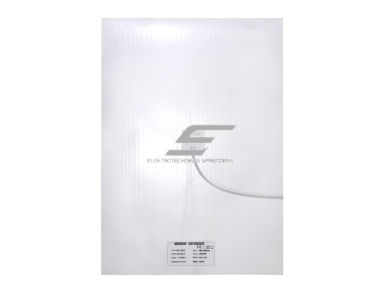
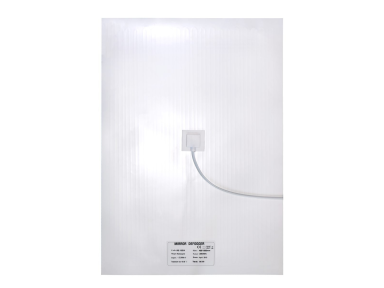
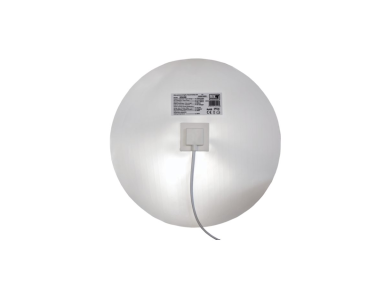
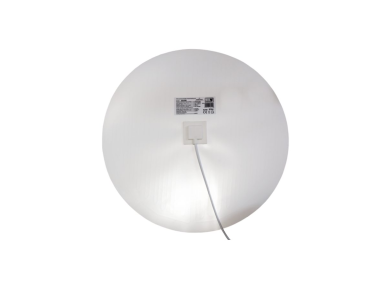
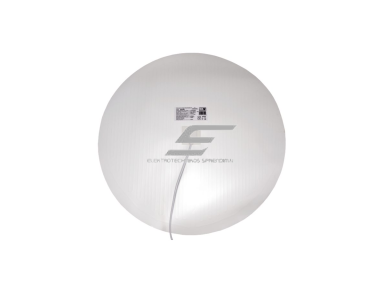
Both work the same way – a thin heating element on a PET substrate is stuck to the back of the mirror and heats the glass evenly. The only differences are the shape and the power range, so choose according to the shape and visible size of the mirror.
■ Rectangular pads
-
6 sizes: 300×200, 400×300, 500×250, 600×400, 700×500, 800×500 mm.
-
Power 9–100 W, power density 1.5–2.5 W/dm².
-
IP54, OMYp 2×0.5 mm² cable, 0.8 m.
-
Suitable for rectangular, square and rounded-corner mirrors and most oval mirrors.
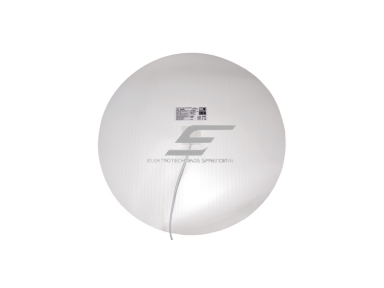
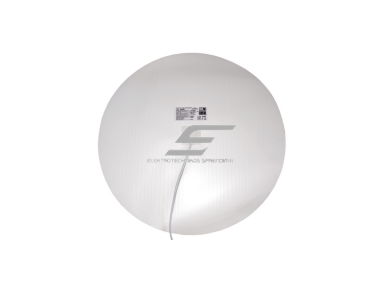
■ Round pads
-
5 sizes: Ø300, Ø400, Ø500, Ø600, Ø700 mm.
-
Power 10–88 W, power density 1.5–2.5 W/dm².
-
IP54, OMYp 2×0.5 mm² cable, 0.8 m.
-
Suitable for round mirrors – heats the entire central area with no “dead” corners.
Simple rule: round mirror – round pad; everything else – rectangular. For an oval mirror, choose a rectangular pad that fits within the central part of the mirror with a 30–50 mm margin.
Selection matrix: every pad in this category
The table shows the main parameters from the supplier’s data. All pads are 230 V / 50 Hz, PET (DuPont) substrate, temperature rise +10…+20 °C, operating temperature −25…+60 °C, OMYp 2×0.5 mm² cable, 0.8 m.
|
Product |
Code |
Heated area |
Power |
IP |
Indicative mirror size |
|
Rectangular |
|
300×200 mm |
ELSP-DFG3020 |
0.06 m² |
9–15 W |
IP54 |
400×300 – 500×400 |
|
400×300 mm |
ELSP-DFG4030 |
0.12 m² |
18–30 W |
IP54 |
500×400 – 600×500 |
|
500×250 mm |
ELSP-DFG5025 |
0.125 m² |
19–31 W |
IP54 |
elongated 600×350 – 800×450 |
|
600×400 mm |
ELSP-DFG6040 |
0.24 m² |
36–60 W |
IP54 |
700×500 – 900×700 |
|
700×500 mm |
ELSP-DFG7050 |
0.35 m² |
53–88 W |
IP54 |
800×600 – 1000×800 |
|
800×500 mm |
ELSP-DFG8050 |
0.40 m² |
60–100 W |
IP54 |
900×600 – 1200×800 |
|
Round |
|
Ø300 mm |
ELSP-DFGR30 |
0.07 m² |
10–17 W |
IP54 |
Ø400 – Ø450 |
|
Ø400 mm |
ELSP-DFGR40 |
0.125 m² |
18–31 W |
IP54 |
Ø500 – Ø600 |
|
Ø500 mm |
ELSP-DFGR50 |
0.196 m² |
29–49 W |
IP54 |
Ø600 – Ø700 |
|
Ø600 mm |
ELSP-DFGR60 |
0.28 m² |
56–64 W |
IP54 |
Ø700 – Ø800 |
|
Ø700 mm |
ELSP-DFGR70 |
0.38 m² |
77–88 W |
IP54 |
Ø800 – Ø1000 |
Power – the range stated by the supplier. “Indicative mirror size” – where the pad covers about 50–80 % of the mirror area and at least 30 mm remains free from the edges. Always check the description of the specific product before buying.
What size pad do you need? Rule and examples
The pad heats only the area of glass it is stuck to – outside it, the mirror will fog up as usual. So it must cover the area you look into (face, shoulders), not the whole mirror right up to the edge.
-
Coverage: 50–80 % of the mirror area, centred at face height.
-
Clearances: at least 30 mm from the mirror edge, the LED strip, the mounting brackets and the touch sensor area.
-
Power check: area in dm² × 1.5–2.5 W. E.g. 600×400 mm = 24 dm² → 36–60 W.
-
Mirrors larger than 1200 mm: two pads in parallel, one for each usage zone.
|
Mirror |
Pad |
Note |
|
600×450 mm |
400×300 |
Leaves ~75 mm on each side – handy for an LED strip or a sensor |
|
800×600 mm |
600×400 |
The most common combination for a bathroom |
|
1000×700 mm |
700×500 or 800×500 |
800×500 – if the mirror is landscape and used across a wider area |
|
1600×800 mm, two washbasins |
2× 600×400 |
One in front of each washbasin, total power up to 120 W |
|
Ø600 mm |
Ø500 |
Leaves a 50 mm ring for the edge or an LED contour |
|
Ø800 mm |
Ø600 or Ø700 |
Ø700 – if the mirror has no illuminated contour |
Control and running costs: when should the pad heat?
The pad needs no thermostat – it is simply connected to 230 V and heats for as long as voltage is present. The key decision is what will switch it on: both convenience and electricity consumption depend on it.
|
Method |
How it works |
When to choose it |
|
Together with the lighting |
The pad is wired in parallel with the mirror or bathroom light on the same switch |
For most homes and hotels – the simplest and most economical option |
|
Separate switch |
The pad has its own switch or a separate rocker on a double switch |
When the light is on often but heating is only needed after a shower |
|
Touch switch behind the mirror |
A controller with a separate “anti-fog” channel; connect the 230 V pad only via a 230 V AC contact – the switch’s relay output or an intermediate relay |
For LED mirror manufacturing and design projects |
|
Timer relay |
At the press of a button the pad heats for a set time (e.g. 20–30 min) and then switches off by itself |
For public spaces and gyms where the lights are on all day |
How much does it cost to run? Example: a 600×400 mm pad, ~39 W on average. Connected to the lighting and heating for ~1.5 h a day – about 21 kWh a year (~€5 at €0.25/kWh). Left on around the clock – about 340 kWh (~€85). That is why it pays to control the pad together with the light or via a timer relay.
⚠ What to check before buying
KibirkštisBefore ordering a pad, I always take the mirror down and look at the back – that answers half the questions.
|
What to check |
Why it matters |
|
Mirror shape and dimensions |
Measure the visible glass, not the frame. From that you can work out the pad size with a 30 mm margin from the edge. |
|
LED strip, sensor, brackets |
The pad must not cover them. Through the pad, a capacitive touch sensor will not work or will trigger on its own. |
|
Mirror backing |
Apply to the intact, clean and dry painted backing of a glass mirror. For acrylic and plastic mirrors – consult us. |
|
Gap to the wall |
The pad itself is thin, but the cable exit and connections need space. Check the mirror’s mounting gap. |
|
Connection point |
The cable is only 0.8 m long. There must be a flush-mounted junction box with a 230 V supply behind or next to the mirror. |
|
How you will control it |
If the mirror has a 12/24 V touch switch, the pad will need the switch’s 230 V relay output or an intermediate relay. |
|
Protection and zone |
The bathroom circuit must be protected by a 30 mA residual current device (RCD). The pads’ IP54 rating exceeds IPX4 – the minimum requirement for equipment in bathroom zones 1 and 2. |
✗ Most common mistakes
|
Mistake |
Consequence |
|
Pad too small for a large mirror |
Only a small “window” stays clear while the edges fog up – it looks as if the pad is not working. |
|
Pad stuck over the touch sensor area |
The switch does not respond to touch, or switches on and off by itself. |
|
Applied to dusty, greasy or cold glass, with air bubbles |
The pad peels off and heats unevenly, and hot spots form at the bubbles. |
|
Pad cut, folded or punctured |
⚡ The heating track is broken and the insulation damaged – the pad stops working and becomes dangerous. |
|
Wires twisted together and wrapped in insulating tape behind the mirror |
⚡ In a humid environment the contact oxidises and overheats. Make connections only with terminals in a junction box. |
|
230 V pad connected to a 12/24 V LED power supply or switch output |
The pad does not heat, and 230 V in the low-voltage circuit destroys the controller and creates a hazard. |
|
Pad left on around the clock |
Wastes up to ~340 kWh a year for nothing (for the 600×400 mm size). |
|
Bathroom circuit without a 30 mA RCD |
⚡ Does not meet bathroom installation requirements; there is no additional protection against electric shock. |
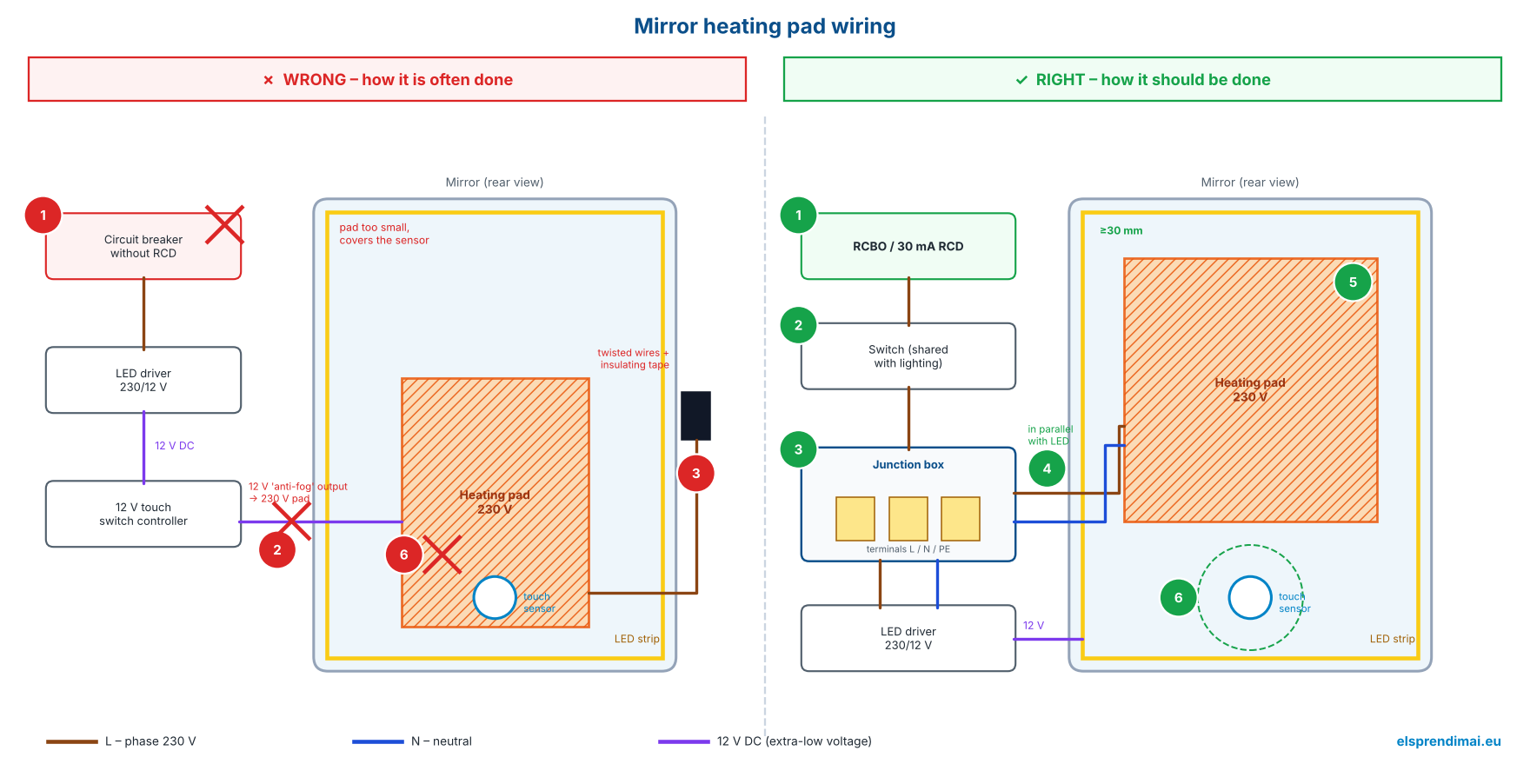
Diagram: wiring a mirror heater – wrong and right
Diagram. A mirror with LED lighting, a touch switch and a heating pad. The most common problems: a 230 V pad connected to a 12 V controller, a pad covering the sensor, and wires joined without terminals. On the left – how it is often done; on the right – how it should be done. The numbers in the diagram match the explanations below it.
KibirkštisI fitted a pad into an LED mirror and connected it to the touch switch’s “anti-fog” output. The light works, the mirror stays cold, and on top of that the switch has started clicking by itself. What’s going on?
FazėTwo things at once. The switch runs on 12 V, while the pad needs 230 V: the switch output must drive a relay coil, and the relay’s 230 V contact switches the pad. And it clicks because the pad is stuck over the sensor area. Reposition it so that at least 30 mm is left clear around the sensor.
☝ Click the diagram to open an enlarged version.
-
30 mA RCD (or RCBO) – mandatory additional protection for all bathroom circuits.
-
Switch or relay – the pad is switched on together with the lighting or via a relay with a 230 V AC contact. A 12/24 V controller output drives only the relay coil.
-
Connections with terminals – in a flush-mounted or mirror junction box, not by twisting wires together.
-
Parallel connection – the LED driver and the pad are connected to the same switch, each with its own wires.
-
Pad position – in the face area, ≥30 mm from the edge and the LED strip, with no air bubbles.
-
Sensor area kept clear – ≥30 mm around the touch sensor free of the pad.
⚡ Important: the diagram is for information only. Connection to the 230 V mains must be carried out by a qualified electrician in accordance with the applicable electrical installation regulations and the manufacturer’s instructions. UAB „Elektrotechnikos sprendimai“ accepts no liability for the accuracy or quality of the connection, or for any faults or damage resulting from improper installation or connection.
Frequently asked questions
Asking the questions is Kibirkštis – a young, curious electrician who dares to ask what others won’t. Answering is Fazė – an experienced engineer.
KibirkštisWon’t the pad make the mirror too hot?
FazėNo. The pad raises the glass temperature by 10–20 °C above ambient – the mirror becomes warm, not hot. That is enough to stop steam condensing on it.
KibirkštisHow long does it take for the fog to clear?
FazėAccording to the manufacturer – 1–10 min. It works best when the pad switches on with the light as you go into the shower: by the time you have finished, the glass is already warm and does not fog up at all.
KibirkštisCan I connect two pads to one switch?
FazėYes, in parallel. The currents are small: even a 100 W pad draws only ~0.43 A on 230 V. Just check that the switch or relay contact is rated for the combined load together with the lighting.
KibirkštisWill it work on a mirror that is already hanging?
FazėYes, if the mirror can be taken down, its back is glass and intact, there is a gap behind it for the cable and a 230 V box nearby. If the mirror is glued to the wall, you can no longer fit a pad.
KibirkštisAnd if the pad is too big – can I just cut it down?
FazėNo. The heating track runs across the entire area of the pad – cut it and the circuit is broken, and the exposed edge is left uninsulated. Choose a smaller size.
KibirkštisCan I connect it myself?
FazėYou can stick the pad on yourself, but the 230 V connection in a bathroom must be done by an electrician – who will also check the 30 mA RCD protection at the same time.
Sources
Supplier data and standards on which this guide is based. Checked on 2026-10-24.
The information and diagrams in this guide are recommendations only. The person carrying out the work is responsible for the accuracy and quality of the electrical connection and its compliance with requirements. UAB „Elektrotechnikos sprendimai“ accepts no liability for the accuracy or quality of the connection.
Pad, switch and relay – in a single order
Heating pads, behind-mirror touch switches and 230 V relays – all in one place. Send us the mirror dimensions and your preferred control method: we will select the size, match the control and send you a quote. Manufacturing mirrors in series? Larger quantities get individual terms, and some sizes are supplied to order.
Get a quote