English:
Adjustable Current Relays
Adjustable current relays are used to protect electric motors from improper current supply. They automatically respond to excessive or insufficient current and can shut down the motor to prevent possible damage.
Main Features:
Current Adjustment: Allows setting the desired operating current for the motor to avoid overloads and damage.
Overcurrent Protection: If the current exceeds the set limit, the relay automatically shuts down the motor to protect it from damage.
Adaptability: Used in motors, pumps, compressors, and other industrial equipment where precise control of the current is necessary.
Additional Protection: Adjustable current relays ensure the motor operates under optimal conditions and protects it from damage.
Usage:
Industrial Systems: Used in production lines where motors often operate under heavy loads.
Commercial Systems: Suitable for use in compressors, fans, and other equipment requiring continuous current control.
Pros:
Protection against overloads and motor failure.
Adaptability for various motors and equipment.
Energy savings by ensuring the motor operates only under proper conditions.
Cons:
Setup and maintenance can be more complicated, especially in large systems.
Requires additional maintenance and inspection procedures.
Motor Automatic Protection
Motor automatic protection devices ensure the motor is protected from improper operating conditions, such as excessive current, low voltage levels, temperature surges, and other hazards that may cause motor failure.
Main Features:
Voltage and Current Protection: Automatic protection controls the motor's start and stop, responding to voltage fluctuations and current surpluses.
Overheating Protection: If the motor’s temperature exceeds the set limit, protection devices will shut down the motor to prevent damage from overheating.
Reliable and Automatic Protection: The system operates automatically and does not require constant human intervention.
Adaptability: Used in industrial equipment such as motors, pumps, compressors, and other devices where continuous protection from varying working conditions is essential.
Usage:
Industry: Applied in industrial systems where motors are used in manufacturing and processing equipment.
Commercial Sites: Used in office buildings, shopping centers, and other commercial properties to protect essential equipment.
Pros:
Automated motor protection against excessive current, voltage fluctuations, and temperature changes.
High reliability and reduced human error.
Prolonged motor lifespan and reduced repair costs.
Cons:
High cost compared to simpler control devices.
Requires regular maintenance and testing to ensure proper operation.
Additional Contacts for Motor Protection
Additional contacts are used in motor protection devices to complement the main control and protection mechanisms, such as voltage relays, current relays, and other fuses. These contacts are typically used to transmit signals or switch additional equipment on or off based on the current motor condition.
Main Features:
Additional Control Contacts: These are extra switches or relays that activate specific functions depending on the motor's status, such as fault alerts or system readiness notifications.
Adaptability: Used in industrial systems where additional control signals are needed or additional protection needs to be activated.
Signal Transmission: These contacts are often used to send system status signals to other devices, such as signal towers, screens, or control panels.
Usage:
Industrial and Production Lines: Often used with motor protection devices to monitor motor status and transmit signals regarding potential disruptions.
Commercial and Residential Buildings: Used to monitor the status of equipment and ensure safety.
Pros:
Complements and enhances motor protection functions.
Increases system control and monitoring capabilities.
Easily integrates with other devices and systems.
Cons:
Additional contacts can increase system complexity and costs.
Requires additional installation and setup knowledge.
Electric motor control and protection management is a group of essential components in industrial and commercial automated systems, where it is crucial to ensure motors operate efficiently and safely. Adjustable current relays help manage motor current strength, motor automatic protection ensures equipment is safeguarded from improper operating conditions, and additional contacts for motor protection assist in further monitoring and controlling motor status. All of these protection systems help extend equipment lifespan, reduce the likelihood of failure, and improve energy efficiency.
Electric motor protection selection guide: motor circuit breaker, overload relay or multifunction protection
A motor usually burns out not from a short circuit, but from prolonged overload, a lost phase or a stalled rotor. In this guide you will find a quick choice by situation, the difference between a motor protection circuit breaker, an electronic overload relay and a multifunction protection relay, how to set the current, a matrix of the whole group, accessories, the most common mistakes and answers to practical questions. Exact parameters are in each product description.
Colour meaning: ■ information · ■ benefit, solution · ■ ⚠ check · ■ ⚡ safety, mistakes
What do you need? Quick choice
| Situation | Solution | Where to look |
|---|
| A small three-phase motor (pump, fan, machine) without a controller | Motor protection circuit breaker – one device protects against overload and short circuit and can also be used to switch the motor on by hand. | 13–18 A, up to 7.5 kW · Motor protection |
| The motor is controlled by a contactor (automation, timer, pressure switch) | Electronic overload relay – its contact interrupts the contactor coil circuit. A circuit breaker or fuses are needed upstream. | 1–6 A · 5–60 A · 10–120 A |
| Protection against phase loss and phase imbalance is important, DIN-rail mounting | Modular digital overload and imbalance relay with adjustable current and trip time. | 3–12 A · 15–50 A · 40–100 A |
| An expensive or critical motor: current, voltage and phase imbalance must be monitored and values shown on a display | Multifunction digital motor protection relay – panel or modular, with external current transformers for wide ranges. | DIN, 3–160 A · panel, 10–999 A |
| A submersible borehole pump with star–delta starting | A dedicated pump control and protection relay (5–250 A, 3 phases). | Pump protection relay |
| You need to check that the load actually draws current (pump running dry, broken belt) | Current monitoring relay – signals when the current goes outside the set limits. | Current monitoring relays |
| A single-phase motor with a start capacitor (compressor, pump) | A potential start relay disconnects the start capacitor once the motor is up to speed. | Potential relay |
| A signal to the controller or remote tripping is needed from the motor protection | Auxiliary and signal contacts, shunt or undervoltage release – from the same series as the protection device. | Accessories for motor protection |
How motor protection works

KibirkštisThe motor is 5.5 kW, so I fitted a 25 A circuit breaker, like for lighting. But the motor still burned out – why didn't the breaker trip?

FazėAn ordinary circuit breaker protects the cable against short circuit, not the motor against overload. The rated current of a 5.5 kW motor on a 400 V network is about 11 A, so even a double overload does not look dangerous to a 25 A breaker. Motor protection is set to the rated motor current from its nameplate and protects against phase loss.
| Property | Motor protection circuit breaker | Electronic overload relay | Multifunction protection relay |
|---|
| Overload | Yes, adjustable current | Yes, adjustable current and time | Yes, with programmable limits |
| Short circuit | Yes, instantaneous release | No – a circuit breaker or fuses are needed | No – a circuit breaker or fuses are needed |
| Phase loss, imbalance | Depends on the model | Yes (imbalance relays) | Yes, plus voltage monitoring |
| How it switches off the motor | Disconnects the supply itself | Its contact interrupts the contactor coil circuit | Its contact interrupts the contactor coil circuit |
| Where it fits | Simple direct-on-line motors | Motors with a contactor and automation | Critical or expensive motors, pumping stations, industry |
⚠ Important: overload and multifunction relays do not disconnect the supply themselves – they work only together with a contactor. If the relay is connected but its contact is not wired into the coil circuit, the motor is not protected.
How to set the protection current
- Take the current from the motor nameplate (In, A) for the voltage and connection (Δ or Y) used on your network.
- Choose a protection device whose range includes this current – ideally the rated current is in the middle of the range, not at its edge.
- Set the current equal to the rated motor current. Do not increase it “for safety” – the protection will then trip too late.
- The trip time (on digital relays) should be chosen according to the starting time: a heavy fan or centrifuge needs a longer time than a pump.
Example: the nameplate of a 4 kW motor shows 400 V Δ – 8.2 A. A protection device whose range includes 8.2 A (e.g. 3–12 A) is suitable, setting – 8.2 A.
Selection matrix: the whole group
| Type | Current range in catalogue | Supply / mounting | Where to look |
|---|
| Motor protection circuit breaker | 13–18 A (up to 7.5 kW) | DIN rail | 13–18 A |
| Electronic overload relay | 1–6 A · 5–60 A · 10–120 A | 180–460 V AC | 5–60 A |
| Digital overload relay | 5–60 A | 90–260 V AC | 5–60 A |
| Modular overload and imbalance relay | 0.1–3 A … 190–300 A (7 ranges) | 150–260 V AC, DIN | from 0.1–3 A · up to 190–300 A |
| Multifunction protection relay (DIN) | 0.3–16 A · 3–160 A · 10–999 A | 230 V or 380 V AC | 0.3–16 A, 230 V |
| Multifunction protection relay (panel, with current transformers) | 0.3–16 A · 3–160 A · 10–999 A | 230 V or 380 V AC, in the panel door | 3–160 A, 380 V |
| Pump control and protection relay | 5–250 A, 3 phases | DIN, star–delta | Pump relay |
| Current monitoring relays | up to 15 A etc. | 24 V DC – 240 V AC/DC, DIN | Current relays |
Ranges are based on the models currently in the catalogue. Whether a range needs external current transformers is stated in the product description.
Accessories: contacts and releases
| Accessory | What it is for |
|---|
| Auxiliary contact (NO, NC) | Shows whether the protection is on – signal to a controller, lamp or interlock. |
| Signal (trip) contact | Switches only when the protection trips – distinguishes “switched off by hand” from “tripped due to a fault”. |
| Shunt release | For remote tripping by a push button or a signal from another device. |
| Undervoltage release | Trips when voltage is lost, so that the motor does not restart by itself when voltage returns. |
| Supply terminals, busbars | To feed several motor circuit breakers from one point. |
⚠ Compatibility: accessories fit only their own series and size (e.g. FMP32, FMP80, 3RV2 S00/S0). Check the protection series marking before ordering.
⚠ What to check before buying
| What to check | Why it matters |
|---|
| The rated motor current from the nameplate | The protection range must include this current – the kW figure without voltage and connection says nothing. |
| Whether there will be a contactor | An overload relay requires a contactor; without one, choose a motor protection circuit breaker. |
| The relay supply voltage | Electronic relays are powered by 90–260 V, 150–260 V, 180–460 V AC or 230/380 V – it must match the control circuit. |
| Mounting | DIN rail in the panel or a panel-mounted relay in the door with external current transformers. |
| Starting time | Heavy-starting machines need protection with a longer trip time. |
| The accessory series | Contacts and releases are not compatible between different series. |
✗ Most common mistakes
- ⚡ The motor is protected only by an ordinary circuit breaker. It protects the cable, but not the motor against overload and phase loss.
- The current is set “with a margin”. A setting above the rated current lets the motor overheat for a long time.
- ⚡ An overload relay without a contactor. The relay does not disconnect the supply itself – its contact must be in the coil circuit.
- ⚡ No short-circuit protection. A circuit breaker or fuses are needed upstream of the overload relay.
- Selected by kW. The same power has different currents at different voltages and connections.
- Accessories from another series. The contact or release does not physically fit and will not work.
Frequently asked questions
What is the difference between a motor protection circuit breaker and an ordinary circuit breaker?
The overload current of a motor breaker can be set precisely to the motor, and its short-circuit release is adapted to starting currents.
Does an overload relay protect against short circuit?
No – it protects against overload and phase loss; a circuit breaker or fuses are needed for short circuits.
What current should be set?
Equal to the rated motor current from its nameplate for the connection used.
Can a single-phase motor be protected?
Yes, if the protection device's description states that it is suitable for single-phase motors – the imbalance function is then disabled or not used.
What are external current transformers for?
For large motors – the full motor current is not passed through the relay; it is measured via transformers.
Can't find the right range or accessory series?
Send us the motor power, rated current and protection series – we will select it and supply to order.
This guide is meant to help you choose a product. UAB „Elektrotechnikos sprendimai“ accepts no responsibility for a choice made solely on the basis of this guide – make the final decision based on the data of the specific product, the motor nameplate and the project documentation.
Motor protection, contactor and panel – in one order
Motor protection devices, overload and multifunction relays, contactors and accessories – all in one place. Send us the motor power, rated current and starting method – we will select a compatible set and send you a quote.
Get a quote 
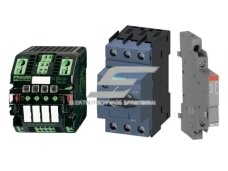 1 - 3 of 3
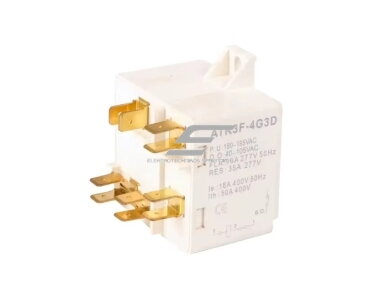
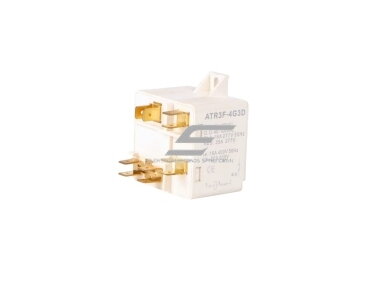
 Motor start potential relay | single-phase motor | 16 A FLA / 35 A RES 277 V | P.U. 180–195 V AC | OURTOP ATR3F-4G3DCode: ATR3F-4G3D
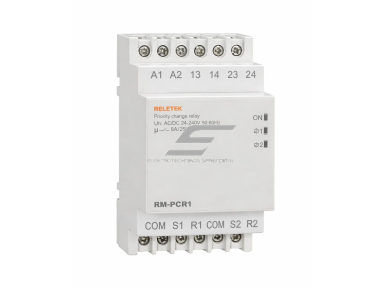
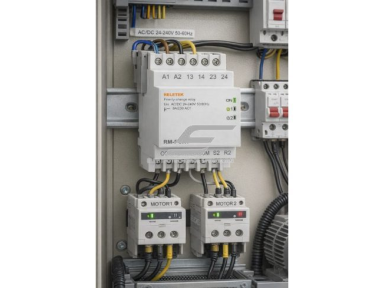 Priority motor control relay | for 2 motors | AC/DC 24–240V | 8A | DIN | automatic delay | RELETEKCode: ES-RM-PCR1


