Electrical distribution and installation guide: from the grid to the socket outlet
An electrical system only works when every link in the chain is matched to the others: the incoming fuse to the cable, the cable to the circuit breaker, the circuit breaker to the load, the residual current protection to the equipment. This guide is a map of the whole group: an interactive matrix by property type, an energy-path diagram, quick calculations and more than 50 detailed sub-group guides in one place. It is written for homeowners, students and electricians or engineers.
Choose the property type – the matrix highlights the links it needs and shows a typical solution. Each row links to the product group and a detailed guide.
Apartment – 1F or 3F supply, 24–36 module panel. Circuits: lighting B10, sockets B16, cooker 3F C16 or 1F B25–B32; residual current protection – 2–3 RCDs 30 mA Type A, each covering 2–4 circuits. Cables 3×1.5 / 3×2.5 / 5×2.5 mm². When renovating – a T2 surge protector in the panel.
House – 3F supply 3×25–32 A. T1+T2 at the incomer (overhead line or lightning protection), 36–72 module panel, separate RCD groups for rooms, kitchen, bathroom zone and outdoor sockets; RCBOs for the fridge, boiler and alarm system. A voltage relay to protect against a broken neutral.
Garage, workshop – often installed DIY, which is why mistakes are most common here. Supply – a separate line from the house panel (CYKY-L underground, in a protective conduit) or a dedicated metered supply in the garage cooperative. A small surface-mounted IP65 enclosure with a main isolator, a Type A RCD 30 mA for all socket circuits and a T2 surge protector. For a compressor, welder or machine tools – a three-phase CEE 16/32 A socket with a C-curve breaker. Sockets and luminaires at least IP44 (dust, moisture, washing), lighting with a motion sensor. No extension leads as permanent wiring. Leave connection to the supply and measurements to an electrician.
Modern house – A house with a heat pump, EV charging and a solar plant: a Type F RCD for the heat pump, a Type B RCD or a charger with integrated RDC-DD protection for EV charging, DC/AC SPDs for the solar plant, a power limiter or load management, an ATS for the generator, current measurement and a power analyser.
Commercial – Office, shop, workshop: 300 mA S and T1+T2 at the incomer, MCCBs for feeder lines, RCBOs for critical circuits, halogen-free cables on escape routes, metering per tenant, power factor correction and a UPS for the server room.
Industry – Manufacturing and warehouses: MCCBs and fuse switch-disconnectors up to 1250 A, busbars, contactors and phase monitoring for motors, industrial sockets 400 V 16–63 A, CTs and analysers, reactive power compensation, selectivity documentation.
Networks – Power utility sites: overhead line poles, clamps and insulators, 6–20 kV switches and power transformers, service fuses, CT metering, lightning protection and earthing.
Link
What to choose
Products and guides
① Grid connection overhead line, 6–20 kV
Overhead line clamps, insulators, poles, substation equipment; 6–20 kV switches and power transformers
③ Surge and lightning protection SPD T1 / T2 / T3, lightning protection
T1+T2 at the incomer (overhead line, lightning protection, PV), T2 in the distribution board, T3 next to sensitive equipment; external lightning protection and earthing
KibirkštisWhy does the guide start with the overhead line if all I need is a panel for my house?
FazėBecause the protection in the panel depends on what comes before it. An overhead line means a higher lightning risk – you will need a T1+T2 surge protector at the incomer. The size of the service fuse determines which breaker you can fit in the panel so that it trips selectively. Press “House” – the matrix will show only what you need.
Energy path: 8 links from the grid to the consumer
Each link leads to a product group. Electrical energy always flows in the same order, so selection must follow the same order too. The matrix shows more links (11) – it also covers metering, compensation and backup power.
✓ Rule: each subsequent link must be weaker than the one before it: the circuit breaker is smaller than the service fuse, the circuit RCD is more sensitive than the incoming one. Then a fault is cleared by the nearest device rather than the whole building.
Solution levels: from apartment to industry
Level
Property
Typical supply
What is mandatory
What is recommended
1 Basic
Apartment, summer cottage
1F 25–40 A or 3F 3×16–25 A
MCBs matched to the cable, RCD 30 mA Type A for socket and wet-room circuits
Panel with spare capacity, T2 surge protector, voltage relay
2 Comfortable
Detached house
3F 3×25–32 A
T1+T2 at the incomer on an overhead line, several RCD groups, RCBOs for critical loads
Voltage relay, outdoor circuits IP44+, panel layout and labelling
3 Modern
House with HP, EV, PV
3F 3×32–40 A
Type F for the heat pump, Type B or RDC-DD for the EV charger, DC and AC SPDs for the solar plant
Load management, ATS for the generator, energy metering
4 Commercial
Office, shop, workshop
3F 63–250 A
300 mA S at the incomer, MCCBs for feeders, halogen-free cables on escape routes, test reports
Separate metering, compensation, UPS for the server room
5 Industry and networks
Manufacturing, warehouses, utilities
from 250 A, 6–20 kV
Selectivity calculation, busbars, NH fuses, contactors and phase monitoring for motors
Power analysers, reactive power compensation, remote monitoring
Power → current → breaker → cable
Single-phase load: I = P / 230. Three-phase: I = P / (1.73 × 400 × cos φ). For resistive loads cos φ ≈ 1, for motors 0.8–0.9.
Load
Current
Circuit breaker
Cu cable (indicative)
Typical consumer
1F 2.3 kW
10 A
B10
3×1.5 mm²
Lighting
1F 3.7 kW
16 A
B16
3×2.5 mm²
Socket circuit
1F 4.6 kW
20 A
B20 / C20
3×2.5–4 mm²
Water heater, dishwasher + oven
1F 5.8 kW
25 A
B25
3×4–6 mm²
Single-phase cooker
3F 11 kW
16 A
C16
5×2.5 mm²
Induction hob 3F, EV 11 kW
3F 17 kW
25 A
C25
5×4–6 mm²
Heat pump, boiler
3F 22 kW
32 A
C32
5×6 mm²
EV 22 kW, workshop
3F 27 kW
40 A
C40
5×10 mm²
House supply, building feeders
3F 43 kW
63 A
C63 or MCCB
5×16 mm²
Commercial property feeder
⚠ Check: the table is indicative – for copper cable laid on a surface or in conduit, a short run (up to ~30 m) and ambient temperature up to 30 °C. The final cross-section depends on the installation method, grouping, temperature and voltage drop: ΔU ≤ 3 % for lighting, ≤ 5 % for other loads. For long runs choose a cross-section one step larger. More details – Cable selection guide.
Quick selection tables
Four tables electricians use every day: circuit breaker curves, RCD types, surge protector classes and IP protection ratings.
① Circuit breaker curves B / C / D
Curve
Instantaneous tripping
Where to use
Typical example
B
3–5 × In
Lighting, sockets, resistive loads, long runs
B10 for lighting, B16 for sockets
C
5–10 × In
Motors, compressors, heat pumps, LED lighting circuits with high inrush currents
C16 for a 3F cooker or pump, C32 EV 22 kW
D
10–20 × In
Transformers, welders, high starting currents
D16 for a welder, D10 for a transformer
② Residual current device (RCD) types and sensitivity
Type
What it detects
Where to use
Assessment
AC
Only AC sinusoidal residual current
Only simple resistive loads
✗ not suitable for new installations
A
AC + pulsating DC
Domestic sockets, washing machine, induction hob
✓ minimum standard
F
A + mixed-frequency current
Heat pumps, air conditioners, 1F frequency inverters
✓ for inverter equipment
B
F + smooth DC
EV charger without RDC-DD, 3F frequency inverters, where required by the manufacturer
✓ the most expensive, only where necessary
Sensitivity
Purpose
Where it is installed
10 mA
Additional protection for people
Individual appliances and special locations where the design or manufacturer requires it
30 mA
Protection of people against electric shock
All socket, wet-room, outdoor and garage circuits
100 mA
Protection of circuits and equipment
TT systems, large circuit groups
300 mA S
Fire protection, selective incomer
At the building incomer, upstream of the 30 mA circuits
③ Surge protective device (SPD) classes
Class
Test impulse
Mounting location
When it is mandatory
T1
Iimp 10/350 µs, typically 12.5–25 kA per pole
Main panel
Building with external lightning protection
T1+T2
Combined
Main house panel
The most common solution for a house with an overhead line or a rooftop solar plant
T2
In 8/20 µs, Imax 20–40 kA
Distribution board
Underground supply, sub-panels, garage
T3
Combination wave
≤ 10 m from the equipment
Servers, boiler controls, TV, medical and security equipment
④ IP protection ratings by location
IP
Protection
Where to use
IP20
Against fingers, no protection against water
Dry rooms, inside the panel
IP44
Against objects > 1 mm and splashing water
Bathroom zones 1–2, garage, outdoors under a roof
IP54
Partially against dust and splashing
Workshops, warehouses, boiler rooms
IP65
Dust-tight, resistant to water jets
Outdoors, wash bays, outdoor panels
IP67 / IP68
Temporary or continuous immersion
Underground joints, wells, fountains
⌂ For homeowners: what to prepare before calling an electrician
What to prepare before calling an electrician
What to prepare
Where to find it
Why it matters
Supply type and permitted power
Your DSO connection contract, service fuse or breaker
Determines the incoming device and whether there will be enough power 1F / 3F
High-power consumers
Appliance rating plates, manuals
Separate circuits and RCD type: F for the heat pump, B / RDC-DD EV
Floor plan
Drawing or hand-sketched plan
Number of sockets, wet zones – IP44 and 30 mA
Outdoor and auxiliary buildings
Garage, sauna, yard lighting
Underground cable, separate RCD group, IP65
Future plans
Heat pump, EV, solar plant
Spare panel capacity +20 %, possibly a three-phase supply
Maintenance: what to check and when
What to check
How often
Who does it
RCD “T” test button – the device must trip
every 6 months
Yourself
SPD status indicator (green / red window)
after a thunderstorm
Yourself
Terminal tightening, thermographic inspection
every 3–5 years
Electrician
Insulation resistance, earthing, RCD tripping time
after repairs and periodically
Certified electrician
⚠ Do not replace blown fuses with larger ones or increase the rated current of breakers – they protect the cable, not the appliance.
KibirkštisHow can I tell if my panel is outdated?
FazėSigns of an outdated panel: screw-in fuses, no RCD, aluminium wiring, overheated or darkened terminals, no room for a new circuit. In that case it is worth replacing the whole panel – use the Panel and box selection guide and panel configurator.
✎ For students: principles that apply everywhere
Earthing systems
System
How it works
Where it is found
Residual current protection
TN-C-S
The PEN conductor is split into N and PE at the incomer; after the split they are never connected again
Most buildings in the Baltic states
✓ works correctly
TT
PE comes from a local earth electrode
Rural areas, remote sites
mandatory for all circuits
TN-C
A common PEN conductor all the way to the socket
Old installations
✗ does not work – rebuild
What protects against what
Device
Overload
Short circuit
Residual current
Standard
MCB – circuit breaker
✓
✓
✗
EN 60898-1
RCCB – residual current device
✗
✗
✓
EN 61008-1
RCBO – combined
✓
✓
✓
EN 61009-1
gG fuse
✓
✓
✗
EN 60269
MCCB – moulded case circuit breaker
✓
✓
with RCD module
EN 60947-2
Coordination condition (HD 60364-4-43): IB ≤ In ≤ IZ – load current ≤ device rated current ≤ cable current-carrying capacity.
Example: socket circuit IB = 12 A → B16 → 3×2.5 mm² (IZ ≈ 19–27 A depending on installation method) – ✓ condition met.
Selectivity: will the nearest device trip?
Upstream
Downstream
Result
Why
gG 63 A
gG 35 A
✓ selective
Ratio of rated currents ≥ 1.6
gG 63 A
C16
✓ selective
For low and medium short-circuit currents
B25
B16
partially
Both trip instantaneously at high current
RCD 300 mA S
RCD 30 mA
✓ selective
Different sensitivity and tripping time
RCD 30 mA
RCD 30 mA
✗ no
Both or the upstream device may trip
KibirkštisWhy is the breaker chosen for the cable rather than the appliance?
FazėBecause the breaker protects the cable against overheating. The appliance is protected by its own protective devices. If you fit a 25 A breaker on a 1.5 mm² cable (current-carrying capacity about 16–18 A), at a 20–25 A load the cable overheats for a long time while the breaker does not trip – the insulation ages, connections heat up and a fire can start.
⚙ For electricians and engineers: where the risk usually lies
Risk
What to check
Guideline
Solution
Short-circuit current
Breaking capacity ≥ prospective Ik
Domestic 4.5–6 kA, near a substation > 10 kA
6 / 10 kA MCB, MCCB, NH fuses
Disconnection time
Loop impedance Zs
TN: ≤ 0.4 s for socket-outlet circuits up to 63 A and fixed equipment up to 32 A, ≤ 5 s for distribution circuits
KibirkštisHow can I quickly check whether the service fuse and the circuit breaker are selective?
FazėCompare the time-current characteristics: the instantaneous tripping zone of the circuit breaker (C16 – 80–160 A) must lie below the melting curve of the service fuse. In practice a 63 A gG fuse with a C16 breaker is selective for low and medium short-circuit currents. For exact data use the manufacturers' tables.
⚡ Safe installation – Fazė's advice
All work only after the supply has been disconnected, the isolation point locked and tagged, and the absence of voltage verified. The incomer and the meter cabinet up to and including the meter are the distribution system operator's (DSO) zone – do not work there. After the work, measure insulation resistance, protective conductor continuity and RCD tripping, and record the results in a test report.
✗ Most common mistakes
Mistake
Consequence
How to do it right
Breaker chosen for the appliance
The cable overheats without the protection tripping
Breaker chosen for the cable IZ
PEN split in several places, N and PE connected
RCD trips constantly, operating current flows in the PE conductor
A single PEN split point
No SPD on an overhead line
After a thunderstorm the boiler controls, routers and controllers fail
T1+T2 at the incomer, T2 in the panel
One RCD for the whole house
A single fault disconnects everything
2–4 circuits per RCD, or RCBOs
Breaking capacity too low
The breaker is destroyed and does not clear the fault
Capacity ≥ prospective Ik
Al to Cu connection without suitable terminals
The contact oxidises and heats up
Al/Cu terminals, contact paste
Panel without spare capacity or a diagram
A year later nobody knows what feeds what
+20 % spare capacity, diagram, labelling
Extension lead used as permanent wiring
Overheating, mechanical damage, fire
A fixed circuit with IP44+ sockets
Frequently asked questions
Asking: Kibirkštis – a young, curious electrician who dares to ask what others won't. Answering: Fazė – an experienced engineer.
KibirkštisIs a single-phase supply enough for a house?
FazėFor a small house without electric heating – yes. If you are planning a heat pump, an induction hob or EV charging, choose a three-phase supply: the load is spread across three phases and you can connect three-phase equipment directly.
KibirkštisI'm renovating my garage myself – what do I need to know about the electrics?
FazėThree things. First: all sockets only via a 30 mA Type A RCD, because a garage – concrete floor, moisture and metal tools – carries the highest risk of electric shock. Second: everything at least IP44, and the cable to the garage runs underground as CYKY-L in a protective conduit – not overhead from a tree and not via an extension lead. Third: for a compressor or welder, calculate the starting current – a single-phase line is often too weak, a three-phase CEE socket is better. You can lay the cables yourself, but leave the connection to the panel and the measurements to a certified electrician.
KibirkštisHow many modules should the panel have?
FazėCount all the devices and add at least 20 % spare capacity. Typically 24–36 modules for an apartment, 36–72 for a house, and 72 or more for a house with a heat pump and a solar plant.
KibirkštisIs it worth replacing fuses with circuit breakers?
FazėFor final circuits – yes: a breaker can be reset and protects the cable more precisely. At the incomer and for high currents, gG fuses and fuse switch-disconnectors remain the best solution thanks to their high breaking capacity and selectivity – see the Fuses and fuse switch-disconnectors guide.
KibirkštisWhat cable is needed for outdoor installation?
FazėOn a building facade – a UV-resistant cable; underground – CYKY-L in a protective conduit or a dedicated underground cable. More details – CYKY-L cables guide and Special-purpose cables guide.
KibirkštisWhen is a T1 surge protector needed, and when is T2 enough?
FazėT1+T2 – when the building is supplied by an overhead line, has external lightning protection or a rooftop solar plant. T2 – when the supply is underground and there is no lightning protection. In both cases T3 next to sensitive equipment is worthwhile.
Typical panel diagrams: apartment, house, modern house
Simplified single-line diagrams show how the links connect in the panel. They are a guide for selecting components and discussing with an electrician – not a design.
Supply and meteringSurge protectionResidual current protectionCircuits
Standards and regulations: national electrical installation rules, HD 60364 series (4-41, 4-43, 5-52, 5-54, 6), EN 61439-1/-3 (panels), EN 60898-1 (circuit breakers), EN 61008-1 / 61009-1 (RCD, RCBO), EN 60269 (fuses), EN 61643-11 and EN 62305 (surge and lightning protection). Checked 2026-11-07.
This guide is for information only. UAB „Elektrotechnikos sprendimai“ accepts no liability for product selection based solely on this guide. Electrical installation work must be carried out by a certified electrician, and the final decision is determined by the design, the operator's connection conditions and the applicable requirements.
The whole electrical system – in one order
From service fuses and surge protectors to the panel, cables and sockets – all matched to each other. Experience in the electrical field since 1998. Send us a description or specification of your property – we will select a kit, check compatibility and send you a quote. The model you need is not in the catalogue? Some products are supplied to order.
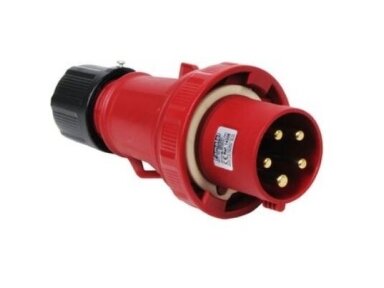
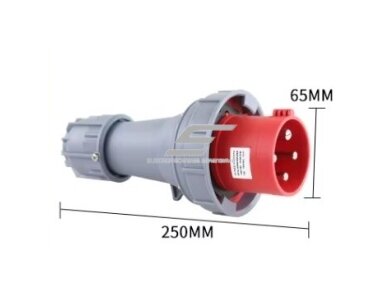
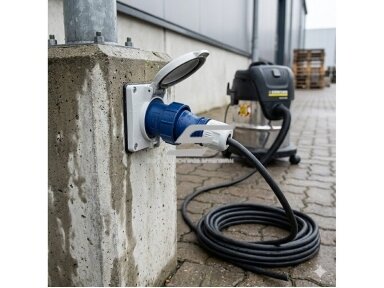
High-quality industrial portable plug designed for intensive use both indoors and outdoors. Featuring 5 contacts (3 phases + neutral + earth), a rated current of 63A, and a voltage of 380/400V, this plug is ideal for industrial and construction environments. The IP44 protection rating ensures reliable protection against dust and water splashes. The 6h clock position allows safe and correct electrical connections, preventing incorrect mating.
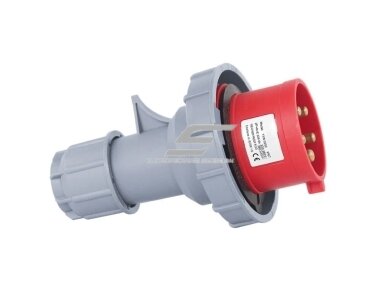
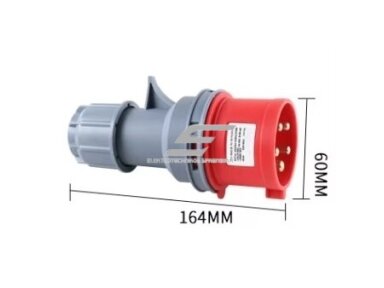
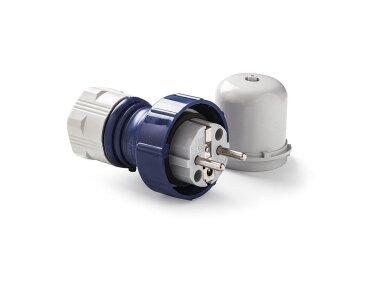
The industrial three-phase plug 5P is designed for use in industrial and commercial environments where reliable and safe power supply is required. This plug is rated for 32A current and operates with a three-phase connection (3P+N+E). The plug provides protection against water and dust, with an IP67 protection rating, ensuring complete sealing even in extreme conditions.
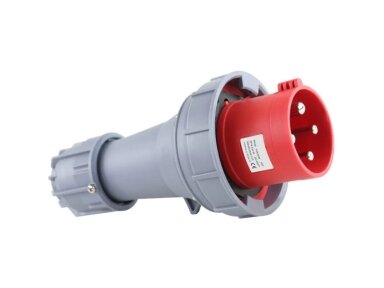
Industrial three-phase plug 4P, 63A, designed for use in industrial environments where reliable and safe power supply is required. This plug with a 3P+N+E configuration ensures proper energy distribution and protection against electric shocks. Equipped with an IP67 protection rating, it is fully dustproof and can withstand temporary immersion in water, making it suitable for use in both dry and damp industrial environments. The plug is ideal for harsh industrial conditions where reliability and resistance are crucial.
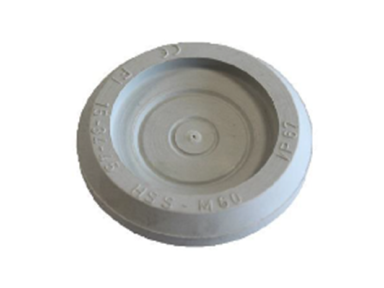
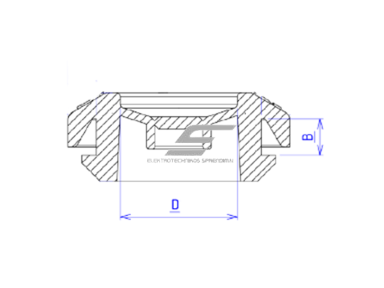
The grey HT HSS membrane cable grommet is pressed into a round hole in the enclosure and seals one cable – for Ø9–120 mm holes and Ø2–100 mm cables, IP65 (HSS-M100, HSS-M120 – IP54). Choose the size by the hole (the number after M) and the outer cable Ø; the range shown in the variant selector, e.g. 1.5–4.5 mm, is the wall thickness.
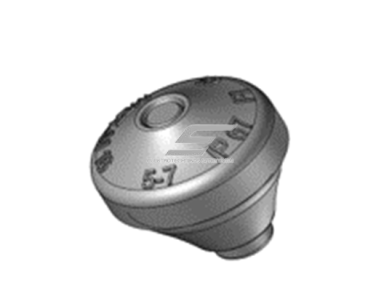
The dark grey HT MET-M push-in cable grommet in TPE seals one cable in a round enclosure hole to IP67. Nine sizes: the number after M is the mounting hole size (M12–M80), for cables from Ø3 to Ø60 mm.
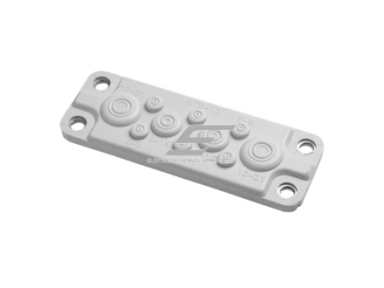
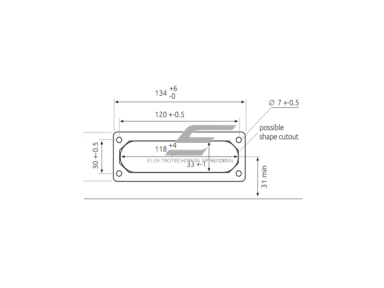
HTB-10 is a compact membrane cable entry plate for a smaller 138 × 48 mm (B-hole) cut-out. It has 10 entries: 2 × Ø12–21 mm, 2 × Ø8–15 mm and 6 × Ø5–8 mm. IP55, −40…+130 °C, fixed through Ø7.5 mm holes.
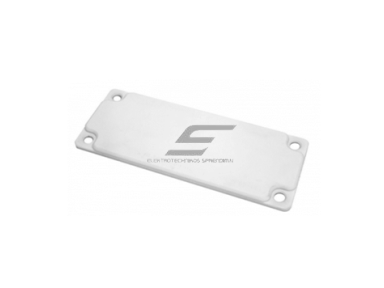
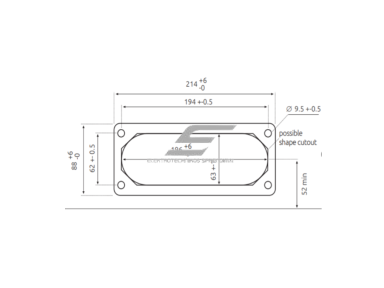
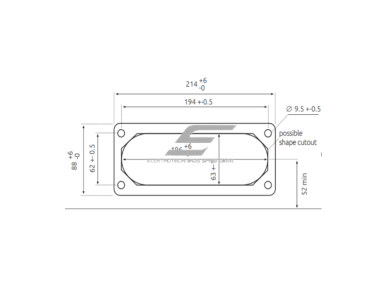
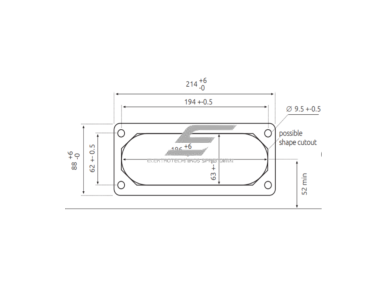
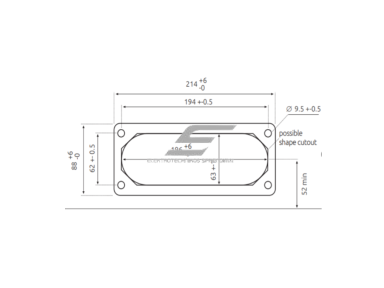
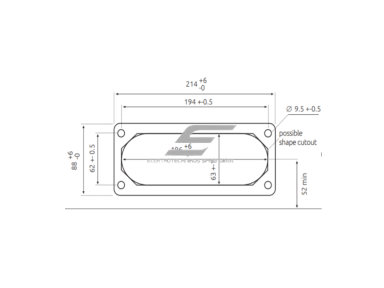
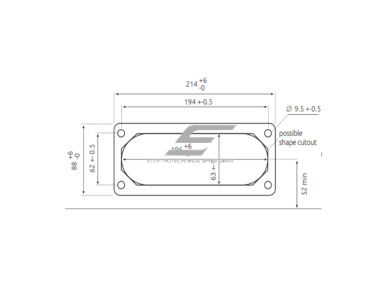
HTC-0 is a blanking plate without entries that seals an unused standard 216 × 84 mm cut-out in a panel or enclosure wall. It is fixed in the same way as the HTC plates with entries, so it can later be replaced by a plate with entries. IP65, −40…+130 °C.
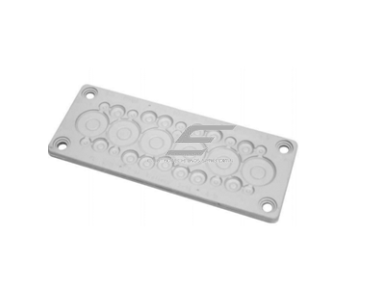
HTC-17 is a membrane cable entry plate for a 216 × 84 mm cut-out, made for several medium-size power cables: 9 entries Ø18–30 mm (with an inner ring Ø10–14 mm), 4 entries Ø10–15 mm and 4 entries Ø5–10 mm. IP55, −40…+130 °C.
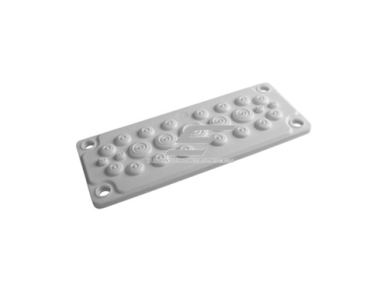
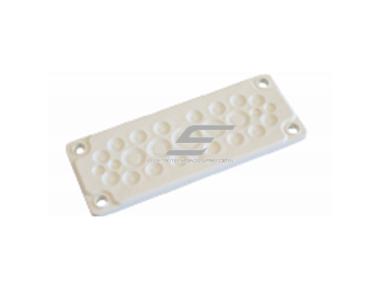
HTC-25 is a membrane cable entry plate for a 216 × 84 mm cut-out with 25 entries: Ø20–26 mm for the feeder, 4 × Ø14–20 mm, 16 × Ø8–14 mm and 4 × Ø5–7 mm. The larger entries have an inner ring for a thinner cable (then IP55). IP65, −40…+130 °C.
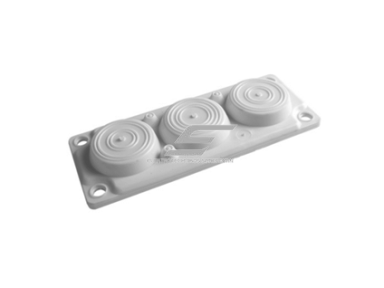
HTC-3 is a membrane cable entry plate for a 216 × 84 mm cut-out, made for large power cables: two entries Ø24–54 mm, one Ø30–59 mm and three small Ø6–14 mm entries for control cables. IP65 (small entries IP55), −40…+130 °C.
HTC-35 is a membrane cable entry plate for a 216 × 84 mm cut-out with a mixed layout: one entry for a Ø17–32 mm feeder cable and 34 entries for cables from Ø6 to Ø18 mm. It suits panels with one incoming supply and many outgoing circuits. IP65, −40…+130 °C.
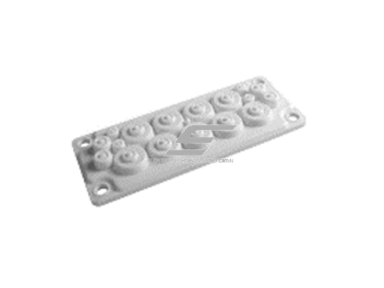
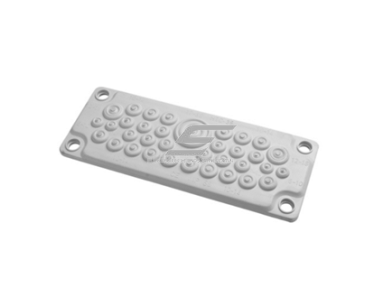
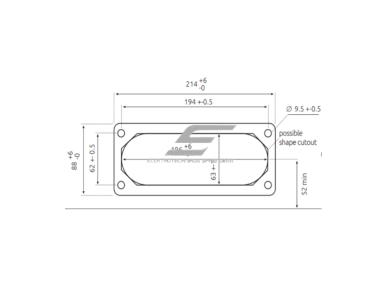
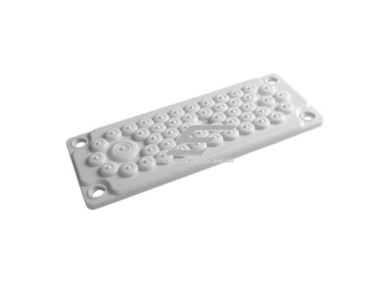
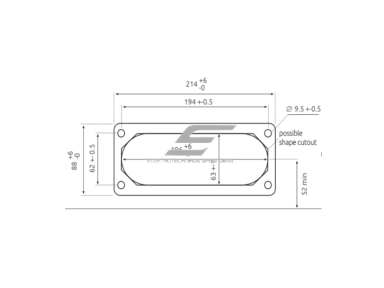
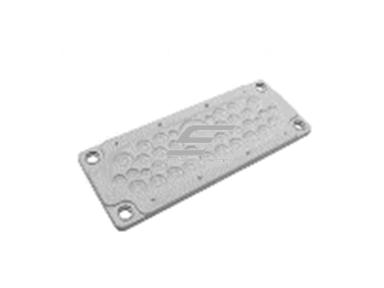
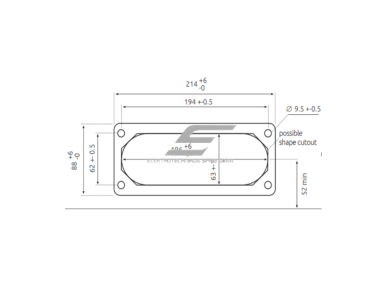
HTC-50 is a membrane cable entry plate for the standard 216 × 84 mm cut-out in an enclosure wall. It has 49 entries for Ø7–13 mm cables and 1 entry for Ø15–25 mm – up to 50 cables in total. Degree of protection IP65, operating temperature −40…+130 °C.
HTKC-25 is a membrane cable entry plate with cones for a 216×84 mm cut-out, for up to 25 cables from Ø5 to Ø26 mm. The main ranges seal to IP65, and the larger cones also have an inner range for thinner cables at IP55.
HTKC-28 is a membrane cable entry plate with cones for a 216×84 mm cut-out. It has 6 large cones Ø13–28 mm for power cables, 18 cones Ø6–13 mm and 4 cones Ø3–11 mm. Up to 28 cables in total, sealing rating IP65.
HTKC-36 is a membrane cable entry plate with cones for a 216×84 mm cut-out. Six cone sizes cover cables from Ø4 to Ø32 mm, up to 36 cables in total. Sealing rating is IP65.