Main Types of Materials and Their Applications:
Acoustic Foam:
Usage: Widely used for sound insulation in studios, cinemas, offices, and manufacturing facilities.
Features: These materials absorb high and mid-frequency sounds, reducing echo and noise transmission between spaces.
Examples: Open-cell polyurethane or melamine foams that effectively dampen sound waves.
Vibration Isolation Plates and Mats:
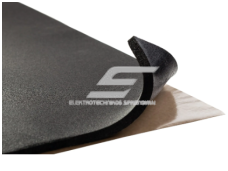
Usage: Designed to reduce vibrations in industrial equipment, vehicles, construction, and flooring structures.
Features: These materials dampen mechanical vibrations while also reducing noise caused by vibrations.
Examples: Rubber or polyurethane mats and plates placed under mechanical systems or floors.
Sound Insulation Panels:
Usage: Used in walls, ceilings, and floors to reduce sound transmission between rooms.
Features: A thick, dense layer absorbs sound and blocks noise transmission through structures.
Examples: Mineral wool, fiberglass, or gypsum boards specifically designed for sound insulation.
Anti-Vibration Elements:
Usage: Used in industrial machines, HVAC systems, cars, or other equipment where vibration control is required.
Features: These materials absorb vibrations and prevent them from spreading into structures or surrounding spaces.
Examples: Rubber or metal dampers, special anti-vibration pads, and inserts.
Sound-Absorbing Films and Coatings:
Usage: Can be used in vehicles, window panes, or on walls as additional noise protection.
Features: Films act as a barrier between the noise source and the protected area, absorbing and dampening noise.
Examples: Sound insulation films for cars or building facades, special soundproof coatings.
Composite Insulation Materials:
Usage: Used for high-efficiency sound and thermal insulation in industry and building construction.
Features: These materials consist of multiple layers, combining vibration, noise, and thermal insulation functions in one product.
Examples: Composites made from combinations of rubber, metal, foam, and other materials.
Application Areas:
Construction: Used for noise and vibration insulation of building walls, floors, and ceilings, especially in multi-story buildings or manufacturing complexes.
Industry: Helps reduce vibrations and noise generated by machines and equipment.
Transportation: In cars, ships, and trains to reduce noise and vibration levels and ensure comfort.
Home: Used to improve quality of life by reducing external noise (e.g., city noise) or internal sounds (e.g., between neighbors).
These insulation materials help ensure a higher level of comfort, durability, and efficiency in many areas where noise and vibrations can cause discomfort or even damage structures and equipment.


 1 - 1 of 1
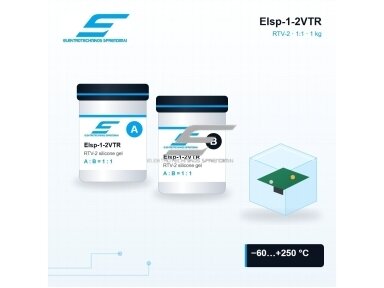
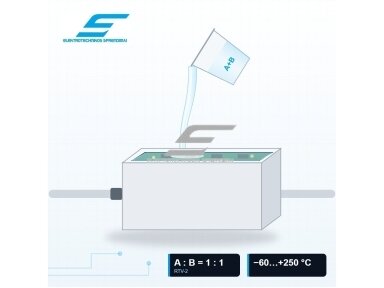
 Two-Component Clear Silicone Gel for Electronics | RTV-2 | 1:1 Mix Ratio | −60…+250 °C | 1 kg | Elsp-1-2VTRCode: Elsp-1-2VTR


