VEHICLE ACCESS CONTROL · ANPR / LPR · AUTOMATIC BARRIERS
Automatic road barriers and boom gates | ANPR number plate recognition and remote control
A comprehensive guide to selecting a vehicle access system: barrier boom length, opening cycle, remote controls, camera integration, safety sensors, installation and operation.
12
products in the category
ANPR
number plate identification
433 MHz
remotes for some models

 Kibirkštis asks, Fazė answers – technical access control solutions.
Key point
An automatic road barrier is a system of mechanism, controller, access identification and movement safety devices. An ANPR camera alone cannot physically open the boom, and a remote cannot detect whether a vehicle is under the barrier. The solution is selected according to the passage width, type of traffic, intensity of use, remote or ANPR integration and safe barrier movement.
1. Quick selection of an automatic road barrier
A road barrier is selected primarily by passage geometry, traffic intensity and the access control principle. A safety system that prevents the boom from moving dangerously when an obstacle is present is designed separately.
|
Situation |
Selection direction |
Important |
|
Small private entrance |
Shorter boom model and remote control |
Width, power supply, photocells |
|
Apartment building or housing association |
ANPR, remotes or a combined solution |
Number of users, permit administration |
|
Business car park |
Integration with number plate recognition and a management system |
Traffic peak, registration, visitor access |
|
Industrial site |
Barrier with a suitable duty cycle and controller |
Trucks, separate pedestrian route |
|
Wider passage |
Longer boom or a different traffic layout |
Boom weight, wind, support, speed |
|
High pedestrian and vehicle interaction |
Separated footpath and additional safety measures |
Risk assessment and safe movement |
2. Barrier models, boom lengths and technical characteristics
Different products in the category serve different control and installation tasks. Some are barrier mechanisms themselves, others are separate components of a number plate recognition system.
|
Model |
Technical data |
Purpose |
|
ES-BSN-B500/XS3 |
3 m, 230 V, IP44, control by switch / signal, brushless DC motor |
For shorter passages |
|
ES-BSN-B500/XF45 |
4.5 m, 230 V, IP44, control by switch / external signal |
For medium-width passages |
|
ES-D02 / ES-TD01 |
Up to 6 m, 80 W, 230 V, 433 MHz, IP44 |
For remote-controlled barriers; ANPR integration depending on the system |
|
ES-D05 |
6 m, 80 W, 230 V, 433 MHz, IP44 |
For ANPR integration and remote control |
|
ES-GDC1005 |
5 MP ANPR camera, 0.2 s recognition parameter example |
For vehicle number plate identification |
See the 3 m automatic barrier and the 6 m remote-controlled barrier.
Scope of supply: ANPR integration capability does not turn the barrier into a complete camera and software kit. The scope of supply of the boom, remotes, receiver, photocells and mounting accessories is defined for each specific product variant.
3. Boom length: 3 m, 4 m, 4.5 m or 6 m?
The boom length must be selected according to the actual passage width to be covered, the location of the barrier housing, the boom support solution and the vehicle trajectory. The nominal boom length is not necessarily equal to the clear passage width.
|
Boom length |
Typical selection principle |
Design note |
|
3 m |
For narrower passages |
Leave a safe distance to obstacles |
|
4 m |
For medium-width entrances and corresponding LPR systems |
Mechanism and boom compatibility |
|
4.5 m |
For wider entrances |
Assess boom stiffness and wind load |
|
6 m |
For wide passages |
Support, balancing and mechanism duty |
A longer boom usually places higher demands on mechanics, support and wind resistance. A short boom must not be arbitrarily replaced with a longer one without assessing the compatibility of the drive, springs or balancing mechanism.
4. ANPR / LPR – automatic vehicle number plate recognition
ANPR (Automatic Number Plate Recognition) and LPR (License Plate Recognition) – number plate reading and recognition technologies whose results can be used for access control.
Vehicle approaches the entrance
↓
ANPR camera reads the plate
Image and character recognition
↓
Permit check
List, schedule or management system
↓
Command to the barrier controller
Only for an authorised vehicle
↓
Barrier opens, safety sensors monitor the passage
Recognition reliability depends on the camera mounting height, viewing angle, distance to the vehicle, lighting, plate visibility and vehicle speed. The camera must be installed in line with the optical and software capabilities of the specific ANPR device.
5 MP defines the camera image resolution, but resolution alone does not confirm number plate recognition accuracy. The 0.2 s recognition parameter example does not cover the entire barrier opening cycle – data verification, command transmission and mechanical movement also take place.
5. Remote control and the 433 MHz system
A radio frequency remote sends a control command to a compatible receiver. The receiver or integrated controller processes it and triggers barrier opening or another assigned function.
|
Criterion |
Meaning |
|
Radio frequency |
433 MHz in the control system of some catalogue barriers |
|
Remote and receiver compatibility |
Depends on the coding protocol and pairing procedure |
|
Range |
Depends on the model, antenna, obstacles and radio environment |
|
User administration |
Adding, revoking remotes and access management depending on the system |
|
Access security |
A coding solution resistant to unauthorised signal replay is important |
The same 433 MHz frequency does not guarantee that two remotes from different manufacturers will work with the same receiver. The coding protocol used, compatibility requirements and controller settings must match.
6. Combined access control: ANPR + remotes + external commands
A combined system allows different entry methods to be assigned to employees, residents, visitors and service vehicles. The control logic can be implemented via a compatible barrier controller or an external access control unit.
Regular users
Permitted registration plates in the ANPR system.
Visitors
Temporary permit, remote or operator command.
Service staff
Remote or control button according to granted rights.
Administrator
Maintenance of permit lists and usage rules.
Access authorisation and obstacle safety are separate control layers. The barrier must not close dangerously simply because the opening timer has expired.
7. Barrier mechanism operation, cycles and intensity
An automatic barrier mechanism consists of a drive, transmission mechanism, boom fixing and balancing elements, control electronics and housing. The drive design may vary – from a gearbox with a brushless motor to other electromechanical solutions.
For example, the opening and closing time of the ES-TD01 model is stated as 1.5–6 s, and the working boom length – up to 6 m. These values do not apply to all models in the category.
Cycle assessment example: 120 vehicles per hour means an average of 2 vehicles per minute if each passes separately. When assessing the mechanism, account must be taken not only of the average number but also of peak-hour traffic, complete opening–closing cycles, passage time and the permissible duty of the drive.
The barrier movement speed is selected to match the boom length, safety sensors and the specific traffic flow. A faster barrier is not always more suitable.
8. Movement safety: photocells, induction loops and obstacle detection
An automatic boom is driven by a motor, so it is important to ensure that the presence of a vehicle or person in the movement zone is properly detected and that the controller reacts safely.
|
Device |
Function |
Important note |
|
Photocell pair |
Detects interruption of the optical beam |
Sensor position and operating logic must match the risk |
|
Induction loop |
Detects a vehicle above a loop installed in the road surface |
Usually does not detect all pedestrians or non-metallic obstacles |
|
Safe force limitation |
Limits dangerous mechanical impact depending on the system design |
Assessed and tested according to applicable safety requirements |
|
Emergency control |
Allows the equipment to be stopped or safely controlled in an emergency |
Functions depend on the system design |
|
Separate footpath |
Reduces the risk of collision with the boom |
Especially important in mixed-traffic areas |
Safety priority: an automatic road barrier regulates vehicle traffic but is not a security barrier designed to stop a vehicle entering deliberately or accidentally. If anti-ram protection is required, barriers specifically designed and tested for this purpose are used.
9. Integration with CCTV, parking, RFID, GSM and building systems
The barrier can be controlled not only by a remote or ANPR camera but also by other access control technologies. Integration requires matching the input command type, signal duration, electrical compatibility and system control logic.
CCTV / ANPR
Plate identification and permit check.
RFID
Card or tag authorisation via a compatible controller.
GSM / network control
Transmission of remote commands depending on the selected module.
Parking software
Administration of permits, events and traffic flows.
Access event logging and integration with security systems depend on the capabilities of the specific camera, controller and software. The mechanical boom gate itself does not automatically record all traffic events.
10. Applications and most suitable control scenarios
Apartment buildings
Residents’ ANPR lists, remotes and visitor permits.
Business centres
Automatic employee access and visitor registration.
Logistics centres
Control of arrival permits for freight transport.
Private yards
Simple remote-controlled barrier.
Car parks
ANPR and automatic vehicle permit administration.
Industrial sites
Flows of employees, suppliers and service vehicles.
11. Installation: foundation, power supply, camera and system commissioning
1. Assess the entrance
Measure the passage width and trajectory.
2. Design the foundation
Take into account loads, soil and fixing points.
3. Install the power supply
230 V circuit or another voltage required by the product.
4. Mount the housing and boom
Check balancing and safe clearances.
5. Install safety sensors
Photocells, loops and other required devices.
6. Connect access control
Camera, receiver or control contacts.
7. Configure control
Permits, command logic, opening and closing.
8. Carry out tests
Check movement, obstacles, traffic flows and emergency situations.
The ANPR camera must be mounted so that the vehicle number plate falls within the proper recognition zone. Outdoor cables, power and data lines require suitable protection and installation routes.
12. Diagram: wrong / right – ANPR control and obstacle safety
✗ WRONG
Camera or remote
↓
Barrier without coordinated safety
No obstacle monitoring and no clear logic
↓
Dangerous boom movement
An authorisation command does not in itself prove that the passage is clear.
✓ RIGHT
ANPR / remote / controller
↓
Coordinated access and safety logic
Photocells, loops and safe control
↓
Controlled passage
Identification and obstacle detection work as separate, coordinated functions.
13. Practical access control scenarios
Apartment building yard. Residents’ vehicles are recognised from a list of permitted plates. Service staff can use a remote, while the administrator grants visitors temporary access, if supported by the chosen system.
Office car park. Employees use ANPR, while visitor plates can be added to the permit list for a specified period. Passage sensors control safe lowering of the boom.
Logistics centre. The barrier can be linked to the vehicle permit register, the security post and separate truck flow management. The camera is mounted according to the expected vehicle trajectory and plate height.
Private entrance. A remote-controlled barrier allows entry to be controlled without a more complex number plate recognition system. If needed, the controller is integrated with additional access automation.
14. Most common selection, integration and installation mistakes
|
✗ Wrong |
✓ Right |
|
A 6 m boom is chosen without assessing the drive. |
Mechanism compatibility and balancing are checked. |
|
An ANPR-compatible barrier is treated as a complete kit. |
The camera, controller and software are assessed separately. |
|
A remote is chosen solely by 433 MHz. |
The protocol and receiver compatibility are checked. |
|
The camera is mounted too high or at an angle. |
The recognition geometry of the specific camera is followed. |
|
No obstacle monitoring is installed. |
The safety system is designed based on a risk assessment. |
|
Peak-hour cycles are not assessed. |
Traffic flow and drive duty are matched. |
|
Plate records are stored without a clear purpose. |
A legal basis, retention period and access rights are defined. |
15. Operation, maintenance and periodic inspection
The service life of an automatic barrier depends on installation, mechanism loads, environment and intensity of use. Periodic maintenance checks the boom fixing, mechanism, control circuits and safety functions.
Mechanical part
Fixings, gearbox, balance and boom condition.
Electrical part
Power supply, wire connections, controller indication.
Safety equipment
Testing of photocells, loops and obstacle responses.
Access control
Remote rights, plate lists and maintenance of system records.
Fazė recommends
When designing an entrance, specify the passage width, daily and peak traffic, vehicle types, ANPR needs, number of remote users, electrical and network infrastructure, and pedestrian movement. This data is sufficient to prepare the initial equipment architecture and select the right mechanism class.
16. FAQ – Kibirkštis asks, Fazė answers
15 practical questions about automatic road barriers, boom lengths, ANPR cameras, remote compatibility, obstacle detection and installation solutions.
KIBIRKŠTIS ASKS · 01
How does an ANPR road barrier differ from a simple remote-controlled boom gate?
FAZĖ ANSWERS
In the simple version, the user presses a button on the remote and the receiver passes the open command to the barrier. In an ANPR system, the camera recognises the vehicle number plate, which is compared with the permit data. Once the permit is confirmed, the barrier opens automatically. Both methods can be combined in one system if the controller supports it.
KIBIRKŠTIS ASKS · 02
If the barrier is ANPR-ready, is the camera already included?
FAZĖ ANSWERS
Not necessarily. ANPR compatibility means the barrier can be controlled by a command from an external number plate recognition system. The camera, network equipment, software and permit management may be separate components. The scope of a complete solution depends on the selected kit, so the barrier mechanism alone should not be regarded as a complete number plate recognition system.
KIBIRKŠTIS ASKS · 03
What boom length should I choose for a 4-metre-wide passage?
FAZĖ ANSWERS
Check whether 4 m is the actual clear passage width, where the barrier housing will stand, how much of the boom length is taken up by the mounting assembly and whether a boom rest is used. A nominal 4 m boom does not always fully cover a 4 m clear opening. A longer compatible option may be more suitable, but this is determined from the dimensions of the specific mechanism and the entrance drawing.
KIBIRKŠTIS ASKS · 04
Is a 6 m barrier suitable for a busy apartment building or company entrance?
FAZĖ ANSWERS
Suitability is not determined by boom length alone. The duty cycle of the motor and gearbox, the permissible number of cycles, opening and closing times, traffic peaks and boom balancing must be assessed. A long boom increases mechanical loads, so a high-intensity site requires a mechanism designed specifically for that duty.
KIBIRKŠTIS ASKS · 05
Are all 433 MHz remote controls compatible?
FAZĖ ANSWERS
No. The same frequency does not mean the same coding protocol. The remote must be compatible with the receiver and the controller pairing system. Fixed or rolling code, ID registration and the access security level may differ. Additional remotes must be selected according to the parameters of the specific receiver.
KIBIRKŠTIS ASKS · 06
Can one barrier be controlled both by a remote and by the vehicle number plate?
FAZĖ ANSWERS
Yes, if the barrier controller and the integration architecture allow several command sources. The ANPR system can open the barrier for registered vehicles, and remotes – for service staff or guests. Both control methods must be linked to a single boom movement and safety logic.
KIBIRKŠTIS ASKS · 07
Will an ANPR camera always recognise a number plate at night?
FAZĖ ANSWERS
Recognition capability depends on the camera optics, lighting, number plate reflections, mounting angle and software. Even a camera with infrared illumination does not guarantee a 100 % result in any weather or at any angle. Real day and night recognition tests should be carried out during design.
KIBIRKŠTIS ASKS · 08
Why are photocells needed if the camera can see the vehicle?
FAZĖ ANSWERS
An ANPR camera primarily identifies the vehicle number plate. Photocells and other safety sensors check for obstacles in the barrier's movement zone. Number plate recognition is not equivalent to a safety sensor, so using a camera does not in itself remove the requirement to design proper boom movement protection.
KIBIRKŠTIS ASKS · 09
Does an induction loop recognise the vehicle registration number?
FAZĖ ANSWERS
No. An induction loop detects the presence of a vehicle above a sensor installed in the road surface. It can be used for passage or presence detection, but it does not read the registration number. Number plate recognition requires a suitable camera and recognition system.
KIBIRKŠTIS ASKS · 10
Can a barrier with an IP44 housing be installed outdoors?
FAZĖ ANSWERS
IP44 indicates protection against the ingress of solid objects larger than 1 mm and against splashing water under standard test conditions. For outdoor barrier suitability, operating temperatures, water drainage, cable entries, corrosion exposure and the mechanism design are also important. The device must be installed in accordance with its outdoor operating conditions.
KIBIRKŠTIS ASKS · 11
What happens during a power failure?
FAZĖ ANSWERS
Behaviour depends on the specific mechanism. Some barriers have manual release or emergency opening solutions, others can be supplemented with backup power. When designing site access, it is essential to plan how the necessary access will be ensured during a power failure, especially where the site has emergency services access requirements.
KIBIRKŠTIS ASKS · 12
Can entry and exit events be logged in an ANPR system?
FAZĖ ANSWERS
Yes, if the camera or the integrated access control software supports event logging. Vehicle numbers, event time and the permit result may be stored. Data collection and storage must serve a clear purpose and comply with personal data protection requirements. The barrier mechanism itself does not necessarily have an event log.
KIBIRKŠTIS ASKS · 13
Is an automatic boom gate suitable for protecting a site against a vehicle break-in?
FAZĖ ANSWERS
A standard automatic road barrier is designed to organise vehicle access, not to physically stop a vehicle forcing its way through. If protection against vehicle ramming is required, a purpose-built protective structure is needed. A simple boom should not be regarded as a certified impact protection barrier.
KIBIRKŠTIS ASKS · 14
Is it necessary to separate pedestrian and vehicle traffic?
FAZĖ ANSWERS
Separating pedestrian and vehicle flows is an important risk reduction measure. Where pedestrians use the same entrance zone, appropriate safety solutions, clear traffic organisation and sensors must be provided based on the site risk assessment. Number plate recognition is not a pedestrian safety measure.
KIBIRKŠTIS ASKS · 15
What information is needed before buying a road barrier?
FAZĖ ANSWERS
You need to know the passage width, the number of vehicles per day and at peak hour, what vehicles will pass, what boom length is required, and whether ANPR, remotes or both control methods will be used. Pedestrian flows, safety sensors, power and network infrastructure, the installation location, the electrical installation and the need for backup opening are also important.
Kibirkštis and Fazė remind you
The convenience of automatic entry depends on the compatibility of ANPR, remotes and the controller, while safety – on proper mechanical design, photocells, obstacle detection and maintenance. Both aspects must be assessed together.
17. Safety standards, privacy and data protection
Automatic road barrier systems are assessed as power-operated access control equipment. The requirements depend on their design, intended use and operating environment.
-
EN 12453 – safety in use of power-operated doors and gates: requirements and test principles for equipment within its scope.
-
EN 13241 – product standard for the characteristics of industrial, commercial and garage doors, gates and barriers, where applicable to the specific design.
-
EN ISO 13849-1 – design principles for safety-related parts of control systems, where applied to a specific safety solution.
-
EN 60529 – degrees of protection provided by enclosures, designated by the IP code.
-
EU General Data Protection Regulation (GDPR) – personal data processing requirements where vehicle number plates can be linked to natural persons.
ANPR and privacy
If the number plate recognition system processes personal data, a lawful basis for processing must be established, data processing must be clearly communicated, access must be restricted, a justified retention period must be chosen, and appropriate organisational and technical safeguards must be ensured.
Operational safety
Installing a barrier requires a site risk assessment, properly functioning movement safety and a maintenance procedure. A boom gate is not designed to physically withstand a vehicle impact. A number plate recognition result or a remote command must not override the safety functions.
Automatic road barriers, boom gates and ANPR systems
Choose road barriers with remote control, external signal control or integration with vehicle number plate recognition systems. Tell us the passage width, traffic intensity, preferred control method and installation conditions – we will help you select the right equipment configuration.
View road barriers and ANPR equipment Contact us
The final barrier selection, coordination of control and safety equipment, and installation must comply with the technical and safety requirements of the specific mechanism and site.
Road barriers and automatic gates with an integrated license plate recognition system (ANPR) and/or remote control via transmitters are flexible and modern solutions designed for vehicle access control at various sites. These systems allow you to choose automated identification based on license plates, manual/remote control via transmitters, or both methods simultaneously, ensuring maximum convenience and security.
Such solutions are widely used in parking areas, industrial zones, logistics centers, residential complexes, and commercial or administrative buildings where reliable and easily adaptable access control is required.
Main functions
Automatic vehicle access control based on license plate recognition (ANPR)
Remote barrier/gate control via transmitter
Possibility to use both control methods simultaneously
Event logging (entries, exits, timestamps)
Integration with CCTV, security, parking, or building management systems
Expandability with buttons, sensors, GSM, or RFID solutions
Operating principles
License plate recognition: the camera automatically identifies the vehicle license plate and opens the barrier for authorized vehicles
Remote control: the user opens the barrier manually using a remote transmitter
Combined mode: some users enter via license plate recognition, others via transmitters (e.g. guests or service staff)
Usage
Residential/private users: Private yards, apartment building entrances. Daily users via license plate recognition; guests via transmitters
Business and industry: Employee and fleet control. Temporary suppliers or visitors via transmitters. Reduced need for security personnel
Engineers and system integrators: Creation of combined access scenarios. Integration with existing IT and security systems. Suitable for small and large facilities
Electricians and installers: Clear architecture: barrier/gate + camera + receiver + controller. Easier commissioning and testing. Designed for outdoor and intensive use
Application areas
Parking lots
Industrial and warehouse areas
Residential communities
Office and business centers
Restricted or controlled-access zones
Advantages
Flexible control: ANPR + remote transmitters
High level of security and convenience
Scalable and expandable system
Suitable for both new and upgraded installations
Disadvantages
Higher initial investment compared to basic barriers
Correct camera installation required
More complex configuration for combined systems
Road barriers and gates with license plate recognition and remote control transmitters are a universal solution that combines automation with manual control. Such systems ensure high security, flexibility, and convenient operation for everyday users, businesses, and industrial facilities. An ideal choice for projects requiring adaptability to different user needs.


 1 - 16 of 16
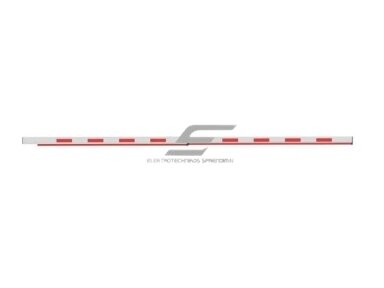
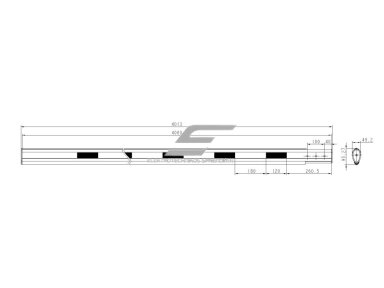
 Aluminium road barrier boom | boom for automatic barrier system | for barrier gate | 4m | 4000x44x110mm | red/white | Hikvision | DS-TMG001-3Code: DS-TMG001-3
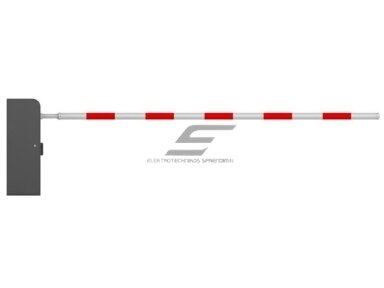
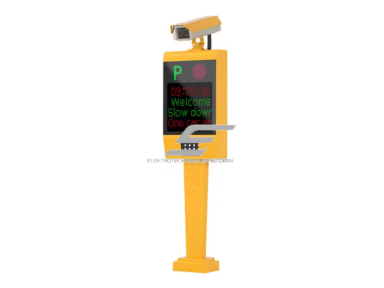
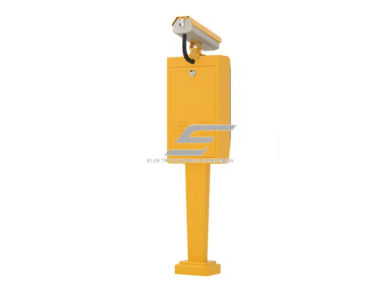 Automatic Vehicle License Plate Recognition System (ANPR / LPR) | 5MP Camera | 0.2 s Recognition | IP WeatherproofCode: ES-GDC1005
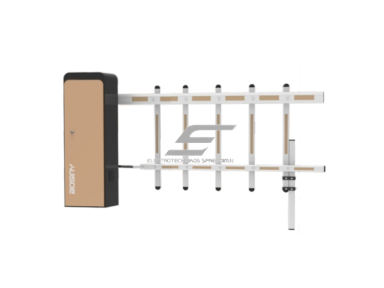
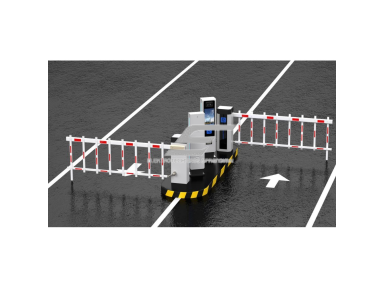 Automatic road barrier | boom gate | switch-controlled | protocol signal control | 4,5m | 230V | IP44Code: ES-BSN-B500/XF45
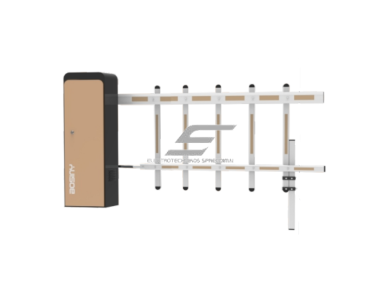
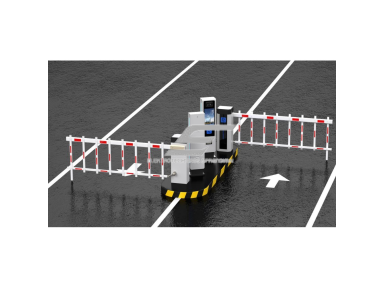 Automatic road barrier | boom gate | switch-controlled | protocol signal control | 3m | 230V | IP44Code: ES-BSN-B500/XF3
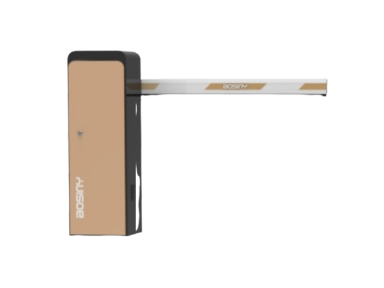
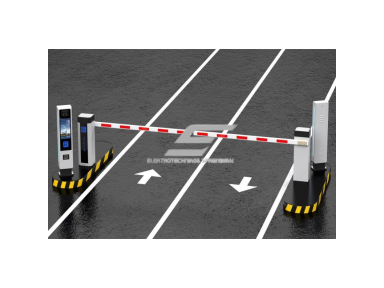 Automatic road barrier | boom gate | switch-controlled | protocol signal control | 6m | 230V | IP44Code: ES-BSN-B500/XS6
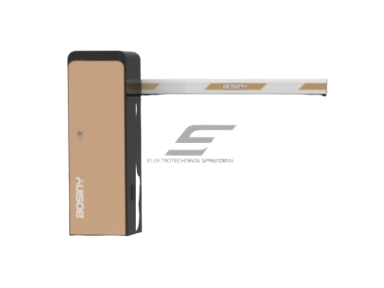
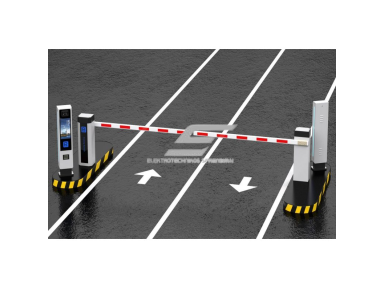 Automatic road barrier | boom gate | switch-controlled | protocol signal control | 3m | 230V | IP44Code: ES-BSN-B500/XS3
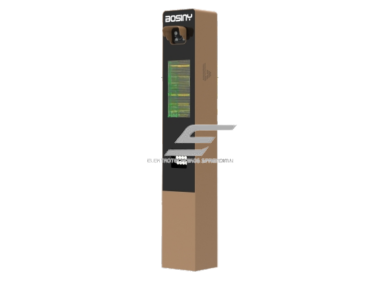
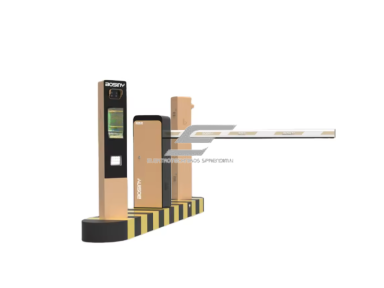 Automatic Vehicle License Plate Recognition System (ANPR) | for automated road barriers | boom gates | 3MP | 230VAC | 220x190x1350 mm | TCP/IPCode: ES-BSN-C600S/LE
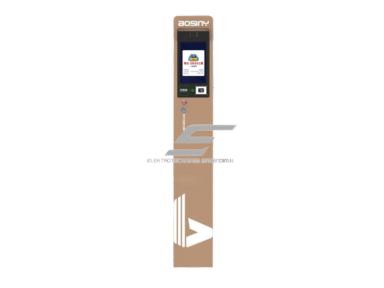
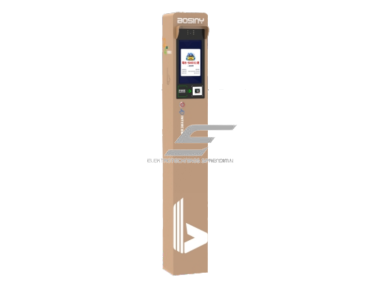 Self-service terminal with video intercom and QR payment support | for automated road barriers | boom gates | 2MP | 230V | 190x160x1350mm | TCP/IP | CloudCode: ES-BSN-P6000/LC
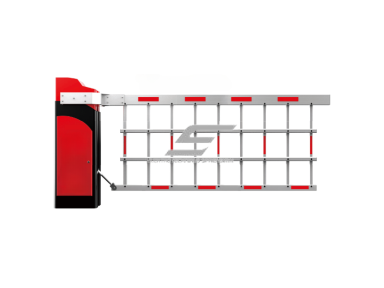
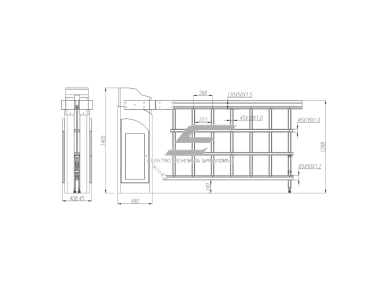 Automatic road barrier | boom gate with remote control | 6m | 250W | 230V | 433MHz | RS485 | IP44Code: ES-KJ01
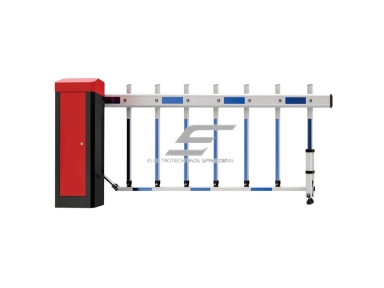
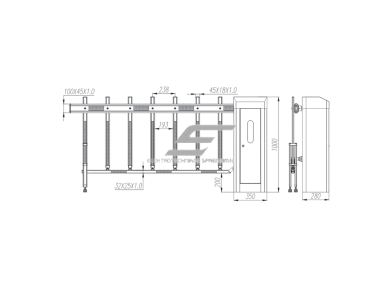 Automatic road barrier | boom gate with remote control | 6m | 80W | 230V | 433MHz | IP44Code: ES-D02
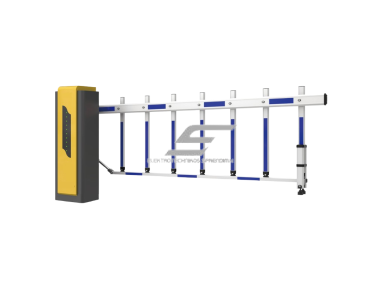
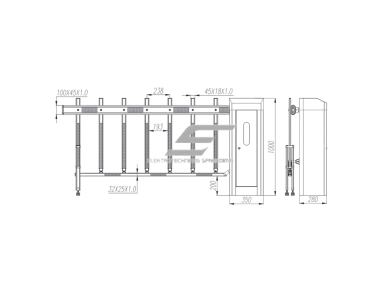 Automatic road barrier | boom gate with remote control | 6m | 80W | 230V | 433MHz | IP44Code: ES-TD01
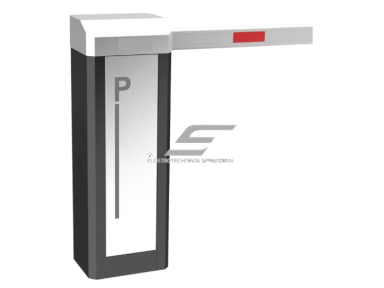
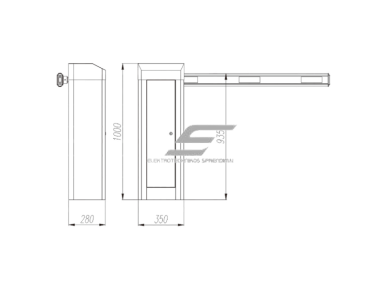 Automatic road barrier | boom gate with remote control | 6 m | 80 W | 230 V | 433 MHz | IP44Code: ES-D01
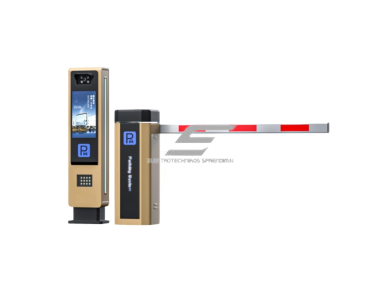
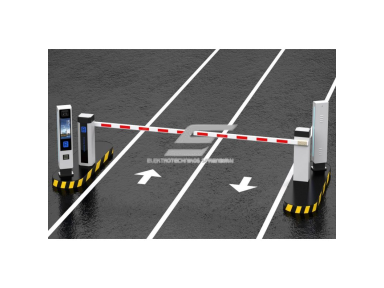 Automatic road barrier | boom barrier with ANPR license plate recognition system and remote control | 6m | 80W | 230V | 433MHz | IP44Code: ES-D05


