


Copper busbars for electrical energy transmission
-
Rigid copper busbars · electrolytic copper · 4 m lengths
Copper busbars | 20–160 mm | selection guide
Flat copper busbars for switchboard main bars, PE and N bars, transformer substations, UPS and battery systems. Below: busbar selection by current, the full range with cross-section and weight, and installation tips.
18sizes in stock range3–10 mmbar thickness20–160 mmbar width4 mbar length
 Asking: Kibirkštis – a young electrician who isn't afraid to ask. Answering: Fazė – an experienced engineer.Key point:
A busbar is chosen not by price per kilogram but by its continuous current rating. This depends not only on the cross-section but also on the shape: a thinner, wider bar has a larger cooling surface. For example, 30 × 10 mm and 60 × 5 mm both have 300 mm², yet DIN 43671 rates them at 573 A and 688 A (60 × 5 mm is a DIN table example, not in our range) respectively. Mounting position, enclosure temperature and whether the bar is painted also matter.Quick busbar selection by current
The smallest size in our range whose indicative DIN 43671 rating exceeds the stated load: one bare bar per phase, AC, ambient +35 °C, bar temperature +65 °C.
Load current Smallest busbar Current rating (DIN 43671) Typical application up to 160 A 20 × 3 mm 204 A Small board phase bars, PE or N bar up to 250 A 20 × 5 mm 274 A Sub-distribution board up to 400 A 40 × 5 mm 482 A Building main board, 250 kVA transformer (~361 A) up to 630 A 40 × 10 mm 715 A 400 kVA transformer, 0.4 kV side (~577 A) up to 800 A 50 × 10 mm 852 A 500 kVA transformer (~722 A) up to 1000 A 80 × 10 mm 1240 A 630 kVA transformer (~909 A) up to 1250 A 100 × 10 mm 1490 A 800 kVA transformer (~1155 A) up to 1600 A 120 × 10 mm 1740 A 1000 kVA transformer (~1443 A) up to 2000 A 160 × 10 mm 2220 A 1250 kVA transformer (~1804 A) ⚠ Check: DIN 43671 values are indicative. A painted bar dissipates heat better (rating about 15–20 % higher), while a higher temperature inside a closed enclosure reduces it. Two parallel bars per phase do not double the rating – expect roughly 1.6–1.8 times. The final decision rests with the switchboard designer under IEC 61439, including short-circuit withstand.Full range: dimensions, cross-section, weight
Click a size to open the product page. Weight is calculated with a copper density of 8.96 g/cm³.
Size (width × thickness, length) Cross-section kg/m Bar weight, kg DIN 43671, A Code · manufacturer 20 × 5 mm, 4 m 100 mm² 0.90 3.6 274 A ESV20X5 · Elsp Group 25 × 3 mm, 4 m 75 mm² 0.67 2.7 245 A ESV25X3 · Elsp Group 25 × 5 mm, 4 m 125 mm² 1.12 4.5 327 A ESV25X5 · Elsp Group 30 × 3 mm, 4 m 90 mm² 0.81 3.2 285 A ESV30X3 · Elsp Group 30 × 4 mm, 4 m 120 mm² 1.08 4.3 –* ESV30X4 · Elsp Group 30 × 5 mm, 4 m 150 mm² 1.34 5.4 379 A ESV30X5 · Elsp Group 30 × 6 mm, 4 m 180 mm² 1.61 6.5 –* ESV30X6 · Elsp Group 40 × 4 mm, 4 m 160 mm² 1.43 5.7 –* ESV40X4 · Elsp Group 40 × 5 mm, 4 m 200 mm² 1.79 7.2 482 A ESV40X5 · Elsp Group 50 × 5 mm, 4 m 250 mm² 2.24 9.0 583 A ESV50X5 · Elsp Group 60 × 6 mm, 4 m 360 mm² 3.23 12.9 –* ESV60X6 · Elsp Group 40 × 10 mm, 4 m 400 mm² 3.58 14.3 715 A ESV40X10 · Elsp Group 50 × 10 mm, 4 m 500 mm² 4.48 17.9 852 A ESV50X10 · Elsp Group 60 × 10 mm, 4 m 600 mm² 5.38 21.5 985 A ESV60X10 · Elsp Group 80 × 10 mm, 4 m 800 mm² 7.17 28.7 1240 A ESV80X10 · Elsp Group 100 × 10 mm, 4 m 1000 mm² 8.96 35.8 1490 A ESV100X10 · Elsp Group 120 × 10 mm, 4 m 1200 mm² 10.75 43.0 1740 A ESV120X10 · Elsp Group 160 × 10 mm, 4 m 1600 mm² 14.34 57.3 2220 A ESV160X10 · Elsp Group * This size is not listed in DIN 43671 – confirm the current rating with the manufacturer's data or ask us. Need another size or a project quantity? Write to us – we will send a quotation.
Where copper busbars are used
Distribution boards and MCCs
L1–L3, N and PE main bars, connections between the incoming switch-disconnector and circuit breakers.Transformer substations
0.4 kV side connections, incomers to LV switchboards, earthing main bars.UPS, batteries, solar plants
DC bars between batteries, inverters and DC boards, where currents are high and voltage is low.Earthing and bonding
Main earthing bar, equipotential bonding bars in industrial and IT rooms.Copper, aluminium or flexible busbar?
Busbar type When to choose What to consider Rigid copper (this category) Highest conductivity in a compact space, reliable bolted joints More expensive and heavier than aluminium Aluminium Long runs and large cross-sections where cost and weight matter Needs ~1.6 times the cross-section for the same resistance, plus Cu–Al transition joints Flexible copper Connections between devices, vibration, thermal expansion compensation More expensive, suited to short connections Tinned flexible Damp or aggressive environments, joints with aluminium Highest price Busbar accessories Supports, insulators, terminals, protective covers Select by bar width and thickness Installation: keep the joint cool
FazėA busbar rarely fails in the middle – it's the joints that overheat. So the key is preparing the contact surface and tightening correctly.- Clean contact surfaces to bare metal before jointing and apply contact (anti-oxidation) compound. Do not abrade tin-plated bars – cleaning and degreasing is enough.
- Use property class 8.8 bolts with disc spring (Belleville) washers and tighten with a torque wrench to the manufacturer's specified torque.
- Fix bars on insulated supports; set the support spacing according to the short-circuit current – long unsupported spans deform during a short circuit.
- Bend only with a proper tool, observing the minimum bending radius for the bar thickness – a crack at the bend increases resistance.
- On long runs and at device terminals use flexible connectors – they compensate for thermal expansion and vibration.
- Mark the phases (L1, L2, L3, N, PE) and cover live bare parts with protective covers.
✗ Most common mistakes- Bar chosen by cross-section only, ignoring the temperature inside a closed enclosure – nearby devices and insulation overheat.
- Joint without compound and disc spring washers – it loosens over time, resistance rises, the joint heats up.
- Copper bar bolted directly to aluminium – galvanic corrosion, the joint burns out within a few years.
- Two bars per phase counted as double current – in reality only ~1.6–1.8 times more.
Diagram: bolted busbar joint – wrong and correct
Diagram. Bolted busbar joint. The DIN 43671 current rating only applies when the joint adds no extra resistance. A poorly made joint runs hotter than the rest of the bar, oxidises and gets hotter over time. Left – the most common mistakes, right – the correct solution; the numbers match the notes in the diagram.
KibirkštisThe bar was sized from the table, yet the joint still runs hot. Why?
FazėUsually it is not the cross-section but the joint: too small an overlap, uncleaned surfaces or loose bolts. Connect it as shown on the right and check the loaded switchboard with a thermal camera after commissioning.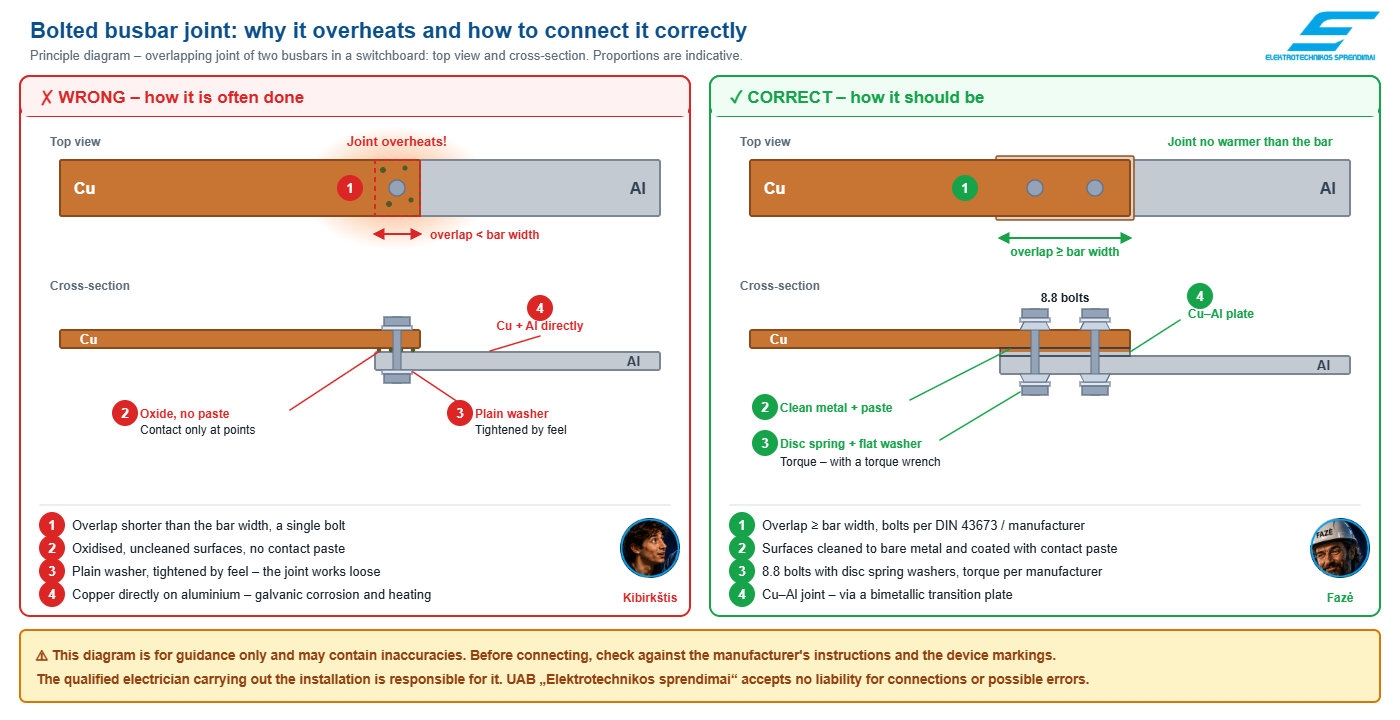 ☝ Click the diagram to open the enlarged version.⚠ This diagram is for guidance only and may contain inaccuracies. Before connecting, check against the manufacturer's instructions and the device markings.
The qualified electrician carrying out the installation is responsible for it. UAB „Elektrotechnikos sprendimai“ accepts no liability for connections or possible errors.What current means in kW
Indicative power by current: in a three-phase 400 V system P = √3 × 0.4 kV × I × cos φ ≈ 0.693 × I × cos φ kW, in a single-phase 230 V system P = 0.23 × I × cos φ kW. For motors cos φ is usually 0.8–0.9, so the real connected power is lower.
Load current 400 V, 3~, cos φ = 1 230 V, 1~, cos φ = 1 100 A 69.3 kW 23.0 kW 160 A 110.9 kW 36.8 kW 250 A 173.2 kW 57.5 kW 400 A 277.1 kW 92.0 kW 630 A 436.5 kW 144.9 kW 1000 A 692.8 kW 230.0 kW 1600 A 1108.5 kW 368.0 kW 2000 A 1385.6 kW 460.0 kW FAQ
KibirkštisWhat copper are the busbars made of?
FazėElectrolytic tough pitch copper (Cu-ETP, EN 13601) – about 99.9 % Cu, conductivity about 58 MS/m, density 8.96 g/cm³.
KibirkštisCan a busbar be used for DC?
FazėYes. There is no skin effect with DC, so the rating is equal to or slightly higher than for AC. For battery and solar DC bars a wider bar is often chosen to reduce voltage drop.
KibirkštisHow do I size N and PE bars?
FazėThe N bar is usually the same cross-section as the phases – especially with non-linear loads (LED, inverters, UPS) that increase neutral current. PE is sized to IEC 60364-5-54: for phase cross-sections above 35 mm², usually at least half the phase cross-section.
KibirkštisHow much does a 4 m bar weigh?
FazėWeight = width × thickness × length × 8.96 g/cm³. For example, 100 × 10 mm × 4 m ≈ 35.8 kg – plan two people or a lifting aid.
KibirkštisCan a busbar be painted or insulated?
FazėYes. A painted bar dissipates heat better, and heat-shrink insulation protects against accidental contact. Leave the contact areas unpainted.Copper busbars for switchboards and projects
We will help you size the busbar by current and supply supports, insulators and flexible connectors. For project quantities we prepare an individual quotation.
☎ +370 620 72733✉ info@elsprendimai.eu 1 - 16 of 27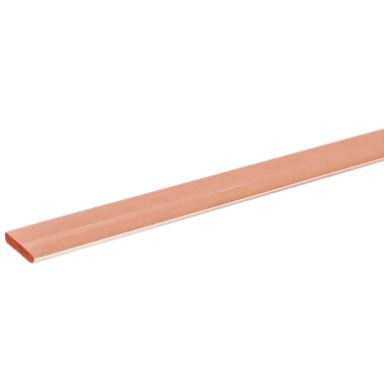
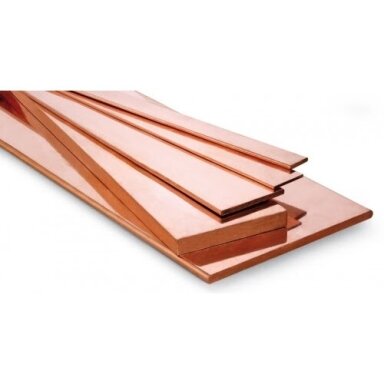
 Copper busbar | 160 × 10 mm | 4 m | Elsp Group | ESV160X10Code: ESV160X10Price 1394.56 € VAT incl.( 1152.53 € VAT excl. )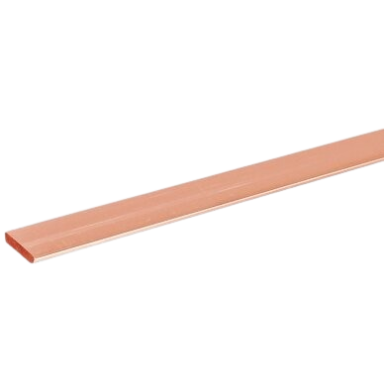
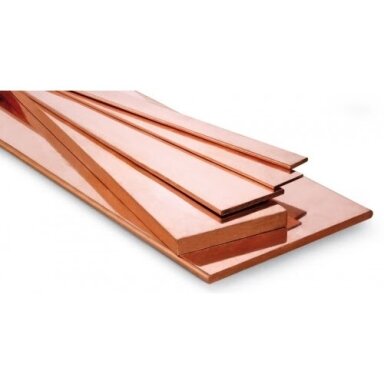 Copper busbar | 120 × 10 mm | 4 m | Elsp Group | ESV120X10Code: ESV120X10Price 1046.05 € VAT incl.( 864.50 € VAT excl. )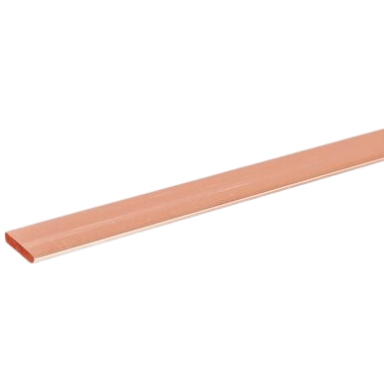
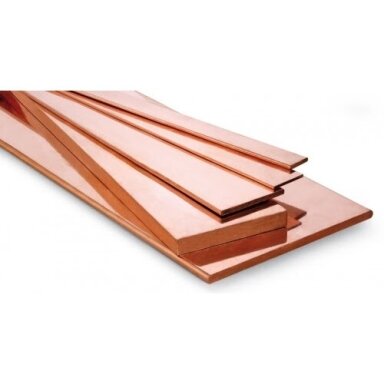 Copper busbar | 100 × 10 mm | 4 m | Elsp Group | ESV100X10Code: ESV100X10Price 871.66 € VAT incl.( 720.38 € VAT excl. )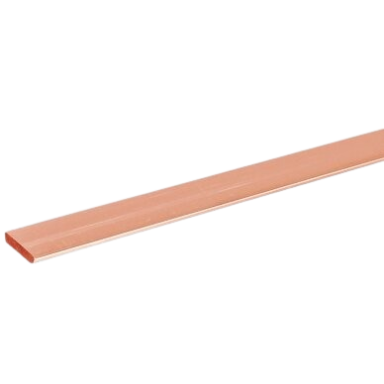
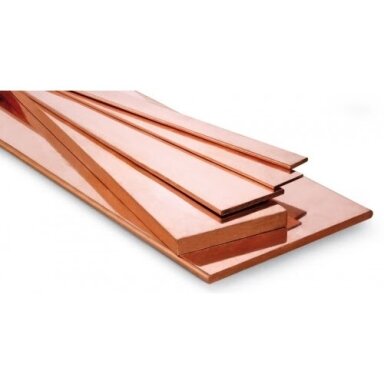 Copper busbar | 80 × 10 mm | 4 m | Elsp Group | ESV80X10Code: ESV80X10Price 697.29 € VAT incl.( 576.27 € VAT excl. )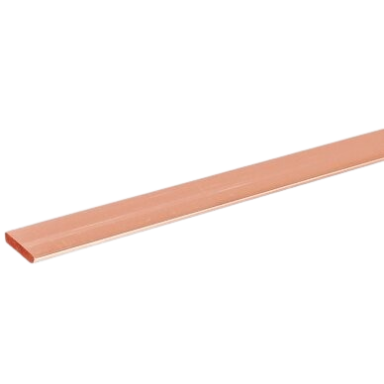
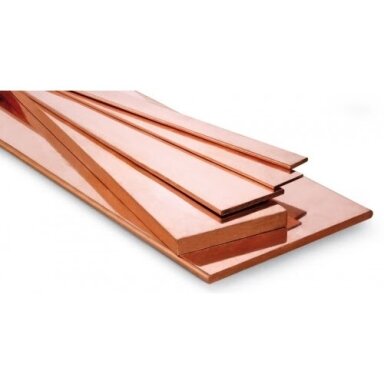 Copper busbar | 60 × 10 mm | 4 m | Elsp Group | ESV60X10Code: ESV60X10Price 522.90 € VAT incl.( 432.15 € VAT excl. )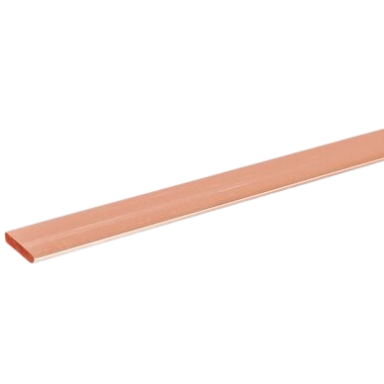
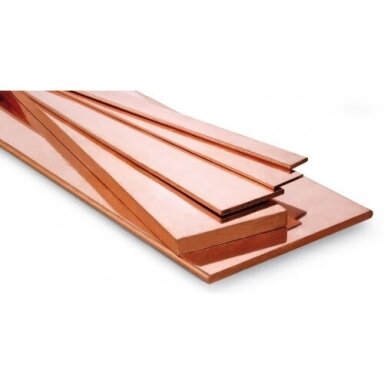 Copper busbar | 60 × 6 mm | 4 m | Elsp Group | ESV60X6Code: ESV60X6Price 313.74 € VAT incl.( 259.29 € VAT excl. )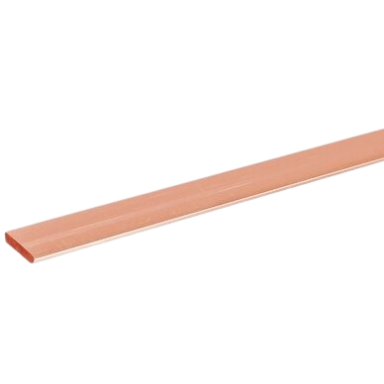
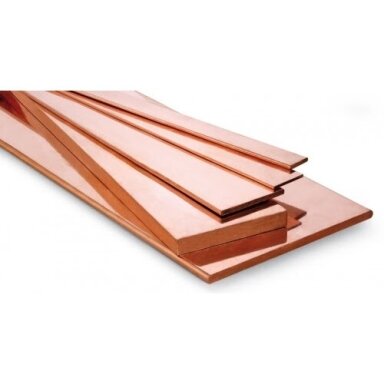 Copper busbar | 50 × 10 mm | 4 m | Elsp Group | ESV50X10Code: ESV50X10Price 435.83 € VAT incl.( 360.19 € VAT excl. )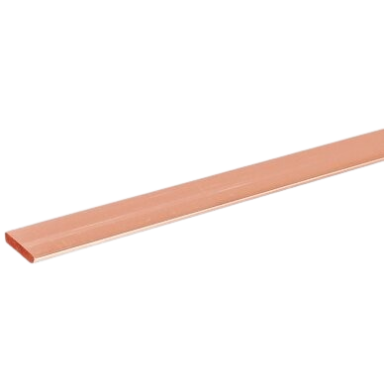
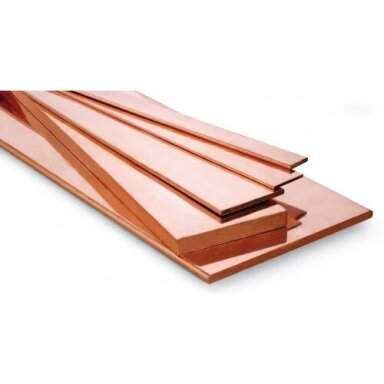 Copper busbar | 50 × 5 mm | 4 m | Elsp Group | ESV50X5Code: ESV50X5Price 217.92 € VAT incl.( 180.10 € VAT excl. )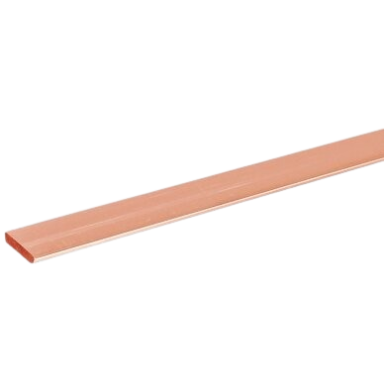
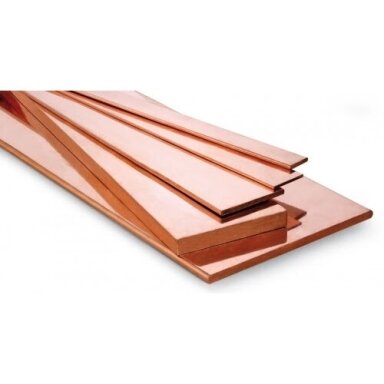 Copper busbar | 40 × 10 mm | 4 m | Elsp Group | ESV40X10Code: ESV40X10Price 348.76 € VAT incl.( 288.23 € VAT excl. )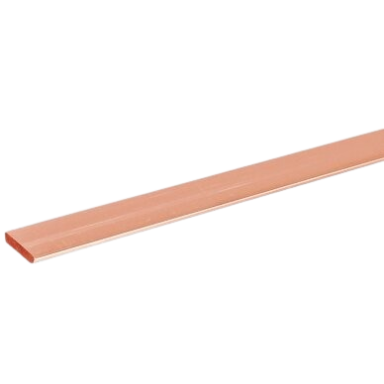
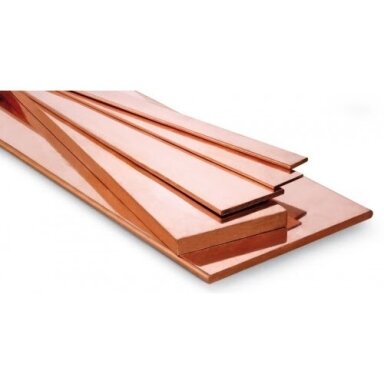 Copper busbar | 40 × 4 mm | 4 m | Elsp Group | ESV40X4Code: ESV40X4Price 139.36 € VAT incl.( 115.17 € VAT excl. )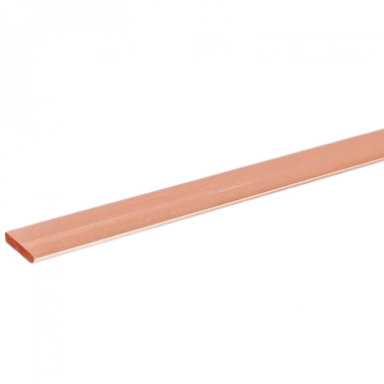
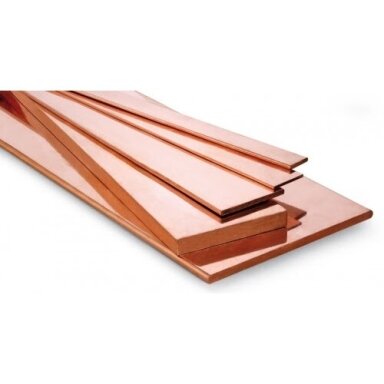 Copper busbar | 40 × 5 mm | 4 m | Elsp Group | ESV40X5Code: ESV40X5Price 174.39 € VAT incl.( 144.12 € VAT excl. )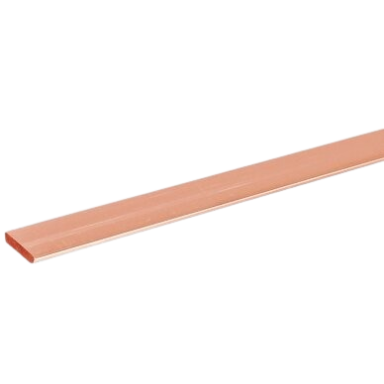
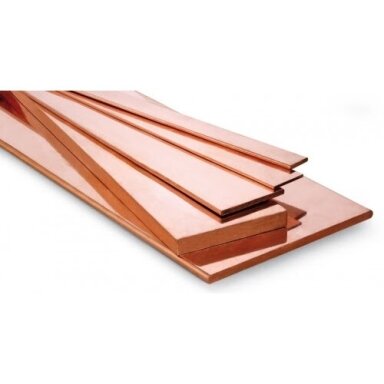 Copper busbar | 30 × 6 mm | 4 m | Elsp Group | ESV30X6Code: ESV30X6Price 156.88 € VAT incl.( 129.65 € VAT excl. )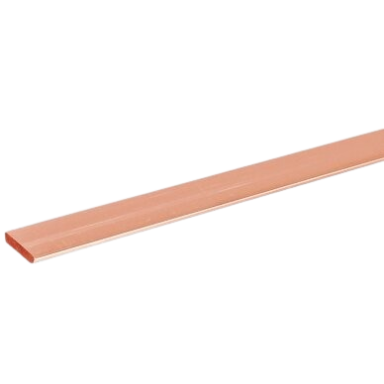
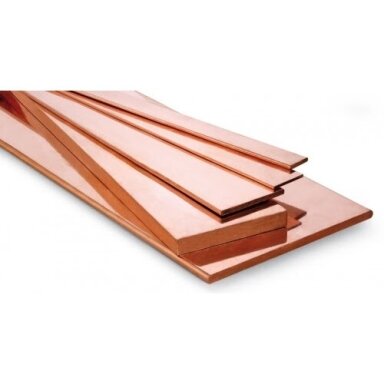 Copper busbar | 30 × 5 mm | 4 m | Elsp Group | ESV30X5Code: ESV30X5Price 130.85 € VAT incl.( 108.14 € VAT excl. )
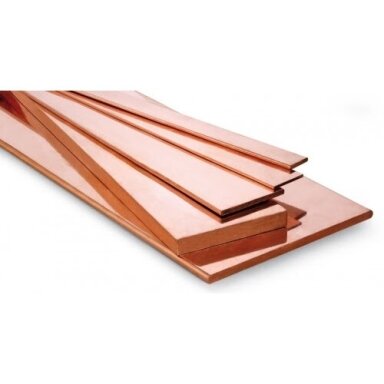 Copper busbar | 30 × 4 mm | 4 m | Elsp Group | ESV30X4Code: ESV30X4Price 104.58 € VAT incl.( 86.43 € VAT excl. )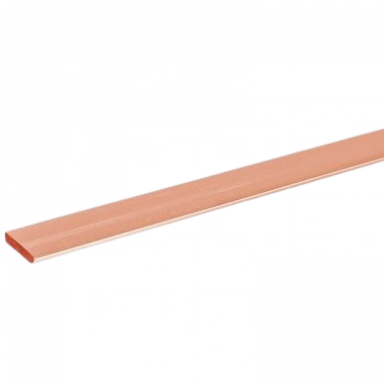
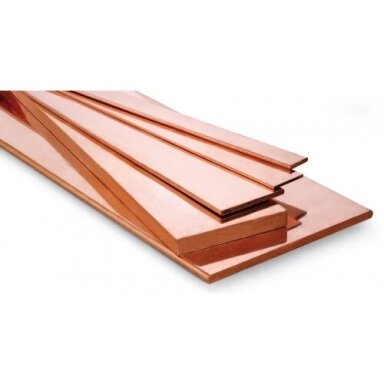 Copper busbar | 30 × 3 mm | 4 m | Elsp Group | ESV30X3Code: ESV30X3Price 78.55 € VAT incl.( 64.92 € VAT excl. )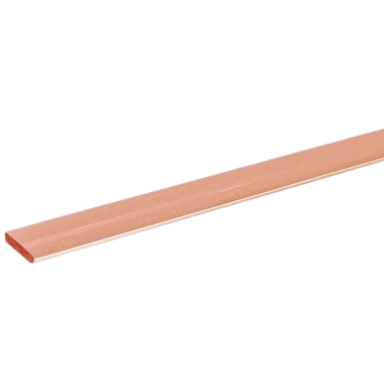
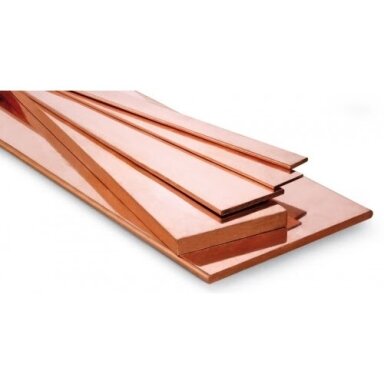 Copper busbar | 25 × 5 mm | 4 m | Elsp Group | ESV25X5Code: ESV25X5Price 108.96 € VAT incl.( 90.05 € VAT excl. )


