ELECTRICAL SAFETY · RESIDUAL CURRENT PROTECTION · DIN MODULAR EQUIPMENT
Promfactor Baltic residual current devices | RCCB and RCBO selection guide
How to choose an RCD by 30 mA or 300 mA sensitivity, rated current, number of poles, type AC / A, circuit-breaker characteristic and the protection needs of the electrical circuit.
RCCB / RCBO
Two types of protective devices
30 mA
Additional protection of persons
AC / A
Residual current detection types
2P / 4P
Circuit pole options

 Kibirkštis asks, Fazė answers – explanations on selecting and installing electrical protection.
Key point
Residual current protection must be selected according to the actual purpose of the electrical circuit. 30 mA and 300 mA devices are not universal substitutes for each other, and in the 40 A / 30 mA marking the numbers describe two different properties: the rated current of the device and its residual tripping sensitivity. A standalone RCCB must be protected against overcurrent by properly selected devices, while an RCBO combines residual current and overcurrent protection in one housing.
Quick RCD selection by electrical circuit
First determine what protection is required: against residual current only, or also against overload and short circuit. Then check the residual current waveform, sensitivity, rated current, number of poles and compatibility with other protective devices.
|
Circuit requirement |
Selection direction |
What to check? |
|
Single-phase socket-outlet circuit |
30 mA type A RCBO, or RCCB with separate suitable overcurrent protection |
Load current, cable, breaker characteristic |
|
Individual appliance with electronic control |
Type A or the special residual current protection type required |
Possible pulsating or smooth DC residual currents |
|
Three-phase system protection |
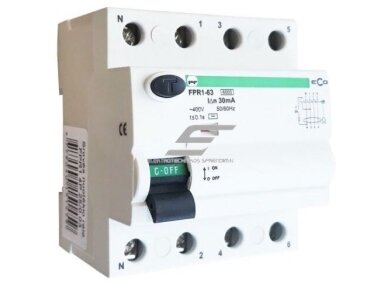
Suitable 4P RCCB or RCBO of the intended design |
Connection of phases and N conductor, PE separation |
|
Several individually protected circuits |
Separate RCBO for each circuit |
Panel space, selectivity, overcurrent parameters |
|
General distribution or fire-risk reduction protection |
100 mA or 300 mA RCCB as per design; selective version if needed |
Whether type S selectivity and additional 30 mA devices are needed |
|
Converters, frequency inverters, EV charging |
Type A, F, B or a special residual current detection system, depending on the equipment |
Equipment manual; type AC or A may be insufficient |
30 mA does not mean 30 A. 30 mA = 0.03 A is the rated residual operating current. For example, in a 40 A / 30 mA device, 40 A is the rated current and 30 mA is the residual current protection sensitivity.
Range and key parameter comparison
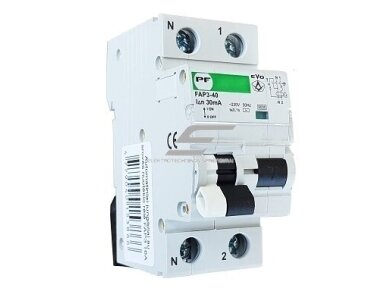
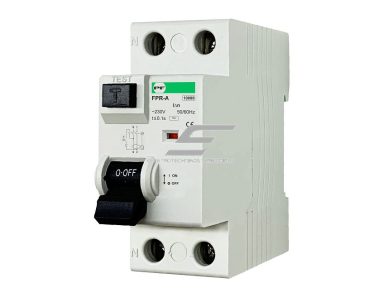
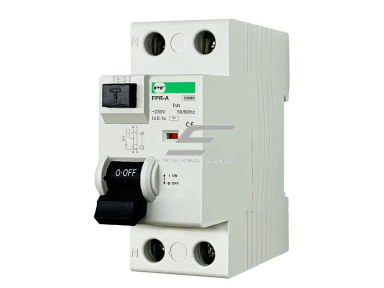
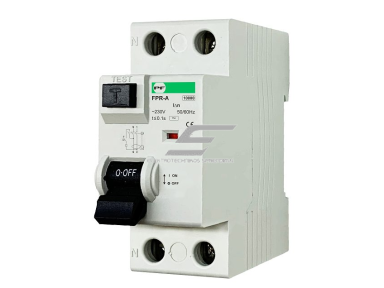
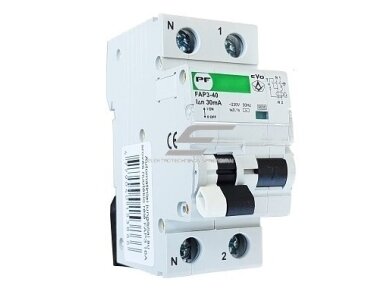
Promfactor Baltic residual current devices are divided into standalone RCCBs and combined RCBOs. Rated currents, number of poles, residual sensitivity, breaking capacity and tripping type may differ between series.
|
Device group |
Poles |
Sensitivity |
Type |
Function |
|
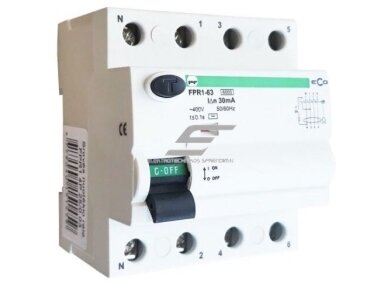
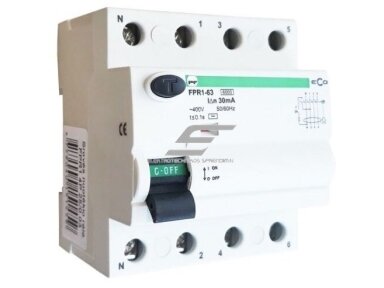
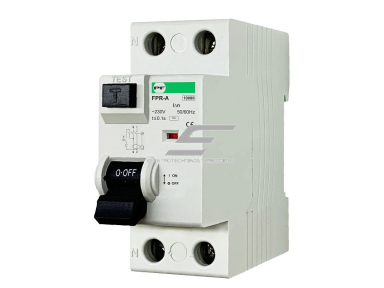
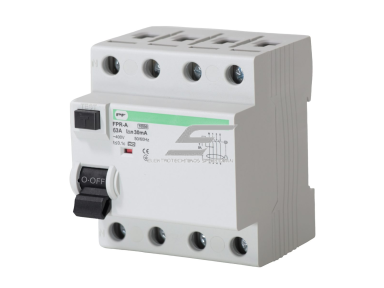
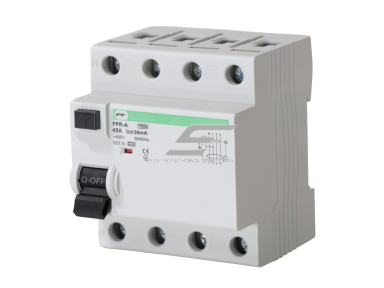
FPR series RCCB |
2P / 4P |
30 mA, 300 mA and others depending on model |
AC / A |
Residual current protection |
|
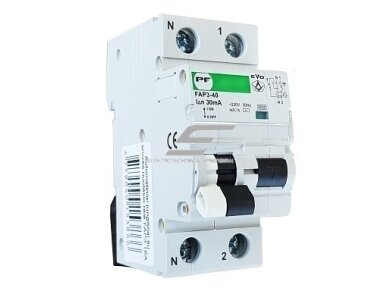
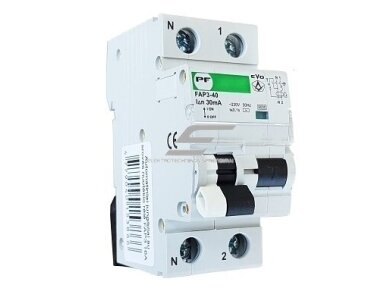
FAP series RCBO |
1P+N / 2P depending on design |
Typically 30 mA |
AC / A |
Residual current, overload and short-circuit protection |
|
FAP B characteristic |
Depending on model |
Depending on model |
AC / A depending on version |
Type B characteristic overcurrent protection |
|
FAP C characteristic |
Depending on model |
Depending on model |
AC / A depending on version |
Type C characteristic overcurrent protection |
Important: a single common product group description does not mean that every product has all the listed functions. Rated currents, breaking capacity and specific standards are checked on the product page.
Meaning of the key parameters
|
Parameter |
Meaning |
|
In (A) |
Rated current of the device, e.g. 25 A, 40 A or 63 A. |
|
IΔn (mA) |
Rated residual operating current, e.g. 30 mA or 300 mA. |
|
Type AC / A |
Type of residual current waveforms detected. |
|
2P / 4P |
Number of device poles, related to the connection of the electrical system. |
|
B / C |
RCBO circuit-breaker instantaneous electromagnetic tripping characteristic. |
|
6 / 10 kA |
RCBO short-circuit breaking capacity class depending on the specific model; this is not the residual sensitivity. |
|
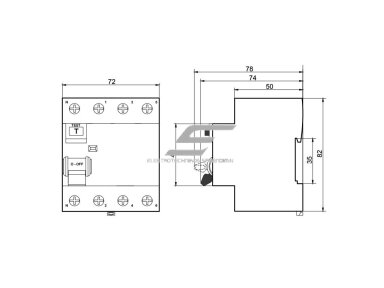
TEST / T |
Device test function, if provided in its design. |
Selection by phases and breaking capacity
All Promfactor Baltic residual current protection products in this group, divided into single-phase (1P+N, 2P) and three-phase (4P) circuits. RCBOs are additionally grouped by short-circuit breaking capacity Icn – 6 kA or 10 kA. Click a phase card or use the filters; the product name links to its product page.
Interactive table is loading…
Select the breaking capacity (Icn) according to the prospective short-circuit current at the installation point. The final decision is made by the designer or a qualified electrician; UAB „Elektrotechnikos sprendimai“ is not responsible for selection based solely on this table.
Residual sensitivity: 30, 100 and 300 mA – what is the difference?
|
IΔn |
Main selection direction |
Important note |
|
30 mA |
Additional protection against electric shock in accordance with the applicable installation rules. |
Common choice for socket-outlet circuits and other designated final circuits. |
|
100 mA |
Certain distribution, fault protection or selectivity schemes. |
Does not replace 30 mA additional protection where it is required. |
|
300 mA |
Certain fire-risk reduction and higher-level distribution circuits. |
Not intended to directly replace 30 mA additional protection of persons. |
Do not assume that a 300 mA model is “better” than 30 mA simply because its number is larger. The lower the IΔn value, the more sensitive the device is to residual current, but the appropriate sensitivity depends on the protection objectives and the entire electrical system.
Type AC and type A RCDs – the essential difference
Type AC
Designed to detect sinusoidal alternating residual currents. Selected only where this is sufficient for the nature of the circuit loads and the applicable requirements.
Type A
Detects sinusoidal alternating and pulsating direct residual currents of specified waveforms. Often important in circuits with electronic power supplies and controllers.
Frequency converters and inverters: Type A is not universal for all electronic equipment. Some systems may require type F or B, or a separate DC residual current detection function. Such requirements are determined by the manual of the specific equipment.
Operating principle – how is residual current detected?
A residual current device monitors the balance of the currents in the live conductors passing through its measuring system. In a single-phase system it evaluates the difference between the phase and neutral conductor currents, and in a three-phase system the sum of the currents in all relevant live conductors.
1. Normal operation
The current entering the circuit returns through the intended live conductors.
2. Insulation fault
Part of the current flows along an unintended path, for example through earthed parts.
3. Residual current detection
The resulting imbalance is detected by the device's measuring mechanism.
4. Disconnection
The device trips according to its sensitivity, type and time characteristics.
An RCD does not detect whether a person is receiving an electric shock – it responds to residual current. Therefore, the protection must be coordinated with the PE conductor, a suitable earthing system, automatic disconnection and other electrical safety measures.
Where are Promfactor Baltic RCDs used?
Houses and apartments
For socket-outlet, lighting and household appliance circuits.
Offices and shops
For protecting circuits of individual work areas, equipment and distribution boards.
Industry
For protecting control, auxiliary and other circuits according to the requirements of the specific site.
Damp locations
For additional circuit protection, combined with the required IP rating, earthing and zone protection.
RCCB, RCBO and a standard circuit breaker – what is the difference?
|
Protection function |
RCCB |
RCBO |
MCB |
|
Residual current detection |
YES |
YES |
NO |
|
Overload protection |
NO |
YES |
YES |
|
Short-circuit protection |
NO |
YES |
YES |
|
Common standard |
IEC 61008-1 |
IEC 61009-1 |
IEC 60898-1 |
Practical example: A 40 A / 30 mA RCCB provides residual current protection, but a separate protective device must ensure proper overcurrent protection. A 16 A / 30 mA type B characteristic RCBO has both functions in one unit.
Installation in the distribution board – key principles
1. Select the device
By purpose, rated current, IΔn, number of poles, type and circuit characteristics.
2. Check the board
Mounting space, DIN rail, wiring and equipment layout.
3. Connect the live conductors
Connect all live conductors of the relevant circuit according to the specific device's wiring diagram.
4. Keep neutral conductors separate
Do not mix the neutral conductor connections of circuits protected by different RCDs.
5. Check PE
The protective conductor is connected according to the installation diagram, not through the RCD measuring circuit.
6. Carry out tests
Check correct installation, protection operation and tripping parameters using suitable test instruments.
Neutral conductor connection: incorrectly interconnected neutral conductor circuits of different RCDs can cause nuisance tripping and dangerous operating conditions. The wiring diagram must be followed precisely.
Electrical safety: connection work must be carried out by qualified specialists after safely isolating the supply and verifying the absence of voltage. An RCD must not be used as a substitute for a faulty electrical installation.
Diagram: wrong and right – choosing RCCB and RCBO
✗ WRONG
Electrical circuit
↓
Only an RCCB installed
Overload and short-circuit protection not considered
↓
Incomplete circuit protection
An RCCB does not have the overcurrent protection function of a circuit breaker.
✓ RIGHT
Circuit load and design
↓
Suitable RCBO or RCCB + overcurrent protection
Voltage, current and sensitivity verified
↓
Coordinated protection system
Residual current and overcurrent protection selected according to the actual circuit requirements.
TEST button, tripping time and periodic inspection
Residual current devices usually have a test button marked T or TEST. Its purpose is to create an internal test condition and check whether the protective mechanism trips. The test is performed in accordance with the device instructions.
|
Check |
What does it show? |
|
TEST button |
The function of the internal test and tripping mechanism under specified conditions. |
|
RCD tester |
Tripping current, time or other parameters required by the test method. |
|
Installation inspection |
Whether the circuits, PE / N system and protection are correctly installed. |
The TEST button does not replace a full inspection of the electrical installation. The actual tripping time depends on the device type, the residual current and the test method applied. It should not be claimed that every RCD always trips within the same number of milliseconds.
Technical standards and protection coordination
-
IEC / EN 61008-1 – general requirements for RCCBs without integral overcurrent protection.
-
IEC / EN 61009-1 – requirements for RCBOs combining residual current and overcurrent protection.
-
IEC / EN 62423 – additional requirements for type F and type B residual current devices, where applicable.
-
LST HD 60364 – requirements for the design, protection and erection of low-voltage electrical installations.
-
IEC / EN 61557-6 – requirements for measuring equipment for testing the effectiveness of residual current devices.
The device's compliance with a specific standard, rated voltage, current, type, wiring diagram, tripping time and other characteristics are assessed according to the documentation of the specific model.
FAQ – Kibirkštis asks, Fazė answers
10 practical questions about “Promfactor Baltic” residual current protection, the differences between RCCB and RCBO, residual current sensitivity, AC / A types, installation and periodic testing.
Kibirkštis asks · 01 What is the difference between an RCCB and an RCBO?
Fazė answers An RCCB responds to residual current but has no inherent protection against overloads and short circuits. An RCBO combines residual current, overload and short-circuit protection in one device. If an RCCB is used, overcurrent protection must be ensured by properly coordinated additional devices.
Kibirkštis asks · 02 What do 40 A and 30 mA mean on one residual current device?
Fazė answers 40 A is the rated current of the device, and 30 mA – the rated residual operating current. These parameters are not related in such a way that the device automatically protects against overload at 40 A. If it is an RCCB, 40 A means its rated current class, and overcurrent protection must be provided by other properly selected devices.
Kibirkštis asks · 03 Is a 300 mA RCD better than a 30 mA one?
Fazė answers No. A 30 mA device is more sensitive and is often used for additional protection of persons. 300 mA may be selected for certain distribution or fire risk reduction functions. If 30 mA additional protection is required in a particular circuit, it must not be replaced by a 300 mA device merely to reduce nuisance tripping.
Kibirkštis asks · 04 Is a type A RCD better suited to modern household appliances?
Fazė answers Often yes, because type A detects not only sinusoidal alternating but also certain pulsating direct residual currents that can occur in electronic equipment. However, some frequency converters, inverters and other special equipment require additional requirements or a different RCD type. The final choice depends on the characteristics of the connected equipment.
Kibirkštis asks · 05 Does a three-phase system need a 4P RCD?
Fazė answers In a three-phase system with a neutral conductor, a 4P device is often used, through which all three phases and N are routed according to the wiring diagram. For three-phase circuits without N, suitability depends on the design and instructions of the specific device. Most importantly – all live conductors of the protected circuit must be properly included in the residual current measurement, and the PE conductor is not routed through the RCD.
Kibirkštis asks · 06 Why does the RCD sometimes trip although I see no obvious fault?
Fazė answers The cause may be damaged insulation, moisture, the sum of natural leakage currents of several devices, an incorrect N and PE connection or mixing of neutral conductors of different RCD circuits. Switching transients of equipment are also possible. A 30 mA device should not be arbitrarily replaced with a 300 mA one – first the actual cause of tripping must be found.
Kibirkštis asks · 07 Will an RCD work if there is no PE conductor in the installation?
Fazė answers An RCD can detect residual current even without a PE conductor, but this does not mean that such an installation is safe or compliant. If the equipment enclosure must be earthed, the absence of a protective conductor can lead to dangerous situations. An RCD is not a substitute for protective earthing.
Kibirkštis asks · 08 What do the B or C characteristics on an RCBO mean?
Fazė answers B and C describe the tripping of the circuit breaker's electromagnetic protection at higher currents. The B characteristic often suits circuits with lower inrush currents, and C – where higher starting currents must be taken into account. However, C must not be chosen simply so that the breaker trips less often – the short-circuit current and disconnection conditions must be checked. This is not the AC or A residual current type marking.
Kibirkštis asks · 09 Is pressing the TEST button enough to know that the RCD is working properly?
Fazė answers The TEST button checks the operation of the device's internal test mechanism under specified conditions, but it does not replace electrical measurements. During an installation inspection, a qualified specialist uses a measuring instrument to assess the tripping characteristics and the adequacy of the entire protection system. The TEST button should be used periodically according to the instructions of the specific device.
Kibirkštis asks · 10 What data should be provided to select the right RCD?
Fazė answers Specify whether the system is single-phase or three-phase, the circuit voltage, load current, whether an RCCB or RCBO is needed, the desired residual current sensitivity, the type of appliances and the existing protection scheme. If an RCBO is required, the B / C characteristic and the short-circuit breaking capacity requirements are also important. Based on this data, the protective device can be selected more accurately.
Kibirkštis and Fazė remind you
A residual current device is selected for the whole electrical circuit. It is important to coordinate the RCCB or RCBO function, rated current, residual current sensitivity, tripping type, overcurrent protection parameters and the earthing system of the electrical installation.
“Promfactor Baltic” residual current devices for distribution boards
Choose an RCCB or RCBO according to the circuit protection needs, residual current sensitivity, rated current, number of poles and AC / A type. If you need help, provide the circuit parameters and the desired protection function.
View residual current devices Contact us
Protection, installation and testing of electrical circuits must comply with the technical parameters of the specific device and the applicable electrical safety requirements.
Functionality:
Leakage relays operate by monitoring the current balance between the phase and neutral wire. If the system detects a leak (for example, when part of the current flows to the ground), the relay reacts quickly, disconnecting the power supply to minimize potential damage.
Key Features:
Protection Levels:
Leakage relays often offer various protection levels, allowing users to select appropriate sensitivity (e.g., 30mA, 100mA, 300mA) depending on the application.
Fast Reaction:
These relays ensure quick response to leaks, typically within milliseconds, thereby reducing the risk of damage.
Design:
Leakage relays are compact and easy to install, often mounted on a DIN rail, which facilitates integration into existing electrical systems.
Reliability:
Made using high-quality components to ensure long-term operation and low failure rates.
LED Indicators:
Relays typically feature an LED indicator that informs users about operational status, signaling leak detection or relay operation.
Testing Function:
Most models come with a test button, allowing users to periodically check the functionality of the relay.
Applications:
Promfactor Baltic leakage relays are widely used in residential, commercial, and industrial electrical systems. They can be utilized in:
Household Systems: Protecting home electrical networks.
Industry: Ensuring safety in production lines and other industrial environments.
Commercial Properties: Safeguarding electrical systems in offices and shopping centers.
Advantages:
Safety: Reduces the risk of electric shock and fire, protecting individuals and property.
Additional Security: Provides extra safety in areas with high moisture or liquid risk.
Easy Integration: Simple to integrate into existing electrical systems.
Disadvantages:
Cost: Initial investment costs may be higher compared to standard protection systems.
Technical Knowledge: Some users may require specialized knowledge to properly configure and maintain the relay.
Improper Use: If the relay is incorrectly configured, it may trigger unnecessarily, causing power interruptions.
Promfactor Baltic leakage relays are a reliable and effective safety measure, ensuring security in electrical systems and reducing the risk posed by leaks.
Selection by phase and breaking capacity
All „Promfactor Baltic“ residual current protection products in this group, divided into single-phase (1P+N, 2P) and three-phase (4P) circuits. RCBO breakers are additionally grouped by short-circuit breaking capacity Icn – 6 kA or 10 kA. Click a phase card or use the filters; the product name links to its page.
Choose the breaking capacity (Icn) according to the prospective short-circuit current at the installation point. The final decision is made by the designer or a qualified electrician; UAB „Elektrotechnikos sprendimai“ is not responsible for selection based solely on this table.

 1 - 24 of 124


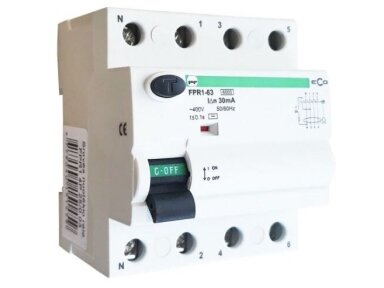
 Modular residual current device | 4P | 25A | 0,03A | type A | DIN | ECO FPR-A | Promfactor Baltic | FPR4025030A | 4779040159585Code: FPR4025030A