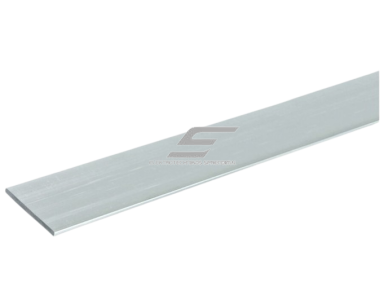
Aluminium power distribution busbar | 6x80mm | 4m | AD31T
Code: YBA10-06-080Price 50.38 € VAT incl.( 41.64 € VAT excl. )AD31T aluminium current distribution busbar – a rectangular electrical-grade aluminium strip designed for conductive connections in electrical distribution boards, control cabinets and other electrical equipment. Busbar dimensions – 6 × 80 mm, cross-section – 480 mm², length – 4 m, approximate weight – 1.3 kg/m. The busbar is uninsulated, while the permissible operating current and mounting solution must be selected according to the specific project conditions; the price is indicated for one 4 m long busbar.
-
Aluminium current distribution busbar | 6 × 80 mm | 4 m | 480 mm² | AD31T
AD31T aluminium electrical current distribution busbar – a rectangular-section electrical-grade aluminium strip designed for conductive connections in electrical distribution boards, control cabinets and electrical equipment. Busbar dimensions – 6 × 80 mm, geometric cross-sectional area – 480 mm², total length – 4000 mm (4 m). Approximate linear weight – 1.3 kg/m, while the total weight of the 4 m busbar is about 5.2 kg. The busbar is used in electrical power distribution and equipment interconnection assemblies where a rigid metallic current-carrying connection is required. The permissible operating current must be determined separately, taking into account installation, cooling, temperature and connection conditions. The price is stated for one 4 metre long busbar.
Key point:
In electrical distribution equipment, current-carrying connections must be selected not only according to their geometric cross-section but also according to their electrical, thermal and mechanical operating conditions. The AD31T aluminium 6 × 80 mm busbar provides a conductor cross-section of 480 mm² and can be used in power distribution or equipment interconnection structures. Its flat shape allows various busbar layouts and contact connection solutions to be designed. Proper use requires evaluation of operating current, temperature rise, busbar mounting, contact design and resistance to short-circuit effects.Dimensions
6 × 80 mmCross-section
480 mm²Length
4000 mm | 4 mMaterial / weight
AD31T | ≈ 1.3 kg/mOperating principle
An aluminium current distribution busbar is a rigid metallic conductor used to create an electrical connection between elements of electrical distribution or control equipment. Electric current flows through the conductive aluminium busbar material, while connections to other components are made using contact joints designed for the specific structure.
The rectangular 6 × 80 mm profile has a thickness of 6 mm and a width of 80 mm. The geometric cross-sectional area is calculated by multiplying the thickness by the width: 6 × 80 = 480 mm². This parameter describes the conductor cross-section but does not by itself determine the permissible operating current.
AD31T electrical-grade aluminium is used for the current-carrying busbar structure. When selecting a busbar, the electrical and mechanical characteristics of the specific material must be evaluated, especially when high currents or significant mechanical loads are expected.
Permissible current load depends on ambient temperature, busbar cooling, its position, arrangement of adjacent busbars, contact joints and permissible temperature rise. Therefore, the 480 mm² cross-section alone is not sufficient to determine a specific permissible current in amperes.
Busbar contact joints must be prepared in a manner suitable for aluminium conductors. The oxide layer that forms on aluminium surfaces can affect electrical contact, therefore contact preparation, selection of connecting elements and tightening conditions are important for connection reliability.
When connecting an aluminium busbar to copper electrical equipment components, a connection system suitable for copper-aluminium (Cu–Al) joining must be used. Contact paste alone does not replace the correct contact element and proper design of the complete connection.
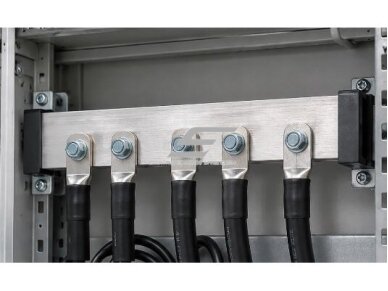
The busbar is an uninsulated metallic conductor, therefore in electrical equipment it must be properly mounted on busbar supports or insulators. Required electrical clearances, protection against accidental contact and structural resistance to forces occurring during short circuits must be ensured.
The 4000 mm long busbar may be used as one continuous current-carrying element or mechanically processed according to the requirements of a specific electrical board or equipment project. During cutting, drilling and other mechanical processing operations, the required geometry of connections and mounting points must be maintained.
Why is this busbar useful?
The AD31T aluminium busbar allows a rigid electrical current transmission or distribution connection to be formed according to an individual electrical equipment design. The 6 × 80 mm cross-sectional shape, 4 m length and possibility to design different mounting and contact connection solutions allow it to be used in various electrical distribution structures. The use of aluminium makes it possible to design relatively low-weight metallic conductive connections, but the specific solution must be verified against electrical and mechanical loads.Technical specifications
Product type Aluminium electrical current distribution busbar Profile shape Rectangular, flat busbar Material Electrical-grade aluminium Aluminium designation AD31T Busbar thickness 6 mm Busbar width 80 mm Cross-sectional dimensions 6 × 80 mm Geometric cross-sectional area 480 mm² Busbar length 4000 mm (4 m) Linear weight Approx. 1.3 kg/m Total busbar weight Approx. 5.2 kg (4 m strip) Weight values Approximate, according to catalogue data Electrical function Electrical current transmission and distribution through conductive connections Permissible operating current Determined according to design installation, cooling and temperature conditions Electrical insulation Uninsulated (bare metal busbar) Contact connection type Selected according to connected equipment and connection design Cu–Al connections Compatible copper-aluminium joining solutions are required Mechanical mounting On supports or insulators suitable for the project Use for N or PE circuits Only according to a design selected and verified by the designer Short-circuit withstand Must be evaluated for the specific busbar system Purpose Conductive connections in electrical distribution and control boards and electrical equipment Sales unit 1 pc. – one 4000 mm (4 m) long busbar Price Stated for one 4 m long busbar Main features and functions
- AD31T electrical-grade aluminium – material for conductive electrical equipment connections.
- Rectangular busbar construction – 6 mm thick and 80 mm wide profile.
- 480 mm² cross-section – geometric conductor cross-sectional area.
- 4000 mm length – one 4 metre long metal strip.
- Approximate weight 1.3 kg/m – linear weight characteristic.
- Approximate total weight 5.2 kg – mass of the entire 4 m strip.
- Electrical current transmission – used for conductive connections between electrical components.
- Electrical power distribution – may be used in appropriately designed busbar distribution systems.
- Mechanical adaptation – busbar length and contact locations can be prepared for the specific structure.
- Design-based current selection – operating current is determined after evaluating thermal and installation conditions.
- Individual contact connections – connection design is selected according to the electrical devices used.
- Bare metal construction – electrical insulation from surrounding parts and protection against contact must be provided.
- 4 m sales unit – the price is stated for the entire strip, not per metre.
Where is it used?
- In conductive busbar systems of electrical distribution boards
- For connections in industrial electrical distribution cabinets
- In connection assemblies of electrical control and automation cabinets
- For current-carrying connections in electrical equipment
- For interconnecting electrical apparatus using suitable contacts
- In individually designed aluminium busbar structures
- For electrical board assembly and modernisation work
- In industrial equipment manufacturing projects requiring rigid conductive connections
- In designer-verified N or PE conductor structures where such use is specified in the design
Use according to need
For electrical panel manufacturers (OEM).
A 4 metre long aluminium busbar intended for individually designed electrical distribution and conductive connection structures. The busbar is prepared according to the required mounting lengths, contact positions and electrical parameters.For designers / electrical engineers.
The 6 × 80 mm geometry and 480 mm² cross-section allow the busbar to be included in electrical, thermal and mechanical calculations. Final current loading and busbar arrangement must be determined according to the project conditions.For installers / electricians.
A metal strip intended for conductive connections in electrical boards. During installation, aluminium contact surfaces must be properly prepared, compatible fixing elements must be used and specified tightening requirements must be followed.Practical application
For example, when designing an electrical distribution board, a rigid connection must be created between several electrical devices. The suitability of the 6 × 80 mm aluminium busbar is evaluated according to the expected current load, temperature conditions and contact design. A component of the required length is prepared from the 4 m strip, and contact and mounting positions are planned. The busbar is mounted on suitable insulating supports, while electrical connections are made using contact elements compatible with aluminium conductors. After installation, electrical clearances, contact tightening, protection against accidental contact and the resistance of the busbar system to the expected electrical and mechanical loads are checked.Advantages
- AD31T electrical-grade aluminium material
- Rectangular 6 × 80 mm profile
- 480 mm² geometric cross-section
- Continuous 4000 mm long strip
- Can be adapted to different mounting lengths
- Used for electrical current distribution connections
- Possibility to design individual contact connections
- Approximate linear weight – 1.3 kg/m
- Approximate total strip weight – 5.2 kg
- Sales unit – one 4 m busbar
Limitations
- Permissible current cannot be determined from the 480 mm² cross-section alone
- Electrical and thermal design selection is required
- The busbar has no insulating coating
- Suitable insulating supports and protection against contact are required
- Aluminium contacts require proper surface preparation
- Compatible connecting elements are required for Cu–Al joints
- Mechanical and thermal short-circuit effects must be evaluated
- Mounting and contact holes must be designed according to the structure
- The 4 metre long strip requires suitable transportation and storage conditions
Safety and installation notes
- ⚡ Before installing or processing the busbar in electrical equipment, disconnect the power supply and verify the absence of voltage.
- The busbar is an uninsulated metal conductor, therefore protection against accidental contact must be provided.
- Determine the permissible current load according to design conditions, not solely from the 480 mm² cross-sectional area.
- Evaluate ambient temperature, cooling conditions, busbar mounting position and arrangement of other conductive elements.
- Mount the busbar on suitable supports or insulators selected according to electrical and mechanical loads.
- Ensure the electrical clearances required by the design between phases, earthed structures and other parts.
- Check the busbar system's resistance to the expected thermal and electrodynamic short-circuit loads.
- Prepare aluminium contact surfaces according to the connection manufacturer's installation instructions.
- Use contact elements and fixing solutions suitable for aluminium conductors.
- When connecting aluminium to copper, use a compatible connection system intended for Cu–Al joints.
- Contact paste alone does not replace the correct contact element and complete connection design.
- Select the contact tightening torque according to the requirements of the manufacturer of the connecting elements used.
- When cutting, drilling or otherwise processing the busbar, remove sharp edges and metal burrs.
- Do not make contact or mounting holes without evaluating their effect on the electrical and mechanical characteristics of the busbar.
- If the busbar is designed as an N or PE conductor, its suitability for the specific electrical equipment structure must be verified separately.
- Design and installation of busbar systems in electrical boards must be carried out by qualified specialists.
Compatibility and selection
The selection of an aluminium busbar depends on the parameters of the specific electrical equipment. Busbar dimensions and geometric cross-section are only part of the data required for design.
Parameter to evaluate What must be checked? Operating current Whether busbar conductivity and temperature rise correspond to the intended load and installation conditions. Cooling and arrangement Ambient temperature, ventilation, busbar spacing and position. Contact connections Compatibility of connected materials, contact surfaces, bolts and tightening conditions. Mechanical mounting Support arrangement, structural rigidity and reliability of busbar fixing. Short-circuit loads Ability to withstand electrodynamic forces and thermal effects. Electrical safety Electrical clearances, protective covers and protection against direct contact. Quick selection guide
6 × 80 mm480 mm²4000 mm | 4 mAluminium AD31TSuitable when you need:- an electrical-grade aluminium distribution busbar;
- a metal strip 6 mm thick and 80 mm wide;
- a conductor with a 480 mm² geometric cross-section;
- a continuous 4 metre long busbar;
- a rigid electrical current transmission or distribution connection;
- an individually designed electrical board busbar system.
Check before choosing:- whether the characteristics of AD31T material are suitable for the project;
- whether the 6 × 80 mm profile matches the intended structure;
- whether the busbar is suitable according to operating-current and temperature calculations;
- whether suitable aluminium contact connections are planned;
- whether Cu–Al connecting elements will be required;
- whether sufficient insulating and mechanical supports are provided;
- whether resistance to short-circuit loads has been considered;
- whether transport and installation conditions are suitable for a 4 m long strip.
Important reminder: 480 mm² is the geometric cross-sectional area of the busbar, not the permissible current value. The busbar is uninsulated, therefore proper electrical and mechanical design is required. The price is stated for one 4 metre long strip with an approximate weight of 5.2 kg.FAQ
What is the AD31T aluminium current distribution busbar used for?
The busbar is intended for conductive connections in electrical distribution and control boards and other electrical equipment. It is used according to a power distribution system designed specifically for the equipment.What material is the busbar made of?
The busbar is made of electrical-grade aluminium designated AD31T.What are the busbar dimensions?
Busbar thickness – 6 mm, width – 80 mm, total length – 4000 mm (4 m).What is the busbar cross-section?
The geometric cross-sectional area is 480 mm². It is calculated by multiplying the 6 mm thickness by the 80 mm width.What maximum current can this busbar carry?
A specific permissible current is not defined. It depends on ambient temperature, cooling conditions, busbar arrangement, contact connections and permitted temperature rise. The 480 mm² cross-section alone is not sufficient to determine the current limit.What is the weight of one metre of busbar?
The approximate linear weight is 1.3 kg/m.How much does the entire 4 metre busbar weigh?
The approximate weight of the entire 4 m strip is 5.2 kg. The weight value is based on catalogue data.Can an aluminium busbar be connected to a copper busbar?
Yes, when a connection system specifically designed for Cu–Al contacts is used. Connections must be made according to the requirements of the connection component manufacturer. Contact paste alone is not sufficient to ensure a proper joint.Does the busbar have electrical insulation?
No. It is a bare metal busbar. After installation, the required electrical clearances, protection against contact and suitable mounting must be ensured.Can the busbar be used as an N or PE conductor?
Such use is possible only according to a structure designed and verified specifically for the electrical equipment. Applicable electrical safety, electrical and mechanical requirements must be evaluated.Can the busbar be cut and drilled?
Yes, when such processing is provided for in the design. During cutting, drilling and preparation of contact holes, the required mechanical and electrical parameters must be maintained and sharp edges removed.Why is proper preparation of aluminium contacts important?
An oxide layer forms on the aluminium surface and can affect the quality of the electrical contact. Therefore, contacts must be prepared and tightened according to the requirements of the selected connection system manufacturer.Must short-circuit loads be evaluated?
Yes. Thermal and electrodynamic loads arising during short circuits must be evaluated in the busbar system, and supports, fixing and connections must be selected accordingly.Is the price stated per metre or for the entire strip?
The price is stated for one 4000 mm (4 m) long aluminium busbar. The linear weight of 1.3 kg/m is given only to describe the busbar weight.AD31T aluminium electrical current distribution busbar | 6 × 80 mm | 480 mm² | 4 m
Rectangular AD31T electrical-grade aluminium busbar intended for conductive connections in electrical distribution boards, control cabinets and electrical equipment. Busbar thickness – 6 mm, width – 80 mm, geometric cross-sectional area – 480 mm², total length – 4000 mm. Approximate linear weight – 1.3 kg/m, total strip weight – 5.2 kg. Permissible current, contact connections and mounting structure are selected according to specific design requirements. The busbar is uninsulated. The price is stated for one 4 metre long strip.
Illustrative image may have been created using AI. The appearance of the product may differ slightly from the image shown. Please refer to the technical specification.ManufacturerThis product is marked with the CE label, which confirms that it complies with all applicable European Union directives and regulations. CE marking is not just a formality – it is an important indicator of quality and safety, ensuring that the product has been properly assessed, tested, and can be safely used throughout the EU market.
CE certification means that the product has been evaluated according to the main criteria:
Safety requirements – ensures that the product does not pose a risk to the user or the environment
Electromagnetic compatibility (EMC) – the device does not interfere with other equipment and is resistant to external disturbances
Environmental standards – complies with current ecological and material usage requirements
Operational reliability – the product is suitable for long-term use according to its intended purposeCE marking allows this product to:
be legally supplied and used in all European Union countries
ensure a high level of quality and safety
be used in residential, commercial, and industrial environmentsThe CE mark is a declaration of the manufacturer’s responsibility, confirming that the product complies with all applicable standards and has been assessed according to EU legislation.
What does this mean for you as a buyer?
Safe use in everyday activities
Reliable performance and reduced risk of failure
Compliance with EU standards and requirements
Suitability for professional solutions Love it? Share your thoughts in a review!Write Review
Related products
 Aluminium power distribution busbar | 4 × 40 mm | 4 m | AD31TCode: YBA10-04-040
Aluminium busbar for conductive links in electrical panels and equipment. Select according to load current, bar dimensions, contact design and installation conditions.
Weight is approximate, based on catalogue data. Linear weight is given per metre; the product price is for one 4 m bar.
Price 17.44 € VAT incl.( 14.41 € VAT excl. ) Aluminium power distribution busbar | 5 × 40 mm | 4 m | AD31TCode: YBA10-05-040
Aluminium busbar for conductive links in electrical panels and equipment. Select according to load current, bar dimensions, contact design and installation conditions.
Weight is approximate, based on catalogue data. Linear weight is given per metre; the product price is for one 4 m bar.
Price 21.32 € VAT incl.( 17.62 € VAT excl. )Alternative products
-
Product Catalog
-
Security and Surveillance Systems | accessories
- IP Surveillance Security Cameras
- Network accessories | equipment for reliable connection
- Video surveillance camera recording devices
- Data storage media | hard drives (HDD) | SD memory cards
- Low Voltage | Power Supply Accessories
- Motion | door | window contact | magnetic sensors | detectors security alarm components
- Keyboards | control panels for security system management
- Security alarm sirens
- Holders | mounting bases | brackets for surveillance cameras
- Solar panels and battery power supplies for surveillance cameras
- Manual camera control panels | video surveillance control
- Protection control system modules
-
Lighting solutions for industrial | commercial | residential | outdoor environments | accessories
- Commercial lighting
- Indoor Interior Lighting
- Lights for corridors | staircases | basement
- Outdoor luminaires | lighting solutions for home | yard | garden
- LED floodlights | street | park lights
- Lamps | for household | industrial lighting | accessories
- Inserts for ceiling light | LED modules with magnet
- LED flexible strips hermetic | non-hermetic | accessories
- Optical Fiber
- Emergency lighting
- Blue lamps | for drug prevention
- Motion | presence sensors | detectors
-
Automation and Control Systems
- Automation control accessories
- Control components for automation and control systems
- Signal converters | controllers for automation control | for control systems
- Touchscreens | panels for automation control | control systems
- Automatic Circuit Breakers for Direct Current (DC) Circuits with Integrated Overload, Short-Circuit, and Voltage Stabilization Protection Functions
- Automation and Electrical Control Components | Contactors | Relays | SSR | Accessories
- Automation control | Data transmission | Low current
- Industrial measurement | counting | detection systems for conveyors
- Panel heaters | protection for electrical equipment against moisture and cold
- Converters-transformers from single-phase to three-phase voltage
- Silicone strip heaters | electric heating solutions for industry
- Heating elements for liquids | water | oils | food heating
-
Smart Automated Products | Control | Transmission | Detection
- Smart Emergency Call System SOS
- Smart Office Management Solutions
- Mirror lighting – modern | smart | functional lighting and control solutions
- Automatic vacuum cleaner robots | smart solutions for daily home care
- NOUS smart | automated control
- WOOX Smart | Automated Control
- SONOFF Smart | Automated Control
- iNELS RF smart | automated control
- TUYA Smart | Automated Control
- IMOU smart | automated control
- Smart home hubs | accessories | for home automation
- Smart water valve controllers | water supply management
-
Electrical distribution and installation
- Reactive Power Compensation Devices
- Electrical power | power cables | wires with copper conductors
- Electrical Distribution Panels, Boxes & Accessories
- Modular equipment installed in electrical distribution boxes | panels
- Smart electrical network analyzers
- Reliable power management | stabilization | control | uninterrupted supply
- Fuse holder blocks
- Fuse disconnectors
- Fuses
- Electrical installation components
- Electric current transformers
- For domestic | professional use Extension cords | power supply extensions
-
Solar Energy Generation and Management Equipment
- Solar Modules | Electricity Generation Equipment
- Inverters for Solar Energy Systems
- Batteries | solar energy storage units
- Mounting systems for solar power plants – stable and secure installation of solar panels on roofs or ground
- Solar Power Plant Balancing | Automation Control | Analysis | Monitoring
- Protective DC automatic circuit breakers for solar modules
- Fuses | fuse holders | disconnectors for solar systems
- Wires | cables | connectors for solar power plants – reliable connection between solar modules | inverters | batteries
- Solar tracking system accessories, controllers, bearings and motors
- DC circuit breakers for batteries and low-voltage DC systems | 12–250 VDC
-
HVAC control solutions for heating and ventilation
- HVAC automation
- Fans for ventilation systems
- Ducts and connections for ventilation | air conditioning systems
- Deflectors | ventilation | ventilation systems
- Dampers for ducts | ventilation | air conditioning systems
- Duct Silencers | Ventilation | Ventilation Systems
- Air Filters for Ducts | Ventilation | Ventilation Systems
- Supply Air Ventilation Dampers
- Diffusers for Ventilation Systems
- Electric heating
- Mobile Air Conditioners | for Indoor Climate Control
- Domestic | industrial air purification systems
- Accessories for cars
-
Workplace Safety | Electrical Safety Equipment | LOTO
- Personal protective equipment for work
- Dielectric tools
- Safety tools
- Safe transport boxes
- Safety relays
- LOTO Lockout Devices | Safety Padlocks | Lockout Hasps
- Alarm warning sirens | audible-visual signals
- Work zone barriers and impact protection | barriers | corner guards
- Antistatic protection | static discharge grounding posts
-
Technical maintenance | service equipment | fire protection solutions
- Revision access doors
- Fire protection
- Passive lifting | unloading | transporting magnets
- Inflatable Liquid Storage Tanks | Reservoirs | Bladders
- Inflatable rubber plugs for sealing high-pressure plumbing pipes
- Rotary | rotating | moving high-pressure nozzles | for industrial cleaning | surfaces | coating treatment
- Ultrasonic micro mist spraying nozzles | dust suppression | humidification | cooling solutions for industry
- High-pressure washing hose reels
- Flood water barriers | protection systems for buildings and infrastructure
- Composite sewer manhole | technical access covers
- Industrial ozone generators for water treatment | disinfection
-
Emergency safety | hygiene | sanitary solutions
- Mobile sanitary containers | container toilets | showers | washbasins | WC
- Emergency safety showers | body | face | eye wash systems | stationary | mobile | combined solutions
- Air showers for cleanrooms | micro-particles | contaminant removal from clothing surface
- Laboratory mixers | sinks | laboratory accessories | for chemistry, medicine, industry
- Other showers | outdoor showers for pools | beaches | SPA
-
Other products
- Operational service products
- Tempered glass
- Pneumatic components
- Thermal Imaging
- Audio Systems
- Educational books
- Insulating anti-vibration sound-absorbing protective materials
- Rubber granule tiles - pavers
- Cutting | grinding discs for working with stone and metal
- Universal drills for concrete | masonry
- Motors and gearheads – precise | reliable | efficient motion control for various tasks
- Power line filters | protection against interference and voltage fluctuations
- Quality used products
-
Security and Surveillance Systems | accessories
- Current Affairs
-
Our services
-
- Automation panel assembly according to your request.
- Drone photography with thermal camera for tightness - thermographic inspections
- Tractor service, drilling, support dismantling... pile drilling for homes
- Rental of professional power network analyzers for accurate electrical parameter measurement and energy quality analysis
- Electrical panel configurator
-
- Contacts
Products catalog
-
Product Catalog
-
Security and Surveillance Systems | accessories
-
IP Surveillance Security Cameras
- BULLET Security Cameras
- EZVIZ Security | Surveillance Cameras
- DOME Security | Surveillance Cameras
- PTZ security | video surveillance cameras
- CUBE security | video surveillance cameras
- PT security | Surveillance cameras
- TURRET security | video surveillance cameras
- Other protection | video surveillance cameras
- Silicone caps for surveillance cameras
- Network accessories | equipment for reliable connection
- Video surveillance camera recording devices
- Data storage media | hard drives (HDD) | SD memory cards
- Low Voltage | Power Supply Accessories
- Motion | door | window contact | magnetic sensors | detectors security alarm components
- Keyboards | control panels for security system management
- Security alarm sirens
- Holders | mounting bases | brackets for surveillance cameras
- Solar panels and battery power supplies for surveillance cameras
- Manual camera control panels | video surveillance control
- Protection control system modules
-
IP Surveillance Security Cameras
-
Lighting solutions for industrial | commercial | residential | outdoor environments | accessories
- Commercial lighting
- Indoor Interior Lighting
- Lights for corridors | staircases | basement
- Outdoor luminaires | lighting solutions for home | yard | garden
- LED floodlights | street | park lights
-
Lamps | for household | industrial lighting | accessories
-
Energy-saving LED bulbs
- LED bulbs E27 base
- LED bulbs E14 base
- GU10 LED bulbs
- LED bulbs GU5.3 (MR16) base
- LED T8 lamps (tubes)
- LED T5 lamps (tubes)
- LED bulbs G4 base
- LED bulbs G9 base
- LED bulbs R7s base
- LED bulbs | analogues to fluorescent-compact bulbs
- LED lamps G53 base
- Decorative / vintage LED bulbs with E27 base
- Decorative / Vintage LED bulbs E14 base
-
Industrial LED lamps | HQL analogs | NAV lamps
- Industrial LED lamps | alternatives to mercury vapor lamps (HQL) E27 base
- Industrial LED lamps | analogs for mercury vapor lamps (HQL) E40 base
- Industrial LED bulbs | alternatives to sodium vapor lamps (NAV) E27 base
- Industrial LED bulbs | Alternatives to sodium vapor lamps (NAV) E40 base
- Industrial UFO type LED lamps | analogs for high-intensity discharge (HID) lamps E40 socket
- Holders for industrial LED lamps
- Fluorescent lamps
- Incandescent bulbs E27 | E14 base
- Household filament type bulbs E14 | E27 base
- Halogen Bulbs R7s | G9 | G6.35 | G4 | E27 Base
- Special purpose lamps
- Accessories for light fixtures | adapters | sockets | holders
- Ballasts for fluorescent lamps T8 | T5 base
- Starters for fluorescent lamps
- Electronic lamp starters | ignitors | initiators
-
Energy-saving LED bulbs
- Inserts for ceiling light | LED modules with magnet
-
LED flexible strips hermetic | non-hermetic | accessories
- Waterproof flexible LED strips
- Non-waterproof flexible LED strips
- Control of Flexible LED Strips
- Profiles | Channels | Corners for LED Flexible Strips
- LED flexible strip connectors | contacts | plugs
- 5V DC Switching Power Supplies for LED Strips
- 12V DC Power Supply for LED Strips
- 24V DC power supplies for LED strips
- Sensors for LED strip
- LED modules
- Optical Fiber
- Emergency lighting
- Blue lamps | for drug prevention
- Motion | presence sensors | detectors
-
Automation and Control Systems
-
Automation control accessories
-
Time voltage deviation current level network control visualization relay
- Controllers for automation systems
- Logical controllers for automation systems
- Servo Controllers for Automation Systems
- Network adapters | industrial automation | communication systems
- Digital | analog input modules for automation controllers
- Digital | analog output modules for automation controllers
- Signal towers | beacons | modules | accessories
- Power and time control relays for home automation with integrated SCHUKO sockets, designed for alternating and direct current protection and for household users.
- Boxes for signaling equipment | Signal lights
-
Cam switches | for devices on/off control
- Cam switches | changeover switches | for equipment control | 1-0-2
- Cam switches | changeover switches | for equipment control | 0-1
- Cam switches | changeover switches | for equipment control | 0-Y-Δ
- Cam switches | changeover switches | for equipment control | reversing | L-0-R
- Cam switches | changeover switches | for equipment control | 1-2
- Cam switches | changeover switches | for three-phase voltage measurement
- Cam switches | changeover switches | emergency | for equipment control
- Other cam switches | changeover switches | for equipment control | 1-2-3 | Uca -O-Uab-Ubc | Uc-O-Ua-Ud
- Plastic enclosures for cam switches
- Handles | levers for cam switches
- Electric motor control | protection management
- Soft starter devices for electric motors
-
Energy meters
- Single-phase electricity meters | energy metering devices
- Three-phase electricity meters | energy metering devices
- Single-phase electrical energy meters | metering devices with current transformers CT
- Three-phase electricity meters | energy metering devices with current transformers CT
- DC electrical energy meters | with shunt
- Hour meters | operating time recording
-
Time voltage deviation current level network control visualization relay
-
Control components for automation and control systems
-
Sensors | Detectors for automation | Control | Management systems
- Contactless bulk material level sensors
- End-position mechanical switches for automation control | control systems
- End-position micro switches for automation control | control systems
- Safety limit switches | industrial switches for equipment safety | for position control and automation
- Connection cables for sensors | detectors for control | automation systems
- Infrared safety barriers
- Contactless magnetic sensors for object detection in automation control | monitoring systems
- Non-contact inductive sensors for detecting metallic objects in automation control | monitoring systems
- Capacitive proximity sensors | for detection of metallic and non-metallic objects in automation control and monitoring systems
- Non-contact ultrasonic sensors for object detection in automation control | monitoring systems
- Non-contact photoelectric sensors for automation control | monitoring systems
- Optical sensors | detectors for automation devices
- Contactless color mark recognition sensors | color contrast detection in automation
- Camera sensors | detectors | brackets for control | automation systems
- Connectors | Sockets (female) | Plugs (male) for sensors | detectors for control | automation systems
- Mounting brackets for photoelectric sensors | control sensors | automation systems
- Rotary level sensors for bulk materials | rotating motion level switches | detectors for silos, hoppers, and tanks
- Vibrating level switches | sensors | detectors | for bulk materials and liquid level control
- Displacement | Linear Position Sensors for Automation
- Trolleys | Crane Control Panels | Hoist Control | Joystick
- Foot control pedals for industrial equipment management
- Audible signals 22/28mm for automation control | control systems
- Buttons for automation control | control systems
- Switches | Keys for automation devices control | control systems
- Additional accessories | components for buttons in automation control | control systems
- Latching push-button switches | ON-OFF | reversing
-
Sensors | Detectors for automation | Control | Management systems
- Signal converters | controllers for automation control | for control systems
- Touchscreens | panels for automation control | control systems
- Automatic Circuit Breakers for Direct Current (DC) Circuits with Integrated Overload, Short-Circuit, and Voltage Stabilization Protection Functions
-
Automation and Electrical Control Components | Contactors | Relays | SSR | Accessories
- Mini contactors for electric motor control
- Contactors | Electrical starters | For equipment control
- Electronic solid-state (SSR) contactors
- Contactors with enclosure and control buttons | for electrical equipment control
- Electromechanical thermal relays | electrical equipment protection
- Control coils for contactors | starters | electrical equipment control
- Adapters-converters for relays and contactors
- Additional contacts | Accessories for contactors
- Modular impulse relays | lighting | electrical circuit control
- Industrial solid state relays | electrical load control
- Intermediate relays for automation | for PLC and electrical control panels
- Automation control | Data transmission | Low current
- Industrial measurement | counting | detection systems for conveyors
- Panel heaters | protection for electrical equipment against moisture and cold
- Converters-transformers from single-phase to three-phase voltage
- Silicone strip heaters | electric heating solutions for industry
- Heating elements for liquids | water | oils | food heating
- Heating elements | igniters | for stoves | boilers | heaters
- Insulation Monitoring & Power Supply Equipment for Medical IT Systems
-
Automation control accessories
-
Smart Automated Products | Control | Transmission | Detection
- Smart Emergency Call System SOS
-
Smart Office Management Solutions
-
Office security and access control | management systems
- Electromagnetic door locks | latches for ensuring access control and security of premises | Accessories
- Electromagnetic door holders for various types of doors | ensuring convenience and safety in premises
- Hydraulic door closers | with impact damping | for smooth and silent door closing
- Exit door opening buttons | for controlling various types of indoor doors
- Face scanning and recognition systems | for secure and efficient access control
- Biometric fingerprint scanners | designed for security and access management
- Card | QR Code | Electronic Key Readers | For Premises Security and Access Control
- Electronic entry cards | key fobs | keys | stickers | for secure and convenient access management
- Door Code Locks | For Security and Access Management of Premises
- Turnstiles | Efficient People Flow Management | Access Control
- Intercoms
- Gate control access management systems
- Access control systems for electronic locks
- Door control and interface controller connection solutions
- Electronic door locks and access controllers
- Canopies for intercoms | protection of access control equipment
- Smart Door Locks | Security and Access Control Solutions
-
Universal mobile | network routers
- Communication converters | Data transmission interfaces and network integration solutions
- Data transmission solutions over a 230V power network | routers
- Mobile routers | 4G LTE | 5G | home and industrial
- Wireless communication | Long-range modems | Routers | Directional antennas | Network solutions
- Communication boosters for drones | wireless signal repeaters
- Wi-Fi routers | wireless network access points for home and office
- Wi-Fi Mesh systems | stable whole-home wireless coverage
-
Office security and access control | management systems
-
Mirror lighting – modern | smart | functional lighting and control solutions
- Magnifying mirrors with sandblasted edge for lighting
- Heating mats | defoggers heaters for mirrors
- Touch | contactless proximity switches mounted behind the mirror
- Digital information displays for mirrors
- Speakers | Resonance speakers for mirrors | furniture
- Smart mirror accessories and control solutions
- Automatic vacuum cleaner robots | smart solutions for daily home care
- NOUS smart | automated control
- WOOX Smart | Automated Control
-
SONOFF Smart | Automated Control
- SONOFF Smart Switches | Touch Switches
- SONOFF temperature | humidity sensors | controllers
- SONOFF smart home control panels
- SONOFF smart switches
- SONOFF smart motion sensors
- SONOFF smart energy meters
- SONOFF smart Schuko sockets
- SONOFF smart home hubs
- SONOFF smart lighting control
- SONOFF smart flexible LED strips
- SONOFF Smart Surveillance | Security Cameras
- SONOFF smart door and window sensors
- SONOFF smart roller shutter | blind | curtain control
- SONOFF other products | accessories
- iNELS RF smart | automated control
- TUYA Smart | Automated Control
- IMOU smart | automated control
- Smart home hubs | accessories | for home automation
- Smart water valve controllers | water supply management
- Smart electrical sockets | energy management
- Wireless automation modules | for smart system control
- Smart Automated Gate Control
- Farm automation | livestock equipment
-
Electrical distribution and installation
- Reactive Power Compensation Devices
-
Electrical power | power cables | wires with copper conductors
- Copper power cables CYKY-L (CYKY-J)
- Copper power supply cables KH05VV-U (NYM-J)
- Copper power supply cables BVV-LL
- Copper power supply cables H03VV-F, H05VV-F
- Copper power supply cables halogen-free NHXMH-J
- Copper power supply cables BVV-PLL
- Copper power supply cables BVV-P
- Copper power supply cables BVV-F, BVV-PL
- Copper power supply cables halogen-free BZ1Z1-P
- Copper power supply wires H05V2-K, H07V2-K
- Copper power supply wires H05V-K
- Copper power supply wires H07V-R, H07V2-R
- Copper power supply wires H07V-K
- Copper power supply wires H05V-U, H07V-U, H05V2-U, H07V2-U
- Halogen-free copper power supply cables H07Z1-K
- Aluminum power supply cables
- Computer power supply cables
- Special purpose power supply cables
- Copper | vintage | retro style braided cables
- Power transmission busbar
- Power supply cables / Leftovers
-
Accessories for power supply cables
- Wire trays | channels for power supply cables | wires
- Cable trays | channels for power supply cables | wires
- Lighting cable trays | channels for power supply cables | cable management
- Profiles for electrical supply cables | wire laying | metallic
- Cable ladders for power supply cables | wires
- Accessories for metal power supply cable | wire channels | trays
- Cable laying | fixing | installation structures
- Installation cable trays | channels for electrical cables | wires | plastic
- Electrical cable | wire identification markers | marking tools
- Surface-mounted sealed | unsealed installation distribution boxes for electrical cables | wires
- Cable lugs and connectors
- Thermally shrinking insulating gloves | hermetically seal electrical wires | cables
- Heat shrink tubing | insulating electrical wires | cables
- Electrical insulating tapes | for electrical wires | cables
- Spiral strips | for concealing electrical wires | cables
- Gel sleeves | for electrical wires | cables
- Gels | lubricants for wire | cable pulling
- Insulating gels for protecting electrical wires | cable connections | contacts from humidity
- Warning hazard | caution marking tapes
- Dielectric insulating sheaths for the protection of electrical cables | wires
- Connectors | plugs | sockets for electrical cables | wires | hermetic
- Electrical cable | wire mechanical protection devices
- Hermetic cable and corrugated conduit entries into electrical distribution boards and enclosures | sealed cable entry solutions
-
Electrical Distribution Panels, Boxes & Accessories
- Single-phase | three-phase electricity metering boxes
- Electrical energy distribution | metering boxes for apartments
-
Surface-mounted electrical power panels | boxes
- Metal | steel surface-mounted electrical distribution boxes | enclosures
- Plastic overhead electrical distribution panels | boxes
- Steel | stainless steel surface-mounted electrical panels | boxes
- Plastic surface-mounted electrical enclosures | boxes
- Metal overhead electrical distribution boxes | panels
- Aluminum surface-mounted | hermetic electrical distribution cabinets | boxes | IP67
- Flush-mounted electrical distribution panels | boxes
- Transparent protective covers for electrical distribution panels | boxes
-
Special electrical panels for garages | panels designed for commercial premises
- Industrial electrical distribution modular enclosures | panels | boxes with additional space for equipment installation
- Industrial modular electrical distribution boards | panels | enclosures with socket outlets
- Industrial combined distribution boards | enclosures with socket outlets
- Construction site distribution boards and mobile power distribution boxes
- Portable electrical distribution | panels | enclosures | boxes
- Switch-disconnectors | changeover switches 1-0-2 | safety switches | accessories
- Sealing products | seals for electrical wires | cables | panels | boxes
-
Terminals | connections for electrical cables | distribution | connection
- Power distribution terminals for electrical wires | cables
- WAGO terminal blocks for electrical wire | cable connections
- Connectors for electrical wires | cable connections
- Installation terminals for connecting electrical wires | cables of fixtures
- Grounding terminals for connecting electrical wires | cables
- Branching terminals for electrical wires | cable connections
- Rear covers for spring assemblies
- Busbar grounding and protection systems
- Soldering components | connection solutions
- Screen terminals for connecting electrical cables | wires
- Accessories for terminals | electrical contacts
- Spring terminal blocks | electrical connections | on DIN rail
- Spring lever terminal blocks for electrical wire | cable connections
- Terminals for connecting electrical wires | cables | mounted on a DIN rail
- DIN rails for mounting modular equipment in the electrical distribution panel
- Switch cabinets | network | telecommunications | server equipment
- Cable transit cabinets | for cable distribution
- Universal cross electrician keys
- Locks | keys | for electrical distribution panels | boxes
- Wire | cable entry strain reliefs in enclosure | cavity
-
Modular equipment installed in electrical distribution boxes | panels
-
Circuit breakers | installed in electrical distribution boxes | panels
- Schneider Electric circuit breakers | installed in electrical distribution boxes | panels
- Industrial circuit breakers
- "Vecas" circuit breakers | for installation in electrical distribution cabinets | boxes
- "Promfactor Baltic" circuit breakers | installed in electrical distribution boxes | panels
- "Noark" circuit breakers | installed in electrical distribution boxes | panels
- "SIEMENS" automatic circuit breakers | installed in electrical boxes
- "Hager" automatic circuit breakers | installed in electrical distribution boxes | panels
- "Legrand" automatic circuit breakers | installed in electrical distribution boxes | panels
- "IEK" automatic circuit breakers | installed in electrical distribution boxes | panels
- "Merlin Gerin" automatic circuit breakers | installed in electrical distribution boxes | panels
- "Eaton" automatic circuit breakers | installed in electrical distribution boxes | panels
- Accessories for circuit breakers
- Smart WiFi circuit breakers | Tuya | with energy metering
- ABB circuit breakers | for distribution boards
- Circuit breakers from other manufacturers | Zext | Allen-Bradley | Netlux | Etimat
- Power contactors | installed in electrical distribution boxes | panels
-
Modular leakage relays | installed in electrical distribution boxes | panels
- "Promfactor Baltic" leakage relays | mounted in electrical distribution boxes | panels
- "Legrand" leakage relays | mounted in electrical distribution boxes | panels
- "Schneider Electric" leakage relays | installed in electrical distribution boxes | panels
- "Eaton" leakage relays | mounted in electrical distribution boxes | panels
- "Vecas" residual current relays | for installation in electrical distribution boxes | cabinets
- Voltage relays modular | mounted in electrical distribution boxes | panels
- Current relays modular | installed in electrical distribution boxes | panels
- Power limiters modular | installed in electrical distribution boxes | panels
- Phase switch modular | mounted in electrical distribution boxes | panels
- Temperature controllers | modular thermostats | designed for mounting in electrical distribution boxes | panels
- Modular time relays | installed in electrical distribution boxes | panels
- Modular | panel | digital ammeters | voltmeters | for installation in electrical distribution boxes | cabinets
- Photo relays | twilight switches | mounted in electrical distribution boxes | panels
- Measurement monitoring electric energy monitoring equipment
- Modular control | signaling equipment | switches | indicator lamps | audible signals
- Automatic aerosol fire extinguishing systems for electrical cabinets and server rooms
- Modular liquid level control relays | for installation in electrical distribution boxes | switchboards
- Interface relays | modular for signal amplification and load control | for installation in electrical distribution boxes | panels
- Modular staircase lighting relays | for installation in electrical distribution boxes | panels
- Phase monitoring | sequence | protection relays, modular | for installation in electrical distribution boxes | panels
- Circuit breakers with residual current protection (RCBO) | for distribution boxes | panels
-
Circuit breakers | installed in electrical distribution boxes | panels
- Smart electrical network analyzers
- Reliable power management | stabilization | control | uninterrupted supply
- Fuse holder blocks
- Fuse disconnectors
- Fuses
-
Electrical installation components
-
Socket outlet blocks for installation in furniture | on surfaces
- Surface-mounted socket towers | power outlet towers
- Socket outlet blocks | desktop mounted socket blocks
- Socket outlet blocks | receptacle blocks built into furniture
- Plug sockets | connectors | wireless charging stations integrated into furniture
- Socket towers | power outlets integrated into furniture
- Socket outlet blocks | receptacle blocks for panel mounting
- Socket blocks with LED lighting
- Modular socket outlets | socket blocks | boxes for furniture installation
- Modular socket towers | surface-mounted socket outlets
- Modular socket towers | power outlets integrated into furniture
- Modular socket outlets | socket blocks | boxes for installation in cabinets
- Built-in modular connectors | for electrical socket systems
- Accessories for built-in furniture sockets
- Sedna Recessed Electrical Installation by Schneider Electric
- Recessed electrical installation
- Hermetic flush-mounted electrical installation IP55
-
Hermetic surface-mounted electrical installation IP44 | IP54 | IP66
- Hermetic surface-mounted installation | 1-gang sockets | switches | accessories
- Hermetic surface-mounted installation | 2-gang sockets | switches | accessories
- Hermetic surface-mounted electrical installation | 3-gang sockets | switches | accessories
- Hermetic surface-mounted installation | 4-gang sockets | switches | accessories
- Surface-mounted electrical installation
- Electrical installation "Vilma"
-
Vintage | Retro Style Electrical Installation Components
- Distribution boxes | surface-mounted | ceramic | retro style
- Plug sockets | surface-mounted | ceramic | retro style
- Plug sockets | flush-mounted | ceramic | retro style
- Switches | surface-mounted | ceramic | retro style
- Switches | flush-mounted | ceramic | retro style
- RJ11 | RJ45 | DATA plug sockets | surface-mounted | flush-mounted | ceramic | retro style
- Surface-mounted socket outlets | plastic | retro style
- Socket outlets | RJ45 | USB-A | USB-C | flush-mounted | plastic | retro style
- Switches | intermediate switches | two-way switches | surface-mounted | plastic | retro style
- Switches | intermediate | blind | doorbell push buttons | flush-mounted | plastic | retro style
- Frames for surface-mounted electrical installation components | ceramic | retro style
- Frames for flush-mounted electrical installation components | ceramic | retro style
- Frames for Surface-Mounted Electrical Installation Components | Plastic | Retro Style
- Frames for flush-mounted electrical installation components | plastic | retro style
- Frames for flush-mounted electrical installation components | wooden | retro style
- Insulators for braided wires | ceramic | metal | retro style
- Distribution mounting boxes are designed to be installed in drywall | masonry
- Boxes mounted in the floor | for socket installation
- Installation electrical boxes for drywall | masonry
-
Socket outlet blocks for installation in furniture | on surfaces
-
Electric current transformers
- Rogowski Coil Integrators
- Split-core current transformers CT | current measurement solutions
- Digital multimeters with CT current transformers | current measurement solutions
- Flexible "Rogowski" coils | current measurement solutions
- Rigid | non-flexible "Rogowski" coils | rings | current measurement solutions
- For domestic | professional use Extension cords | power supply extensions
-
Industrial | domestic socket outlets | plugs | adapters for electricity supply
- Household single-phase plugs | industrial single-phase | three-phase for electricity supply
- Plug sockets for household single-phase | industrial single-phase | three-phase electrical power supply
- Adapters (transitions) for household | industrial power supply
- Sockets mounted on a DIN rail | for power supply
- High Voltage Equipment | Components 6kV | 10kV | 12kV | 20kV
-
Underground Power Transmission | Overhead Power Lines
- 0.4kV Overhead Line Metal Structures for Uninsulated Wires
- 10kV Overhead Line Metal Structures with Non-Insulated Conductors
- Metal structures for 0.4kV overhead lines with insulated wires
- Clamps for air line cables | cables | equipment mounting
- Guy wires | Crossarm braces | Stork nest platforms
- Cable supports for overhead lines
- Air line terminals
- Air line crossbars for SZ circuit breakers
- Airline covers | Wire frames | Cable mounting
- Airline metal structures | traverses | tops
- Insulators for Electrical Power Airline Lines
- Overhead power cables | wires for electricity supply
- Bird Protection for Electrical Equipment
- Preformed helical anchor clamps for overhead lines
- Eye nuts for overhead power lines and energy infrastructure fastening assemblies
- Reinforced concrete poles for overhead power lines and infrastructure networks
-
Surge Protection and Lightning Protection
- Active lightning rods | Lightning strike protection
- Passive Franklin-type lightning rods | lightning strike protection
- Surge Arresters | Electrical Equipment Protection from Lightning Strikes
-
Lightning protection | grounding system components | rods | connectors | fastening | installation accessories
- Potential equalization busbars | terminals | for grounding systems
- Digital | mechanical lightning discharge counters
- Galvanized steel strips for grounding
- Galvanized steel | aluminum wires for grounding
- Hot-dip galvanized poles for lightning rod mounting
- Grounding rods | galvanized | copper-coated | with lead filling for lightning protection system
- Concrete bases for lightning rod installation | accessories
- Driving heads | chisels for grounding rods
- Grounding wire holders | PVC | stainless steel | accessories
- Anti-corrosion connection tapes | pastes for lightning protection systems
- Tips for grounding rods | lightning protection systems
- Galvanized connectors for fastening wire to mast | lightning protection systems
- Cross connections | for grounding | lightning protection systems
- Lightning rods | mast mounting | installation accessories
- Coupling sleeves for grounding rods
- Test joint boxes and inspection pits
- Thermal welding
-
Solar Energy Generation and Management Equipment
- Solar Modules | Electricity Generation Equipment
-
Inverters for Solar Energy Systems
- Single-phase solar inverters | efficient electricity management
- Three-phase solar inverters | efficient electricity management
- Hybrid three-phase solar inverters | efficient electricity management
- Solar power controllers | reliable power plant control
- Combined hybrid solar inverters with battery | UPS function
- Batteries | solar energy storage units
- Mounting systems for solar power plants – stable and secure installation of solar panels on roofs or ground
-
Solar Power Plant Balancing | Automation Control | Analysis | Monitoring
- Backup power transfer switches for generators (ATS / MTS)
- Solar electricity energy meters
- Surge protectors for solar | photovoltaic systems
- Solar power plant circuit breakers | reliable protection and control for solar energy systems
- Solar inverter accessories | adapters
- Voltage control relays for solar power plants
- Solar module optimizers | maximum solar power plant output and efficiency
- Protective DC automatic circuit breakers for solar modules
- Fuses | fuse holders | disconnectors for solar systems
- Wires | cables | connectors for solar power plants – reliable connection between solar modules | inverters | batteries
- Solar tracking system accessories, controllers, bearings and motors
- DC circuit breakers for batteries and low-voltage DC systems | 12–250 VDC
-
HVAC control solutions for heating and ventilation
-
HVAC automation
-
Sensors and detectors
- Temperature sensors and thermostats
- Fluid flow | temperature meters | sensors
- Household | Industrial temperature maintenance thermostats
- Air quality meters | CO2 | VOC sensors
- Differential pressure relays and transducers
- Liquid level sensors | Monitoring systems
- Non-contact infrared (IR) surface temperature sensors
- Digital gas flow meters
- Temperature and humidity sensors | environmental parameter measurement solutions
- Anemometers | wind speed | air flow measuring devices
- Electric motors
-
Frequency inverters for motor speed regulation
- Optidrive frequency inverters for motor speed control
- Siemens frequency inverters | efficient motor control | process automation
- Schneider Electric frequency inverters | efficient motor control | process automation
- EURA Drives frequency inverters | efficient motor control | process automation
- Frequency inverters
- Air damper drives
- Speed regulators for fans
- Motorized actuators for air dampers | ventilation (HVAC) systems | air ducts
- Modbus modules and power supplies
-
Sensors and detectors
-
Fans for ventilation systems
- Industrial Fans for Ventilation Systems
- Centrifugal Roof Fans | Ventilation | Ventilation Systems
-
Domestic fans for ventilation systems
- Domestic inline duct fans | for ventilation systems
- Household window fans | ventilation system
- Household ceiling fans | air circulation solutions
- Standard extractor fans | wall switch controlled
- Extractor fans with pull-cord switch
- Extractor fans with timer
- Extractor fans with timer and humidity sensor
- Extractor fans with light or plug
-
Protective ventilation grilles for ventilation systems
- Round protective ventilation grilles for ventilation systems
- Wall-mounted | external protective ventilation openings for ventilation systems
- Furniture ventilation grilles for ventilation systems
- Square protective ventilation grilles | Galvanized steel
- Square protective ventilation grilles for ventilation systems | plastic
- Fan shutdown timers for ventilation systems
- Accessories for fans | ventilation systems | decorative panels
-
Ducts and connections for ventilation | air conditioning systems
-
Ducts for ventilation | ventilation systems
- Sealing tapes for duct systems
- Rigid ducts for ventilation | air conditioning systems | plastic
- Flexible ducts for ventilation systems | aluminum
- Flexible ducts for ventilation | vent systems | stainless steel
- Flexible ducts for ventilation systems | metal
- Flexible ducts for ventilation | ventilation systems | PVC film
- Rigid ducts for ventilation | air conditioning systems | galvanized steel
- Square | rectangular | rigid ducts | for ventilation systems | plastic
-
Square | rectangular ducts | ventilation | ventilation systems | plasticSquare | rectangular ducts | ventilation | ventilation systems | plastic
- Holders for square ducts | ventilation systems | plastic
- Connections for square ducts | ventilation | ventilation systems | elbows 3°-49° | plastic
- Connectors for square ducts | ventilation | ventilation systems | 90° elbows | plastic
- Connections for square ducts | ventilation | ventilation systems | fittings | plastic
- Connections for square ducts | ventilation | ventilation systems | T-shaped | branch fittings | plastic
- Connections for square ducts | ventilation systems | sleeves with a backdraft damper | plastic
- Wall connectors for square ducts | ventilation systems | adapters | plastic
- Ducts | Ventilation | Ventilation Systems | Metal
-
Ducts | ventilation | ventilation systems | plastic
- Connections for ducts | Ventilation systems | 45° elbows | Plastic
- Duct connections | ventilation systems | 90° elbows | plastic
- Connections for ducts | Ventilation systems | Couplings | Plastic
- Connectors for ducts | ventilation systems | transitions | adapters | plastic
- Connectors for ducts | ventilation systems | T-shaped | three-way | plastic
- Duct connections | ventilation systems | flanges | plastic
- Duct connections | ventilation systems | condensate collector | plastic.
- Connections for ducts | ventilation systems | flexible connectors with backflow valve | plastic
- Wall connectors for ducts | ventilation systems | adapters | plastic
- Holders for ducts | ventilation systems | plastic
-
Ducts | ventilation | ventilation systems | galvanized steel
- Duct fittings | ventilation systems | 45° elbows | galvanized steel
- Connections for ducts | Ventilation systems | 90° elbows | Galvanized steel
- Duct ventilation hoods | chimneys | for ventilation systems | galvanized steel
- Connectors for ducts | ventilation systems | T-shaped | tees | galvanized steel
- Connectors for ducts | ventilation systems | transitions | adapters | galvanized steel
- Connections for ducts | ventilation systems | sleeves | galvanized steel
- Flexible connectors for ducts | ventilation systems | sleeves | galvanized steel
- Connectors for ducts | ventilation systems | connectors with back-draught shutter | galvanized steel
- Holders for ducts | ventilation systems | galvanized steel
- Connectors for ducts | ventilation systems | branches | galvanized steel
- End caps for ducts | ventilation systems | galvanized steel
- Transitions | adapters for square and round ducts | ventilation | ventilation systems | plastic
-
Ducts for ventilation | ventilation systems
- Deflectors | ventilation | ventilation systems
- Dampers for ducts | ventilation | air conditioning systems
- Duct Silencers | Ventilation | Ventilation Systems
- Air Filters for Ducts | Ventilation | Ventilation Systems
- Supply Air Ventilation Dampers
- Diffusers for Ventilation Systems
-
Electric heating
-
Electric heating
- Infrared heaters
- Infrared heaters | heating panels
- Electric wall-mounted | free-standing heaters | radiators — reliable electric heating
- Other heaters
- Underfloor heating thermostats | mats
- Industrial electric fan heaters
- Self-regulating | heating power supply cables
- Electric hot air curtains
- Electric footwear / shoe dryers | ADAX ST3D
- Radiant heaters | ADAX | Glamox Heating GVR5/VR5
- Electric heating regulators
- Grilles for radiators | for duct finishing
- Accessories for heating systems
-
Electric heating
- Mobile Air Conditioners | for Indoor Climate Control
- Domestic | industrial air purification systems
- Aromatic diffusers | essential oil diffusers for homes | offices | industrial premises
- Domestic | industrial dehumidifiers | moisture collectors | humidity control solutions
- Domestic | industrial air humidifiers | ultrasonic | fog generators
-
HVAC automation
- Accessories for cars
-
Workplace Safety | Electrical Safety Equipment | LOTO
- Personal protective equipment for work
- Dielectric tools
-
Safety tools
- Dielectric Screwdrivers
- Insulated pliers for electricians
- Insulated cable | wire knives | professional safe tools for electricians
- Crimping presses - pliers
- Cable cutting scissors | pliers
- Cable stripping knives | pliers
- Hydraulic hole punchers | hole punching tools | for electrical panels | professional tools for cable entries | for automation and distribution cabinets
- Safe transport boxes
- Safety relays
-
LOTO Lockout Devices | Safety Padlocks | Lockout Hasps
- LOTO Safety Padlocks | Personal Lockout Padlocks
- LOTO Lockout Hasps | Group Lockout
- Electrical Plug Lockouts | LOTO Covers
- Valve and Gas Cylinder Lockouts
- Group Lockout and Key Boxes
- LOTO Tags | Warning Tags
- LOTO switch and button lockouts | circuit breakers | knife switches | E-stop buttons
- LOTO kits | complete lockout sets
- Alarm warning sirens | audible-visual signals
- Work zone barriers and impact protection | barriers | corner guards
- Antistatic protection | static discharge grounding posts
-
Technical maintenance | service equipment | fire protection solutions
-
Revision access doors
- Plastic revision access doors
- Floor access hatches | aluminium profile | under tiles
- Aluminum profile inspection doors-hatches with drywall panel
- Aluminum revision access doors with chain
- Steel revision access doors
- Steel revision access doors - hatches with a lock
- Roof access hatch-doors with gas struts | Aluminium
- Access panels with a window | for access to technical cavities
- Fire protection
- Passive lifting | unloading | transporting magnets
- Inflatable Liquid Storage Tanks | Reservoirs | Bladders
- Inflatable rubber plugs for sealing high-pressure plumbing pipes
- Rotary | rotating | moving high-pressure nozzles | for industrial cleaning | surfaces | coating treatment
- Ultrasonic micro mist spraying nozzles | dust suppression | humidification | cooling solutions for industry
- High-pressure washing hose reels
- Flood water barriers | protection systems for buildings and infrastructure
- Composite sewer manhole | technical access covers
- Industrial ozone generators for water treatment | disinfection
-
Revision access doors
-
Emergency safety | hygiene | sanitary solutions
- Mobile sanitary containers | container toilets | showers | washbasins | WC
- Emergency safety showers | body | face | eye wash systems | stationary | mobile | combined solutions
- Air showers for cleanrooms | micro-particles | contaminant removal from clothing surface
- Laboratory mixers | sinks | laboratory accessories | for chemistry, medicine, industry
- Other showers | outdoor showers for pools | beaches | SPA
-
Other products
-
Operational service products
- Measuring equipment
- Marking | Safety Signs
-
Cable ties | cable holders | mounting accessories
- Holders for cables and wires
- Accessories for cable ties
- Mounting straps installed on the surface
- Double cable ties
- Double locking cable ties
- Mounting straps with locking base | surface-mounted
- Universal fastening straps
- Cable ties with push-in mounting holder
- Cable ties with stainless steel locking tab
- Work lights
- Portable Battery-Powered Flashlights
- Galvanic cells batteries
- Storage boxes and containers
- Inspection and observation mirrors | professional solutions for visual inspection | safety | diagnostics
- Spherical safety mirrors | for blind spot monitoring and traffic safety
- Tempered glass
- Pneumatic components
- Thermal Imaging
- Audio Systems
- Educational books
- Insulating anti-vibration sound-absorbing protective materials
- Rubber granule tiles - pavers
- Cutting | grinding discs for working with stone and metal
- Universal drills for concrete | masonry
- Motors and gearheads – precise | reliable | efficient motion control for various tasks
- Power line filters | protection against interference and voltage fluctuations
- Compact electronics cooling | ventilation fans | accessories
- Industrial multipole connectors | housings | accessories
- Decorative & Acoustic Wall and Ceiling Panels | Slat Panels | Interior Finishes
- Acoustic | Sound-Absorbing Foam Panels for Echo Reduction
-
Operational service products
- Quality used products
-
Security and Surveillance Systems | accessories
- Current Affairs
-
Our services
- Automation panel assembly according to your request.
- Drone photography with thermal camera for tightness - thermographic inspections
- Tractor service, drilling, support dismantling... pile drilling for homes
- Rental of professional power network analyzers for accurate electrical parameter measurement and energy quality analysis
- Electrical panel configurator
- Contacts

To get free delivery spend additional
2000.00 € VAT incl.
We will deliver for free!
Up to the minimum order amount left
8.00 € VAT incl.


UAB Elektrotechnikos sprendimai
Elektrotechnikos sprendimai, UAB. Company code: 305053561 VAT number: LT100012235811. J. Basanavičiaus g. 23, LT-76233, Šiauliai, Šiaulių m. sav., LITHUANIA. Phone: +37065801033.
© 2026 Elektrotechnikos sprendimai, UAB. Without Elektrotechnikos sprendimai, UAB confirmation any use or copying of site content is prohibited.
Aluminium power distribution busbar | 6x80mm | 4m | AD31T
Add to cart -