LED lamp guide: cap type, lumens, colour and compatibility
Here you will find quick selection by situation, cap identification, a lumens vs watts comparison, the colour temperature scale, T8 / T5 tube wiring methods, 12 V lamp and dimmer compatibility, a matrix of all groups and the most common mistakes. Specific parameters are given in each product description.
Colour key: ■ information · ■ benefit, solution · ■ ⚠ check · ■ ⚡ safety, mistakes
What do you need? Quick selection
|
Situation |
Solution |
Where to look |
|
Replace an ordinary bulb in a light fitting, lamp or chandelier |
Classic A60 (pear-shaped) or candle / golf-ball LED lamp – match the cap on the old bulb |
E27, E14 |
|
Recessed ceiling lights (downlights) |
Directional lamp: 230 V – GU10 (twist-lock), 12 V – GU5.3 / MR16 (pins push straight in) |
GU10, GU5.3 (MR16) |
|
Replace a fluorescent tube (strip light) |
LED T8 or T5 tube of the same length; you must know the fitting’s ballast type |
T8, T5 · wiring methods |
|
Garage, warehouse, workshop – lots of light needed in one place |
High-power E27 lamp (30–50 W, 3,200–5,000 lm) – only in a fitting that can take its weight and dimensions |
E27 50 W / 5,000 lm |
|
Corridor, stairwell, storeroom – light only when someone is there |
Lamp with PIR motion sensor (E27) or T8 tube with sensor |
E27 with PIR, T8 with PIR |
|
You want to adjust brightness with a dimmer |
Only a lamp marked “dimmable” plus an LED dimmer (ideally trailing edge) |
E27 9 W dimm., GU10 dimm. · more |
|
Exposed bulb over a table, café, interior accent |
Decorative (filament / vintage) lamp 1,800–2,700 K |
Decorative E27, E14 |
|
Cooker hood, fridge, night light, small fitting |
Low-power E14 or G9 / G4 capsule – match the cap |
E14, G9, G4 |
|
Halogen floodlight with a linear lamp |
LED R7s – length matters (78 mm or 118 mm), as does the space around the lamp |
R7s |
|
Shop and display-case accent lighting (AR111) |
LED G53 (AR111), 12 V |
G53 |
|
12–48 V system: off-grid house with solar panels, camper van, low-voltage lighting |
Low-voltage E27 lamp – check that it suits your system’s voltage and current type |
E27 12–48 V |
Identifying cap types: what to look for on the old lamp
The number in the cap designation is the thread diameter or the pin spacing in millimetres. The letters “GU” and “G” mean pins, “E” means Edison screw.
■ E27 / E14 – screw
E27 – 27 mm thread (standard), E14 – 14 mm (small). Screw-in. Mains voltage 230 V.
E27 ·
E14
■ GU10 – 230 V directional
Two pins with “feet”, 10 mm apart. Push in and
twist. Connects directly to 230 V.
View
■ GU5.3 (MR16) – 12 V directional
Two thin pins, 5.3 mm apart. Pushes straight in.
Only via a 12 V power supply.
View
■ G9 – 230 V capsule
Two loops, 9 mm apart. Pushes straight into a 230 V socket.
View
■ G4 – 12 V capsule
Two thin pins, 4 mm apart. Our G4 lamps are designed for
12 V AC / DC.
View
■ G53 (AR111) – 12 V
Flat disc Ø 111 mm, pins 53 mm apart. 12 V supply.
View
■ R7s – linear
Contacts at both ends. Length is what matters most: 78 mm or 118 mm. 230 V.
View
■ T8 (G13) / T5 (G5) – tubes
T8 – Ø ~26 mm, pins 13 mm apart; T5 – Ø ~16 mm, pins 5 mm apart. Length: 60 / 120 / 150 cm (T8).
T8 ·
T5
⚠ GU10 and GU5.3 look the same from the front. Before buying, look at the pins: thicker ones with “feet” – GU10 (230 V); thin straight ones – GU5.3 (12 V). A socket in a fitting with a transformer is not suitable for a 230 V lamp, and vice versa.
Lumens and watts: how much light you need
The watts of an LED lamp indicate its power consumption, not its brightness. Brightness is indicated by lumens (lm). When comparing with old incandescent bulbs, use the EU equivalence table (Regulation (EU) 2019/2015, for non-directional lamps):
* Slightly below the table threshold – after replacement the light will be close, but not quite the same. Efficacy: good household LED lamps deliver around 90–110 lm/W; if a lamp of the same wattage delivers noticeably fewer lumens, it is simply less efficient.
Colour temperature (K): warm, neutral or cool light
1,800–2,500 K
Very warm, amber
decorative, filament lamps, cafés
2,700–3,000 K
Warm white
living rooms, bedroom, dining room
4,000–4,500 K
Neutral white
kitchen, bathroom, office, workstation
6,000–6,500 K
Cool white
garage, warehouse, workshop, plant rooms
Do not mix different colour temperatures in one room – the difference between a 2,700 K and a 6,000 K lamp on the same ceiling is obvious instantly. When buying several lamps for one room, choose the same model and the same K value.
Beam angle: directional or diffused light
|
Angle |
How it lights |
Where it suits |
Example |
|
24–38° |
Narrow beam, bright spot |
Pictures, accents, display cases, high ceilings |
GU10 7 W / 38° |
|
100–120° |
Wide, even |
Standard recessed ceiling lighting |
GU10 120°, GU5.3 110° |
|
150–300° |
Almost all directions |
Open fittings, ceiling lights, chandeliers |
E27 270°, E27 150° |
|
PAR30 / reflector E27 |
Directional with reflector |
Track lights, directional lighting with an E27 socket |
PAR30 25 W, Philips 7 W |
T8 / T5 tubes: how to replace fluorescent lamps
Since 24 August 2023, fluorescent T8 and T5 lamps are no longer manufactured in or imported into the EU – only remaining stock is sold. In existing fittings they are usually replaced by LED tubes, but the wiring method depends on the fitting’s ballast:
■ With starter (EM / KVG ballast)
The fitting has an electromagnetic choke and a starter. An LED tube with an LED starter simply replaces the old lamp and starter – no rewiring needed. Our examples:
T8 60 cm,
T8 120 cm.
■ Direct 230 V wiring
The ballast is removed and 230 V is fed directly to the lampholders: single-ended tube – L and N at one end; double-ended – L at one end, N at the other (e.g.
T8 with PIR, double-ended). Rewiring is done by an electrician and the fitting is labelled.
■ Electronic ballast (EB / HF)
The fitting has no starter; the choke is an electronic unit. A standard LED tube with a starter is not suitable here – either the tube must be clearly stated as EB-compatible, or the fitting is rewired for direct 230 V.
⚡ If you do not know what ballast the fitting has, open it (with the power disconnected) and look: a cylindrical starter means EM; no starter and a flat electronic unit inside means EB. Before rewiring for direct 230 V, check the tube’s instructions: for some tubes the manufacturers recommend an additional fuse in the circuit.
The T5 group contains G5 tubes for existing fittings (e.g. T5 8 W G5). Integrated T5 LED luminaires, with or without a switch, are not tubes but complete fittings installed as a new light (e.g. T5 13 W 118.5 cm, T5 6.5 W 58.5 cm). You will find them in a separate category: LED T5 linear luminaires.
12 V lamps (GU5.3, G4, G53): the transformer matters too
Electronic transformers designed for 12 V halogen lamps often have a minimum load (e.g. 20 or 35 W). When a 50 W halogen is replaced with a 5–7 W LED, the load can drop below the minimum – the lamp flickers, does not light or fails quickly.
|
Situation |
What to do |
|
Old electronic transformer, LED flickers |
Replace with a constant-voltage 12 V LED power supply, sized for the total wattage of all lamps with ~20% headroom |
|
Toroidal (ferromagnetic) transformer |
Often works with LED, but check – some LED lamps require DC only or AC only; see the marking on the lamp |
|
Lamp marked “12 V DC” |
Connect only to a DC voltage source – e.g. GU5.3 Optonica 12 V DC |
|
Lamp marked “12 V AC/DC” |
Suitable for both AC and DC 12 V systems – e.g. G4 2 W |
Dimming: when an LED can be dimmed
An LED lamp can only be dimmed if the manufacturer has marked it as dimmable (in our product names – the word “dimmable”). A non-dimmable lamp on a dimmer flickers, hums and fails early.
|
What to check |
Why it matters |
|
Dimmer type |
LED drivers are usually better suited to trailing edge (reverse phase) dimmers; old leading edge (TRIAC) dimmers designed for incandescent bulbs often cause flicker |
|
Minimum dimmer load |
Old dimmers were rated for a 40–60 W incandescent load. Three 6 W LED lamps (18 W) may be below the minimum – you need an LED dimmer with a low minimum load |
|
Maximum LED load |
A dimmer’s LED rating is usually stated separately and is considerably lower than for incandescent lamps – see the dimmer’s instructions |
|
Identical lamps on one circuit |
Dimmable lamps from different manufacturers or models dim differently – use a single model on one circuit |
Examples of dimmable lamps: E27 9 W / 806 lm, E14 4 W / 400 lm, GU10 6 W / 700 lm, decorative E27 8 W.
Selection matrix: all LED lamp groups
The table shows the parameter ranges you will find in each group (based on product names). The specific product description will help you make an exact choice.
|
Group |
Voltage |
Power |
Luminous flux |
Colour temp. |
Features / examples |
|
Screw caps |
|
LED E27 |
230 V |
2–50 W |
160–5,000 lm |
2,700–6,000 K |
A60, directional PAR30, high-power, with PIR, dimmable, Philips. 12 W / 1,155 lm |
|
LED E14 |
230 V |
2–10 W |
200–1,000 lm |
2,700–6,000 K |
Candles, G45 golf balls, dimmable. candle 5.5 W, G45 7 W |
|
Decorative E27 |
230 V |
2.5–8 W |
188–810 lm |
1,800–4,500 K |
Filament, vintage, globes. 8 W dimm., 1,800 K |
|
Decorative E14 |
230 V |
4 W |
400 lm |
2,500–2,700 K |
Candle 4 W |
|
Directional (for recessed fittings) |
|
LED GU10 |
230 V |
1–15 W |
90–1,200 lm |
2,700–7,000 K |
38°–120°, dimmable, Optonica, Philips. 7 W / 38°, Philips 3.9 W |
|
LED GU5.3 (MR16) |
12 V |
4–7 W |
320–600 lm |
2,700–6,000 K |
7 W / 600 lm / 110° |
|
LED G53 (AR111) |
12 V |
~11–15 W |
560–1,100 lm |
2,700–4,500 K |
15 W / 1,050 lm |
|
Capsules and linear |
|
LED G9 |
230 V |
3–7 W |
220–950 lm |
2,800–6,000 K |
7 W / 950 lm |
|
LED G4 |
12 V AC/DC |
2–3 W |
170–210 lm |
2,700–6,000 K |
2 W / 180 lm |
|
LED R7s |
230 V |
6–9 W |
600–1,000 lm |
4,000 K |
9 W / 1,000 lm – check the length |
|
Tubes (fluorescent lamp replacements) |
|
LED T8 (G13) |
230 V |
~7–36 W |
up to ~4,100 lm |
2,800–6,500 K |
60 / 120 / 150 cm, with starter, with PIR, Ledvance. 120 cm with starter, Ledvance 120 cm |
|
LED T5 (G5) |
220–240 V |
8–36 W |
1,200–5,600 lm |
6,500 K |
G5 tubes. G5 8 W. Integrated luminaires – LED T5 linear luminaires. |
Ranges were calculated from product names in October 2026 and may change as the range is expanded. Before buying, always check the specific product description and datasheet.
⚠ What to check before buying
|
What to check |
Why it matters |
|
Cap and voltage |
GU10 (230 V) and GU5.3 (12 V), E27 and E14 – look similar at first glance, but are not interchangeable |
|
Lumens, not watts |
Compare brightness in lm – see the equivalence table |
|
Colour temperature (K) |
One K value per room; for homes usually 2,700–3,000 K, for work areas 4,000 K |
|
Dimensions |
High-power E27 lamps can be up to 139 × 220 mm – they will not fit in an enclosed ceiling light or shade. R7s – 78 or 118 mm |
|
Enclosed fitting |
LED drivers do not like overheating; in an enclosed glass shade choose a lower-wattage lamp or one the manufacturer approves for use in enclosed fittings |
|
Dimmer |
Only a lamp marked “dimmable” + an LED dimmer – see dimming |
|
T8 / T5 ballast |
EM with starter, EB or direct 230 V – this determines which tube to buy – see tubes |
|
12 V supply |
AC or DC, transformer minimum load requirement – see 12 V lamps |
|
Moisture and outdoor conditions |
Our LED lamps are mostly IP20 – in damp locations or outdoors they are protected by the fitting, not by the lamp itself |
✗ Common mistakes
|
Mistake |
Consequence |
How to do it right |
|
GU5.3 (12 V) lamp fitted in a 230 V circuit without a transformer |
The lamp burns out instantly |
For a 230 V socket – GU10; for 12 V – only via a power supply |
|
Non-dimmable LED lamp on a dimmer |
Flicker, humming, shortened service life |
Dimmable lamp + LED dimmer |
|
LED tube with starter – in a fitting with an electronic ballast |
Does not light, or the ballast / tube fails |
Identify the ballast type; for EB – a compatible tube or rewiring for 230 V |
|
Direct 230 V tube fitted in a fitting with a choke |
The tube does not work or overheats |
Remove the ballast and starter, rewire according to the tube’s diagram |
|
50 W halogen replaced with a 5 W LED on an old electronic transformer |
Flicker, lamp does not light |
Constant-voltage 12 V LED power supply |
|
Comparing by watts (“it was 60 W – I’ll buy a 60 W LED”) |
6–8 times more light than needed, glare |
Compare by lumens: 60 W incandescent ≈ 806 lm ≈ 8–10 W LED |
|
High-power E27 lamp in a small or enclosed fitting |
Does not fit, overheats, shorter service life |
Check the dimensions and the fitting’s permitted wattage |
|
Different K values in one room |
The ceiling looks “patchy”, the room looks untidy |
One model and one K value per room |
Change lamps only with the power switched off and after letting them cool down. Rewiring of fittings (removing ballasts, wiring T8 / T5 for 230 V, installing 12 V power supplies) must be carried out by a qualified electrician. Responsibility for installation lies with the person carrying it out – UAB “Elektrotechnikos sprendimai” accepts no liability for the connection or any errors.
Frequently asked questions
Asking: Kibirkštis – a young, curious electrician who dares to ask what others won’t. Answering: Fazė – an experienced engineer.

KibirkštisWhich LED lamp will replace an old 60 W incandescent bulb?

FazėLook at lumens, not watts: a 60 W incandescent corresponds to at least 806 lm. That is usually an 8–10 W LED lamp, e.g.
E27 9 W / 806 lm. Check the cap on the old bulb.
KibirkštisWhat colour temperature should I choose for my home?
FazėLiving rooms and bedrooms – 2,700–3,000 K, kitchen and workstation – 4,000 K. Leave 6,000 K for the garage and workshop – in a living room such light looks cold and “clinical”.
KibirkštisCan I dim any LED lamp with a dimmer?
FazėNo. Only one marked “dimmable”, and only with an LED-compatible dimmer. An old dimmer for incandescent bulbs often has a 40–60 W minimum load – with just a few LED lamps it simply will not work stably.
KibirkštisHow do I know whether an LED tube with a starter suits my fluorescent fitting?
FazėDisconnect the power and look: if the fitting has a starter (small cylinder), the ballast is electromagnetic – a tube with an LED starter will work, e.g.
T8 120 cm. If there is no starter, it is most likely an electronic ballast; then the tube must be EB-compatible or the fitting must be rewired for 230 V.
KibirkštisI fitted an LED lamp in an old 12 V halogen fitting and it flickers. Why?
FazėThe load on the electronic transformer is too low. A 5–7 W LED is not enough for the transformer to work stably. The solution is a constant-voltage 12 V LED power supply, sized for the total lamp wattage with headroom.
KibirkštisCan an LED lamp be used in an enclosed ceiling light?
FazėYes, but choose a lower wattage and only a lamp the manufacturer does not prohibit in enclosed fittings. The LED driver is sensitive to heat – inside enclosed glass the temperature is much higher and service life is shortened.
KibirkštisCan an LED lamp be used outdoors or in a bathroom?
FazėOur lamps are mostly IP20 – they are not protected against moisture. Outdoors or in a bathroom the lamp must be protected by a fitting with a suitable IP rating. Here the lamp is just the light source.
KibirkštisWhat is the difference between a T5 tube and a T5 light with a switch?
FazėA T5 tube with G5 pins is a replacement for an existing fitting, e.g.
T5 8 W G5. A T5 with a switch is a complete fitting with its own housing that you install as new, e.g. under a kitchen cabinet:
T5 13 W 118.5 cm.
Sources
This guide is for information purposes and is intended to help you find your way around our range. UAB “Elektrotechnikos sprendimai” accepts no liability for product choices made solely on the basis of this guide. Make your final decision based on the specific product description, the manufacturer’s data and the fitting’s instructions, and if in doubt – contact us.
LED lamps for your project – in a single order
Upgrading the lighting in an office, warehouse or apartment block? Send us a list of your existing lamps (cap, wattage, quantity) and the fitting types – we will select LED equivalents, assess ballast compatibility and send you a quote. Model you need not in the catalogue? Some products are supplied to order.
Get a quote

 1 - 5 of 5
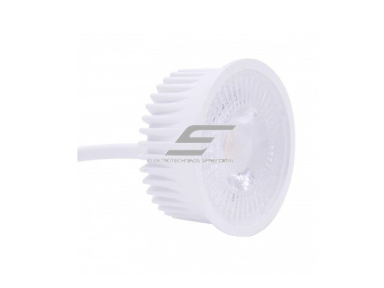
 LED lamp Optonica SP5-B1 | disc-shaped | 5 W | CCT 3000K / 4000K / 6000K | 400 lm | 50° | 50 × 28 mm | white | IP20Code: SP5-B1-1985
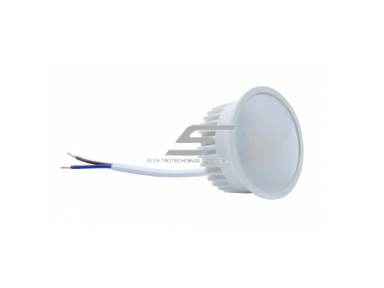
 LED bulb Optonica SP5-B1 | disc-shaped | 5 W | CCT 3000K / 4000K / 6000K | 400 lm | 110° | 50 × 28 mm | white matte | IP20Code: SP5-B1-1984
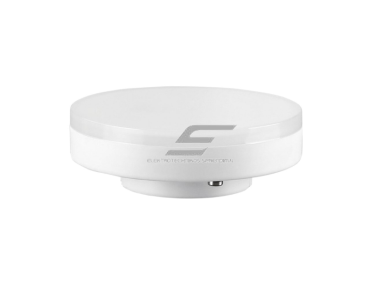
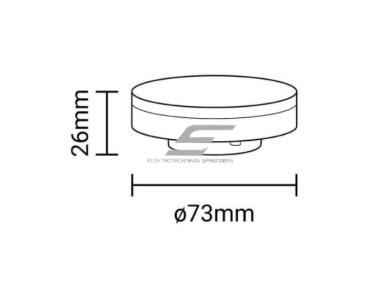 LED bulb GX53 Optonica SP7-A1 | flat shape | 7 W | 2700K | 560 lm | 180° | 74 × 25 mm | white | IP20Code: SP7-A1-1543
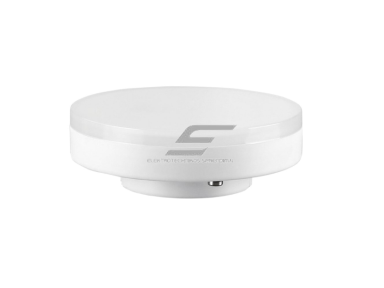
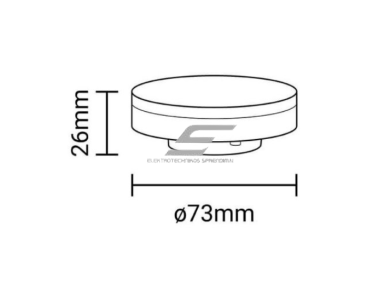 LED bulb GX53 Optonica SP7-A1 | flat shape | 7 W | 4500K | 560 lm | 180° | 74 × 25 mm | white | IP20Code: SP7-A1-1542
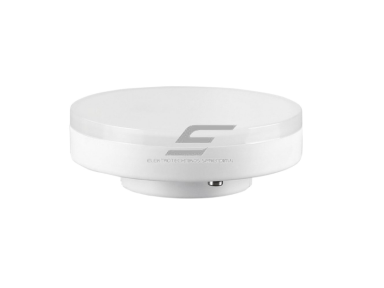
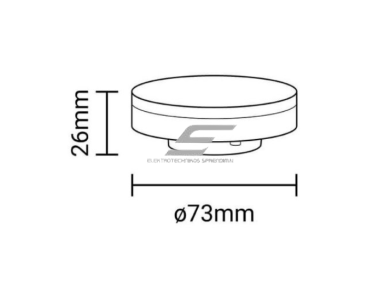 LED bulb GX53 Optonica SP7-A1 | flat shape | 7 W | 6000K | 560 lm | 180° | 74 × 25 mm | white | IP20Code: SP7-A1-1541


