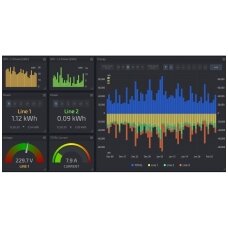
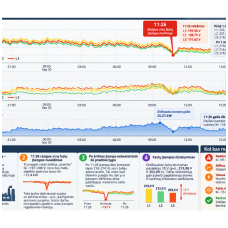
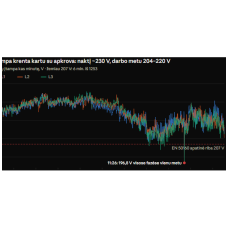
Rental of professional power network analyzers for accurate electrical parameter measurement and energy quality analysis
-
Rental of the Smart-MAIC D103 electrical network analyser for 7 or 14 days or on request: the actual load profile, voltage level, phase balance and cos φ at your site. You monitor the data remotely in real time.
-
Electrical network analyser rental – measurements at your site
When you need to know what is really happening in the electrical network of a building or company, but buying a device is not worth it, rent the three-phase Smart-MAIC D103 analyser. Within a few days you get a record of voltage, current, active power, cos φ and energy for each phase – a solid basis for decisions on capacity increase, protection, compensation or a claim to the grid operator.
⚡ Electrical network analyser rental
If you need measurements for a one-off check and buying a device is not worth it, we offer electrical network analyser rental.
Rental period When it fits 7 days Weekly load profile – working days and weekend, troubleshooting disturbances 14 days More reliable statistics, rarely recurring events, variable production cycle On request Longer or non-standard measurements – the period is agreed individually Most common reasons for rental:
- before increasing the permitted capacity or changing the main protection – the actual load profile;
- before reactive power compensation – cos φ and the active power profile, from which the rating of the compensation unit is calculated;
- unexplained tripping, flickering lights, equipment failures – voltage dips and overvoltages by phase;
- phase load balancing and energy cost analysis;
- solar power plant: the inverter trips due to overvoltage – voltage rise during generation, energy taken from and fed into the grid.
What the rental includes and what is needed on site:
- Device – Smart-MAIC D103 three-phase electrical network analyser (DIN rail, 3 modules).
- Measures per phase: voltage (V), current (A), active power (W) and reverse active power, active energy (Wh) and reverse energy, cos φ. Current – 50 mA … 100 A per phase.
- Accuracy: active energy ±0.5%, voltage and current – error below 1%.
- Data: updated every 5 s, logged every 1 min; viewed in the cloud dashboard, MQTT and API for integration. If the connection is lost, data is stored for up to 12 days.
- ⚠ 2.4 GHz Wi-Fi network required (IEEE 802.11 b/g/n) on site – a 5 GHz network will not work. The analyser connects through it, and the data can be monitored remotely in real time. Before renting, make sure the Wi-Fi signal reaches the distribution board.
- ℹ What this device does not measure: reactive and apparent power, harmonics (THD) and short voltage events lasting seconds – data is logged at one-minute intervals. The measurement is suitable for diagnostics, but not as official proof of power quality (EN 50160). To monitor reactive energy and THD-I, choose the panel analyser (see below).
■ Real measurement example – what you get after the rental
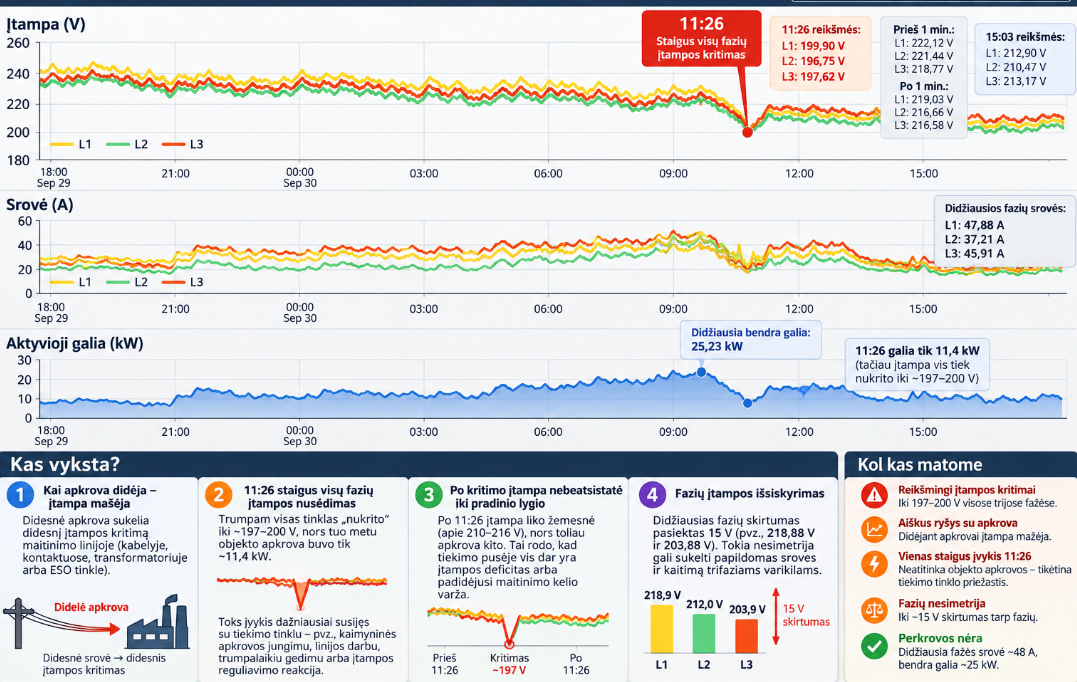
Over almost a full day, the analyser recorded the voltage, current and active power of all three phases. The data shows:
⚡ Sudden voltage dip At 11:26 the voltage of all phases dropped to ~197–200 V, although the site load at that moment was only 11.4 kW. This points to a cause on the supply network side, not inside the site. Voltage does not recover After the dip the voltage stayed at about 210–216 V, even though the load later decreased. Phase unbalance The difference between phases reached up to 15 V (218.9 / 212.0 / 203.9 V). This puts extra load on three-phase motors and makes them run hotter. ✔ No overload Maximum phase currents: 47.9 A / 37.2 A / 45.9 A, maximum total power 25.2 kW. Such data helps you approach the grid operator with solid evidence, select the right protection, capacity or stabilisation equipment, and stop looking for a fault where there is none.
☝ Need continuous measurement? Instead of renting, you can buy your own analyser:
- Basic panel-mount three-phase analyser with CT 3×250 A – no Wi-Fi: LED display, RS485 Modbus RTU, records events (high / low voltage, current unbalance, THD-I) and min. / max. values. Mounted in the panel door (cut-out 91×91 mm).
- Smart-MAIC D103-2 with remote monitoring over Wi-Fi – modular, DIN rail, 3 split-core current transformers 100 A, data to the cloud or your system via MQTT. Neutral conductor required.
Check rental terms and available dates by phone +370 620 72733 or via the contact form.
Who the service is for
- Building administrators and those responsible for electrical facilities – a clear answer whether the problem is in the building or in the supply network, and whether the existing capacity is sufficient.
- Engineers and energy managers – load profile, phase balance and cos φ for design, capacity reserve and compensation calculations.
- Electricians – troubleshooting and checking an installed system without investing in measuring equipment.
- Solar power plant owners and installers – voltage rise during generation, energy taken from and fed into the grid.
- Manufacturing companies – loads by shift and equipment, energy cost analysis.
How the rental works
- You contact us and briefly describe the site and the problem you want to investigate.
- We agree on the rental period (7, 14 days or other) and the timing.
- A qualified electrician mounts the analyser on a DIN rail in the panel and connects it to the site's 2.4 GHz Wi-Fi network.
- You monitor the data remotely in real time; it is logged every minute.
- At the end of the rental the analyser is dismantled and returned.
Additionally, by agreement: consultation on the measurement results and preparation of a report.
ℹ No Wi-Fi on site? A 4G LTE Wi-Fi modem can be used.
☝ Preparing for the rental – what to have ready
- 2.4 GHz Wi-Fi network name and password. Check with a phone next to the distribution board that the signal is sufficient. No Wi-Fi – use a 4G LTE Wi-Fi modem.
- Space in the board: 3 modules (54 mm) on the DIN rail and access to the neutral (N).
- Supply data: rating of the main protection (A) and cable or busbar dimensions. The D103 measures up to 100 A per phase – agree on higher currents in advance.
- An electrician to install and remove the analyser, and access to the board at the agreed time.
- Description of the problem: when it occurs (time of day, day of the week, which equipment is running) – this lets us choose the measurement period.
How to read the results – reference values
Parameter Reference What it means Voltage 230 V ±10% (207–253 V) Often below 207 V – excessive load, a long or undersized cable, or a problem in the supply network. Above 253 V during generation – the solar inverter may disconnect. Voltage drop Compare with the load Voltage drops as your load increases – the cause is on site (cables, connections). It drops while the load is steady – the cause is in the supply network. Phase voltage difference up to ~2% (≈4–5 V from the average) A larger difference heats three-phase motors and points to an unbalanced load or a network problem. Phase currents Similar in all phases One phase constantly more loaded (in practice >20–30%) – redistribute single-phase loads. Maximum current up to ~80% of the main protection rating If it often approaches the rating – the capacity reserve is small: load management or an increase in permitted capacity. cos φ ≥ 0.95 – good; 0.90–0.95 – monitor; < 0.90 – low A low cos φ increases current and losses. If your contract includes a reactive energy charge, compensation usually pays back quickly. Exported energy According to the generation profile Shows how much solar energy is fed into the grid and how much is used on site. ℹ These reference values are practical and intended for diagnostics. An official power quality assessment according to EN 50160 requires a class A analyser.
What to do after the measurement
What the measurement showed Solution Voltage out of limits due to the supply network Contact the grid operator with the measurement chart. For sensitive equipment – a voltage stabiliser; for protection against under- or overvoltage – a voltage relay. Voltage of one phase drops or disappears For critical single-phase loads – an automatic phase selector. Low cos φ A reactive power compensation unit – its rating is calculated from your cos φ and active power profile. Current approaches the main protection rating Load redistribution, an increase in permitted capacity and a review of protection devices. Equipment fails for no clear reason Check the surge protection – one-minute logging does not capture short impulses. Parameters must be monitored continuously Buy your own analyser – the Smart-MAIC D103-2 or another one from the Electrical network analysers group. Not sure what to choose after the measurement? Send us the chart or a screenshot – we will help you select a solution.
Frequently asked questions
How long should I measure?
7 days is usually enough – it shows working day and weekend loads. If the problem occurs rarely or the production cycle varies, choose 14 days or longer.
Is the measurement data suitable for a claim to the grid operator?
It shows the voltage level and dips by phase and is a good basis for a discussion with the operator. Official proof of power quality according to EN 50160 requires a class A analyser.
Does the analyser measure harmonics and reactive power?
No. The D103 measures voltage, current, active power, energy in both directions and cos φ. The need for reactive power compensation is calculated from cos φ and the active power profile.
Can I buy the analyser?
Yes – the Smart-MAIC D103-2 and other analysers are in the Smart electrical network analysers group.
Contact us
Tell us what site and what problem you want to investigate – we will suggest the rental period and agree on the timing.
Phone: +370 620 72733
E-mail: gintas@elsprendimai.eu
Address: J. Basanavičiaus g. 23, LT-76233 Šiauliai, Lithuania