


Aluminum power supply cables
-
Aluminium Power Supply Cables – for Economical Installation of Incoming, Distribution and Power Lines
Aluminium power supply cables are power cables with aluminium conductors, designed for the transmission and distribution of electrical energy in residential, commercial, industrial and infrastructure facilities. They are often chosen for incoming supply lines, long cable routes, underground electrical networks, utility buildings, workshops, garages and distribution systems.
Main idea:
An aluminium power cable is chosen when a reliable, economical and lighter cable is needed for supplying electrical energy over a longer distance or for higher power. Compared with copper cables, aluminium cables are often significantly cheaper, especially for larger cross-sections, which is why they are widely used for incoming supply lines and distribution networks.Conductors
AluminiumVoltage
Usually up to 1 kV or according to cable typeInstallation
Underground, in conduits, cable routes, buildingsPurpose
Incoming lines, distribution, power linesWhat is an aluminium power supply cable?
An aluminium power supply cable is a power cable whose conductors are made of aluminium. Aluminium is lighter and more economical than copper, so these cables are often chosen where longer routes, larger cross-sections or a more cost-effective solution for electrical energy transmission are required.
Such cables are used for electrical incoming supply lines, distribution networks, building supply lines, industrial facilities, farms, garages, workshops, outdoor lighting and other electrical power supply systems.
Important to know:
An aluminium cable can be a very good choice for the incoming supply to a private house, garage or utility building, but its cross-section must be selected correctly. Aluminium has lower conductivity than copper, so for the same load, a larger aluminium cable cross-section is often required compared with a copper cable.Aluminium cable construction
- Aluminium conductors – transmit electrical energy and are lighter and more economical than copper conductors.
- Core insulation – usually PVC, PE or XLPE, depending on the cable type.
- Outer sheath – protects the cable from moisture, mechanical damage, UV radiation and environmental effects according to the technical data of the specific cable.
- Number of cores – can be 1, 3, 4, 5 or more cores, depending on the network type and application.
- Protective layers – some cables may include additional layers for mechanical or environmental protection.
Technical data
Product type Aluminium power supply cable Conductor material Aluminium Rated voltage Usually up to 0.6/1 kV or according to the specific cable type Insulation PVC, PE, XLPE or another material according to cable construction Operating temperature Depends on the insulation type, often from -40 °C to +70 / +90 °C Installation Underground, in conduits, cable trunking, cable routes, buildings or outdoors according to cable type Application For incoming supply lines, distribution networks, power lines, industrial and residential facilities Where are aluminium power cables used?
- Electrical incoming supply lines – for private houses, utility buildings, garages and workshops.
- Underground cable routes – for power supply between buildings or facilities.
- Distribution networks – for electrical energy transmission from distribution boards to consumers.
- Industry – for production equipment, distribution cabinets and power circuits.
- Commercial facilities – for warehouses, shops and technical rooms.
- Outdoor lighting – for yards, areas, sites and infrastructure facilities.
- Farms – for power supply to barns, warehouses, grain equipment and pumps.
When to choose aluminium and when to choose copper cable?
Cable type When to choose? Note Aluminium cable For incoming supply lines, long routes, underground lines, larger cross-sections and when price is important. A more economical solution for higher power and longer distances. Copper cable For shorter lines, indoor installations, smaller cross-sections and when compactness is important. Better conductivity, smaller required cross-section, but higher price. Practical recommendation:
For the incoming supply to a private house, garage or utility building, an aluminium cable is often chosen because it helps reduce the project cost, especially when the distance is longer. However, the final choice must be coordinated with the project, electrical power, protection devices and network operator requirements.How to choose the right aluminium cable?
The choice of an aluminium cable depends on the load, cable length, installation method, electrical network type and permissible voltage drop. Since aluminium has lower conductivity than copper, copper and aluminium cables with the same cross-section cannot be compared directly.
When choosing an aluminium cable, it is recommended to evaluate:- ✔ Connected power in kW.
- ✔ Operating current in amperes.
- ✔ Single-phase or three-phase network.
- ✔ Cable length from the source to the load.
- ✔ Permissible voltage drop.
- ✔ Installation method: underground, in conduit, in air, on a route, in trunking.
- ✔ Ambient temperature and mechanical impact.
- ✔ Rating of the circuit breaker or fuse.
- ✔ Compatibility of connectors, lugs and terminals with aluminium.
- ✔ Possible future load increase.
How to choose the cable cross-section?
Cross-section is one of the most important parameters of an aluminium cable. A cable with too small a cross-section may heat up, cause a large voltage drop, reduce equipment efficiency and create a safety risk. An oversized cross-section increases the price, but it may be useful for long routes or when planning for a higher load in the future.
Aluminium cable cross-section Most common use Note 10 mm² Smaller loads, shorter distribution lines Used according to the project and protection devices 16 mm² A common choice for smaller incoming lines and utility buildings Cable length and current must be evaluated 25 mm² Incoming supply lines, garages, workshops, homesteads Often selected when higher power or a longer route is required 35 mm² and above Higher-power incoming lines, industry, long routes, distribution networks Selected according to the project, power and voltage drop Important:
This table is indicative. The exact aluminium cable cross-section must be selected by a qualified specialist according to load current, cable length, installation conditions, protective device, voltage drop and applicable electrical installation requirements.What effect does cable length have?
Cable length is very important when choosing an aluminium cable. The longer the route, the greater the voltage drop. This means that the voltage at the end of the connected equipment may be lower, while energy losses in the cable will be higher.
For long routes, it is often necessary to choose a cable with a larger cross-section, even if a smaller cross-section would theoretically be sufficient based on current. This is especially relevant for incoming supply lines, pumps, workshops, garages, utility buildings and three-phase loads.
In brief:- ✔ Short route – lower voltage drop.
- ✔ Long route – a larger cross-section is often required.
- ✔ Larger cross-section – lower energy losses.
- ✔ For aluminium cables, cable length is especially important due to lower conductivity compared with copper.
Single-phase or three-phase system?
System Most common cable Where is it used? Single-phase 230V system 3 cores: L, N, PE Smaller incoming lines, lighting, sockets, household loads Three-phase 400V system 4 or 5 cores, depending on the system and project Incoming lines, workshops, three-phase motors, industry, distribution lines Underground installation and protection
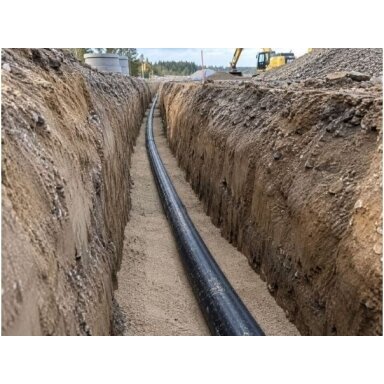
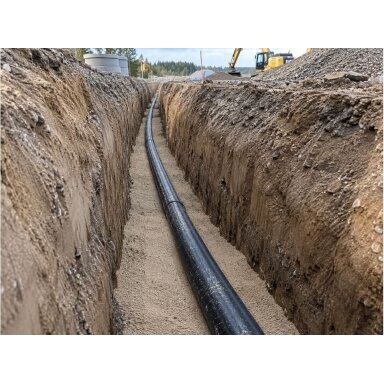
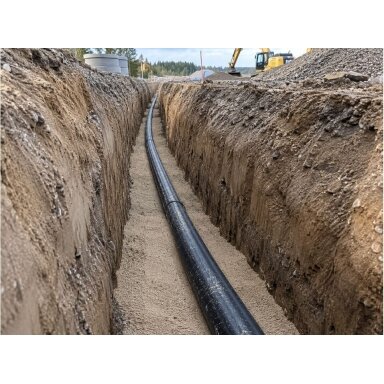
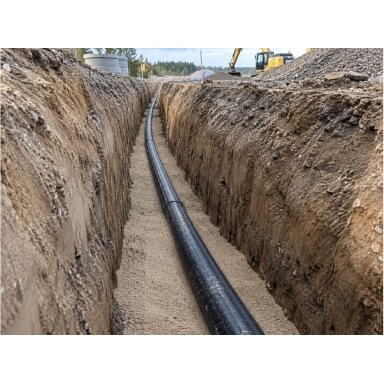
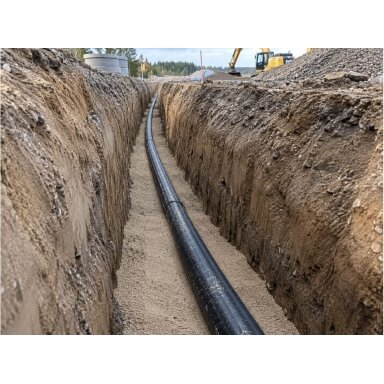
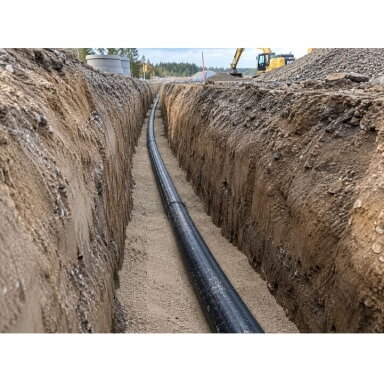
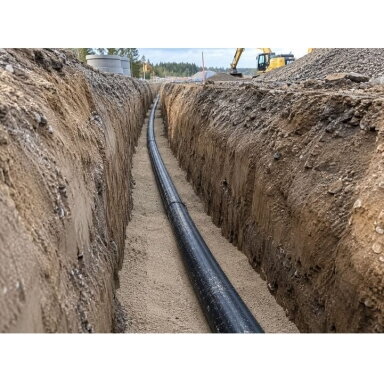
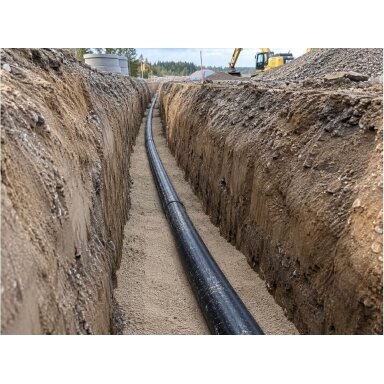
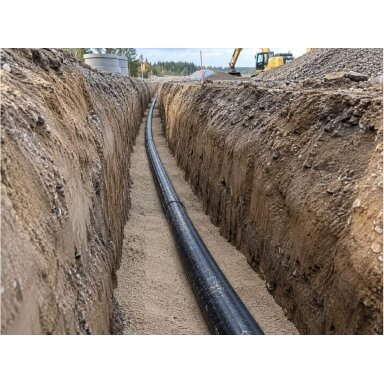
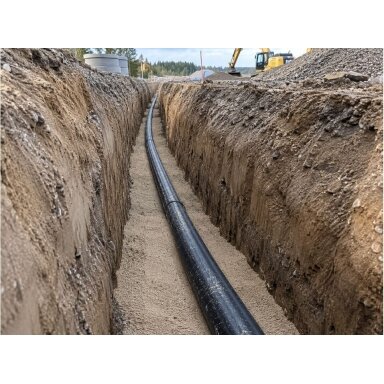
Aluminium power cables are very often used for underground electrical networks. It is recommended to pull the incoming cable through a corrugated conduit or another suitable protective conduit, which additionally protects the cable from mechanical damage, stones, ground movement or future repair works.
Practical tip:
When laying a cable underground, it is worth planning not only cable protection but also convenient replacement in the future. A corrugated or protective conduit helps reduce the risk of mechanical damage and makes operation easier.Aluminium cable connections and lugs
Aluminium cables must be connected only with terminals, lugs and connection accessories suitable for aluminium. Aluminium requires correct contact, the correct tightening torque and, where necessary, special pastes or connectors designed for aluminium.
Important:- Do not use terminals that are not designed for aluminium.
- Avoid direct aluminium and copper contact without suitable transition connectors.
- Use suitable lugs and tightening torques.
- Poor contact may heat up and create a fire risk.
Most common selection mistakes
- The same aluminium cross-section as copper is selected without considering the conductivity difference.
- Cable length and voltage drop are not evaluated.
- Incorrect terminals or lugs are used for aluminium.
- The cable is laid underground without additional mechanical protection.
- Network operator or project requirements are not taken into account.
- The wrong number of cores is selected for a single-phase or three-phase system.
- The circuit breaker is not selected according to the permissible cable load.
- Future power expansion is not considered.
Advantages
- ✅ More economical solution than copper cable, especially for larger cross-sections.
- ✅ Lighter than copper cable.
- ✅ Suitable for long routes and incoming supply lines.
- ✅ Widely used in electrical distribution networks.
- ✅ Suitable for underground networks when installation requirements are followed.
- ✅ Available in various cross-sections and numbers of cores.
- ✅ Good choice for utility, industrial and infrastructure facilities.
- ✅ When properly selected and installed, it can serve for a long time.
Disadvantages
- ❌ Lower conductivity than copper, so a larger cross-section is often required.
- ❌ Suitable terminals, lugs and connectors for aluminium are required.
- ❌ Incorrectly connected contact may heat up.
- ❌ For smaller cross-sections and indoor installations, copper cable is often more convenient.
- ❌ Voltage drop must be checked for long routes.
- ❌ Not all terminals and devices are designed for aluminium conductors.
Frequently Asked Questions (FAQ)
Is aluminium cable suitable for a house incoming supply?
Yes, aluminium cable is often used for incoming supplies to houses, utility buildings, garages and other facilities, but the cross-section must be selected according to power, length, installation conditions and project requirements.Which is better for an incoming supply – copper or aluminium cable?
Both options can be suitable. Copper cable has better conductivity but is more expensive. Aluminium cable is more economical, especially for larger cross-sections and longer routes.Can aluminium cable be laid underground?
Yes, if the cable has a suitable construction and is laid according to installation rules. It is often recommended to use a protective or corrugated conduit.Why is aluminium cable cheaper than copper cable?
Aluminium as a material is cheaper and lighter than copper, so the price difference becomes especially noticeable in larger cross-section cables.Can aluminium be connected directly to copper?
Direct contact between aluminium and copper is not recommended without suitable transition connectors. Dedicated terminals, lugs or connection accessories must be used.Why is cable length important?
The longer the cable, the greater the voltage drop. Long routes often require a cable with a larger cross-section to ensure stable equipment operation.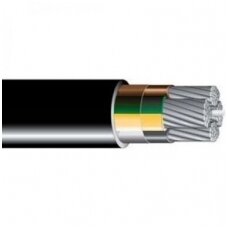 1 - 13 of 13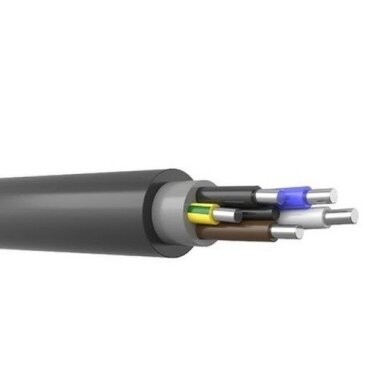
 Aluminium power cable | 5×10 mm² | AXMK | 1 m | blackCode: AXMK 5x10Price 2.06 € VAT incl.( 1.70 € VAT excl. )
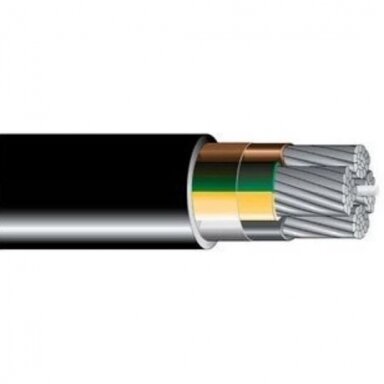 Aluminum power cable | 5x35mm² | AXMK | Class 2 | 1m | blackCode: AXMK 3x35Price 6.27 € VAT incl.( 5.18 € VAT excl. )
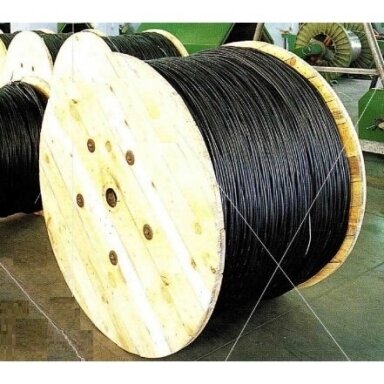 Aluminium power cable | 4x240 mm² | AXMK | Class 2 | 500 mCode: SKU#165996603051259561Price 21.11 € VAT incl.( 17.45 € VAT excl. )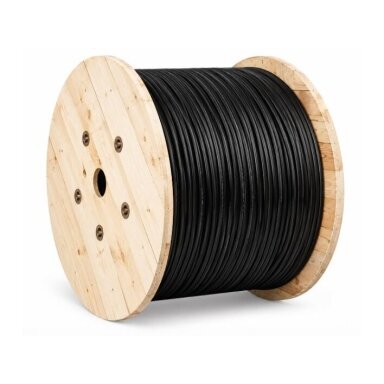
 Aluminium power cable | 4x150mm² | AXMK | Class 2 | 500m | blackCode: SKU#165996595240116261Price 14.52 € VAT incl.( 12.00 € VAT excl. )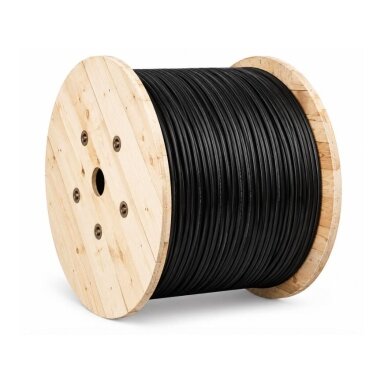
 Aluminium power cable | 4x120mm² | AXMK | Class 2 | 1000m | BlackCode: SKU#165996553256573221Price 11.04 € VAT incl.( 9.12 € VAT excl. )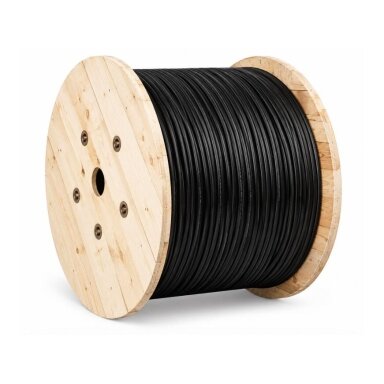
 Aluminium power cable | 4x50mm² | AXMK | Class 2 | 1500m | BlackCode: SKU#165996533759726861Price 6.32 € VAT incl.( 5.22 € VAT excl. )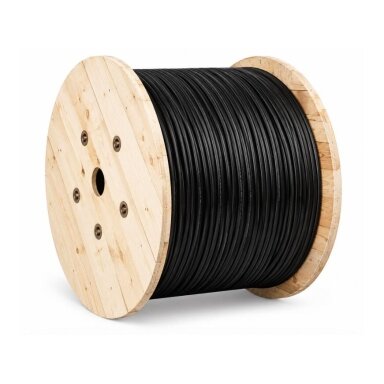
 Aluminium power cable | 4x35mm² | AXMK | Class 2 | 1500m | blackCode: SKU#165996525796386881Price 4.24 € VAT incl.( 3.50 € VAT excl. )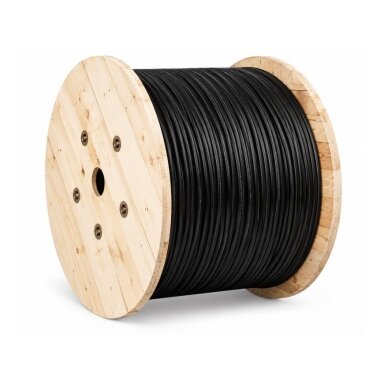
 Aluminium power cable | 4x25mm² | AXMK | Class 2 | 2000m | blackCode: SKU#165996509261744451Price 3.12 € VAT incl.( 2.58 € VAT excl. )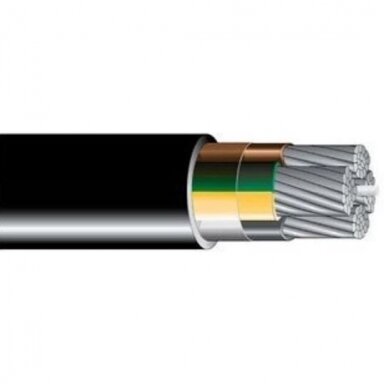
 Aluminium power cable | 4x25mm² | AXMK | Class 2 | 1m | blackCode: AXMK 4x25Price 4.24 € VAT incl.( 3.50 € VAT excl. )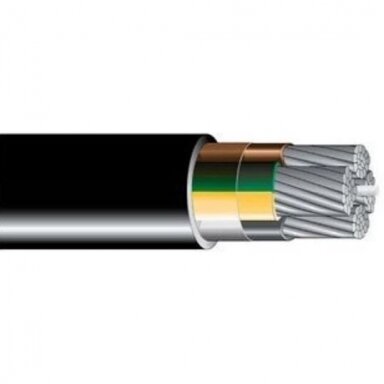
 Aluminium power cable | 4x35mm² | AXMK | Class 2 | 1m | blackCode: AXMK 4x35Price 6.05 € VAT incl.( 5.00 € VAT excl. )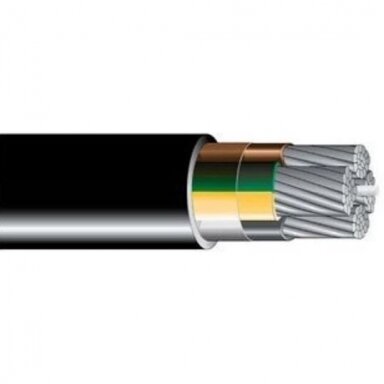
 Aluminium power cable | 4x50mm² | AXMK | Class 2 | 1m | BlackCode: AXMK 4x50Price 8.47 € VAT incl.( 7.00 € VAT excl. )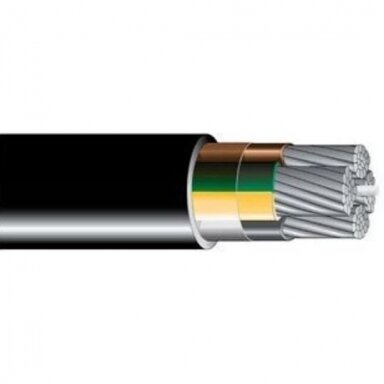
 Aluminium power cable | 4x120mm² | AXMK | Class 2 | 1m | BlackCode: AXMK 4x120Price 15.13 € VAT incl.( 12.50 € VAT excl. )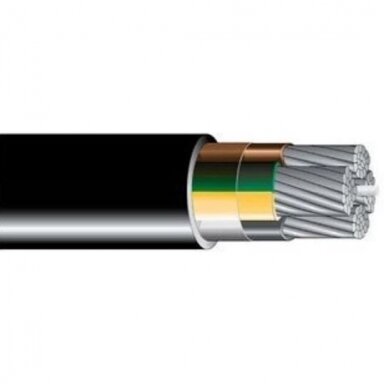
 Aluminium power cable | 4x150mm² | AXMK | Class 2 | 1m | blackCode: AXMK 4x150Price 19.36 € VAT incl.( 16.00 € VAT excl. )


