Ventilation guide: supply air vent, extract fan or mini heat recovery unit – how to choose
Good ventilation is not a single product but a system: fresh air enters in the living rooms, while humid and polluted air leaves from the bathroom, WC and kitchen. This guide covers quick selection by situation, solution levels from the simplest vent to a heat recovery unit, selection of vent length and insulation, an extract fan matrix, electrical safety requirements in bathrooms, the most common mistakes and answers to practical questions. Specific parameters are given in each product description.
Colour coding: ■ information · ■ benefit, solution · ■ ⚠ check · ■ ⚡ safety, mistakes
What do you need? Quick selection
|
Situation |
Solution |
Where to find it |
|
Windows mist up, the air is stuffy, but the wall must not be drilled (rented flat, airtight PVC windows) |
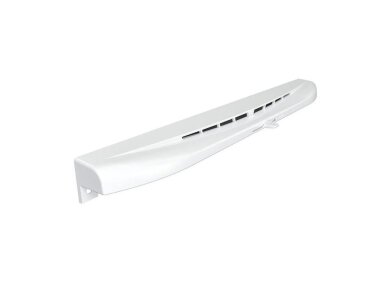
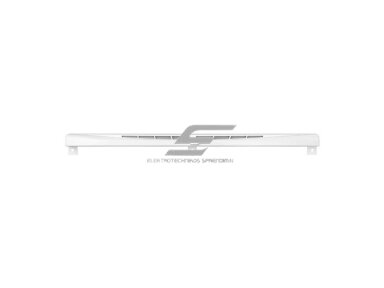
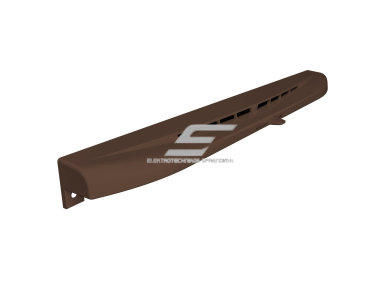
Window vent mounted on the sash without drilling, with a G3 filter and adjustment |
Window vent 350 mm, white, brown |
|
Not enough air in the bedroom or children's room, the house has natural draught through shafts |
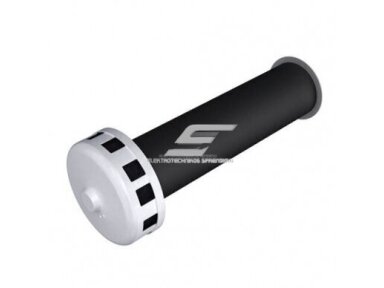
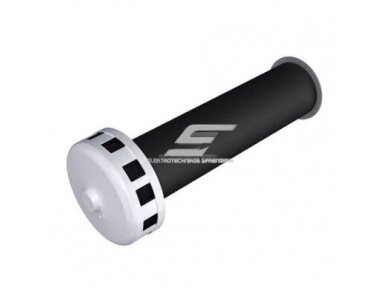
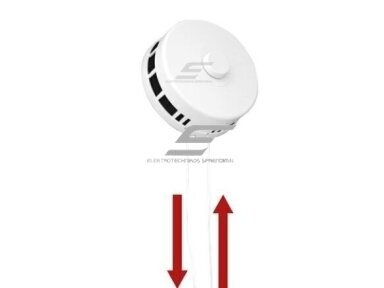
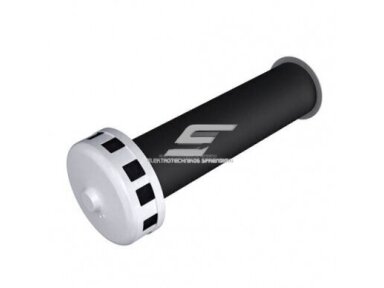
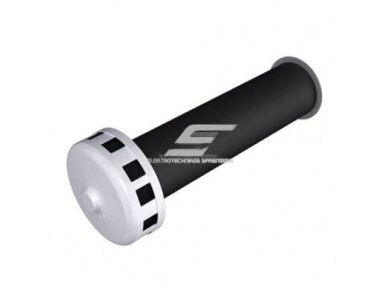
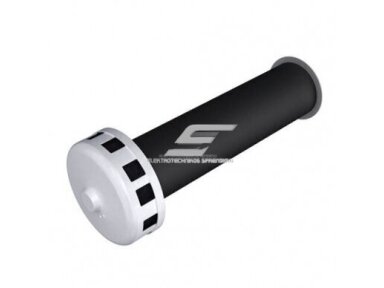
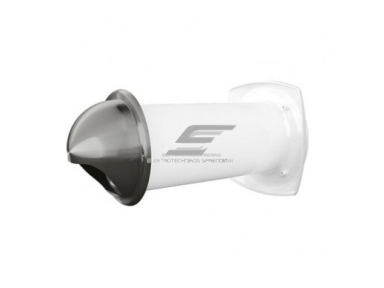
SAV-type wall vent – head with damper, adjustable down to fully closed, length according to wall thickness |
D125 · 450 mm · PE foam, 500 mm, 650 mm – all lengths |
|
Extract fans already run in the bathroom and kitchen, but doors whistle and air is drawn through window gaps |
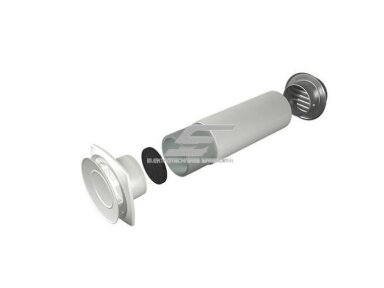
KP-type compensating vent with an air valve – air comes in where it is planned |
D100, D125, D160 – outdoor elements |
|
Bathroom or WC without a window, moisture builds up, joints go mouldy |
Axial extract fan with a backdraught damper; most convenient – with a timer or humidity sensor |
D100 with timer, D100 with humidity sensor, D120 with humidity sensor – matrix |
|
Long duct with elbows, or several extract points into one duct |
In-line duct fan – several times higher pressure than a wall-mounted axial fan |
D125 with sound insulation, D125 low-profile – comparison |
|
A single room, no ducts, important not to chill the room in winter |
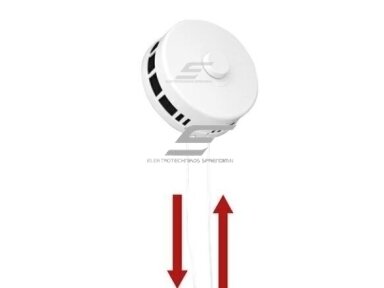
Wall-mounted mini heat recovery unit D125 – supplies and extracts air, returns part of the heat |
Mini heat recovery unit D125 |
|
Whole flat or house of 40–250 m², you want balanced ventilation |
Central heat recovery unit with duct system and heater |
Heat recovery unit 300 m³/h with heater |
|
Workshop, warehouse, commercial premises |
Industrial heat recovery unit with speed controller 1000–3000 m³/h |
1000 m³/h, 2000 m³/h, 3000 m³/h |
|
The inner head with filter of a SAV vent is broken or lost |
Spare head with filter D125 – replaced without changing the duct in the wall |
Head with filter D125 |
Solution levels: from the simplest vent to a heat recovery unit
Start from the bottom: each level solves more but costs more and requires more installation work. The most common correct solution for flats is level 3: vents in the rooms + extract fan in the bathroom and kitchen.
LEVEL 1
Window vent
No drilling, mounted on the window sash. A quick solution for misting windows when the wall must not be touched.
LEVEL 2
Wall vent (natural draught)
Vent through the external wall with a G3 filter, insulated duct and damper. Air moves by natural draught through the bathroom / kitchen shafts.
LEVEL 3
Vent + extract fan
Vents in the living rooms, fans in the bathroom, WC and kitchen. Controlled, predictable air movement without a large investment.
LEVEL 4
Duct fan
When the duct is long, has elbows or several points are connected – more pressure is needed than a wall-mounted fan provides.
LEVEL 5
Wall-mounted mini heat recovery unit
A single room: supplies and extracts air, returns part of the heat. No duct system.
LEVEL 6
Central heat recovery unit
Whole flat or house with a duct network: balanced supply and extract, heat recovery, filters, automation.
How the system works: air comes in – air goes out
Outdoor air
through the grille and G3 filter
→
Vent
bedroom, living room, study
→
Transfer
corridor, gap under the door or door grille
→
Extract
bathroom, WC, kitchen – fan or shaft
→
To outside
through a shaft or in the wall
As much air as is extracted must come in. If the home has no vents, the bathroom fan “pulls” air through window gaps and door cracks – you hear whistling, doors are hard to close, and the declared m³/h remain on paper only. And vice versa: a vent without working extract hardly works – the air has nowhere to go.
Rule: supply where people live (rooms), extract where it is humid and smells (bathroom, WC, kitchen). Air must flow freely through the corridor – leave a gap under the bathroom door or fit a door grille.
Wall vent: SAV or KP type?
Both types are installed through the external wall, both have a G3 filter and thermal and acoustic insulation. They differ in the inner part, control and the type of extract system they work best with.
|
|
SAV type (12,5TOV040…100) |
KP type (10/12,5/16TOV, TOV1) |
|
Inner part |
Head with damper, handle and scale |
Decorative control device – air valve |
|
Adjustment |
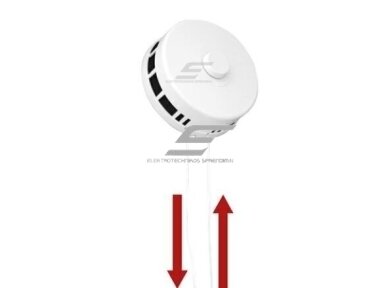
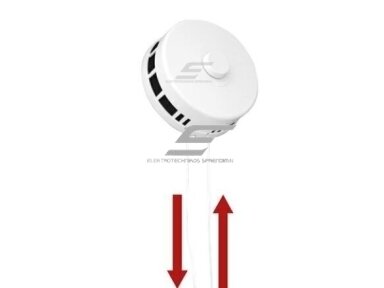
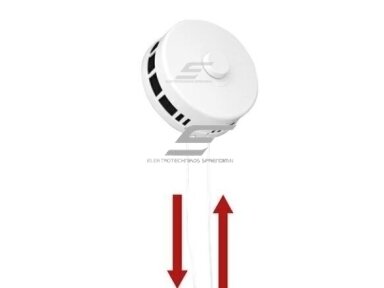
Smoothly down to fully closed; when mounted high – with a cord |
The air valve adjusts the supply air volume |
|
Diameter |
D125 (duct outer Ø132 mm) |
D100, D125, D160 |
|
Duct length |
400–1000 mm in 50 mm steps |
500 mm (TOV) or 1000 mm (TOV1) |
|
Insulation |
3 variants: mineral wool with foil, mineral wool, PE foam |
Thermal and acoustic insulation element |
|
Outdoor side |
Aluminium grille with stainless steel mesh |
4 variants: ASA grille, ASA outlet, stainless steel outlet, aluminium grille |
|
Best suited for |
Natural draught; room up to ~20 m²; when easy closing is desired |
With mechanical extract (fans, central extract) |
|
Drilling |
Core bit Ø132 mm (opening ~133 mm), 2–3° slope to the outside |
Nearest core bit larger than the duct outer Ø, 2–3° slope to the outside |
SAV vent: length according to wall thickness and insulation type
The duct must be no shorter than the full wall thickness including insulation and finish – the excess is cut on site. Measure the actual thickness at the opening location (e.g. through an existing ventilation opening or by drilling a test hole), not from the design drawings.
|
Wall (example) |
Total thickness |
Choose duct |
|
Log or timber-frame wall |
~200–380 mm |
400 mm |
|
Blocks 300 mm + insulation 100 mm + render |
~420 mm |
450 mm |
|
Blocks 300 mm + insulation 150 mm + render |
~470 mm |
500 mm |
|
Brick masonry 510 mm + insulation 100 mm |
~630 mm |
650 mm |
|
Apartment block panel + insulation after renovation |
measure on site |
next longer size |
|
Thick old masonry wall |
up to 1000 mm |
up to 1000 mm |
Insulation type (code suffix):
|
Variant |
Insulation |
When to choose |
|
-01 |
Basalt mineral wool covered with reinforced aluminium foil |
When you want mineral wool insulation with a foil-covered surface |
|
-02 |
Basalt mineral wool |
Mineral wool insulation without facing |
|
-03 |
Closed-cell polyethylene foam |
When it is important that the insulation does not absorb moisture – the most common choice for flats |
All SAV vent lengths and insulation types – 39 models
Spare part: if the inner head with filter of a SAV vent is damaged or lost, it can be replaced without changing the duct in the wall –
head with filter D125.
KP vent: diameter, length and outdoor element
A KP-type vent always has the same inside – G3 filter, insulated duct and air valve. You choose the diameter (according to the required air volume), length (according to the wall) and outdoor element (according to the façade).
|
Diameter |
Duct int. / ext. |
Air valve |
Capacity, fully open* |
|
D100 |
100 / 104 mm |
Ø165 mm |
38.3 m³/h @1.5 m/s · 51.0 @2 m/s · 76.5 @3 m/s |
|
D125 |
125 / 129 mm |
Ø197 mm |
61.0 m³/h @1.5 m/s · 81.4 @2 m/s · 122.1 @3 m/s |
|
D160 |
160 / 164 mm |
Ø234 mm |
95.4 m³/h @1.5 m/s · 127.2 @2 m/s · 190.8 @3 m/s |
* Capacity – how much air the vent passes at the stated air velocity in the duct. The actual airflow depends on the extract capacity and the pressure difference.
Extract fans: how many m³/h you need and which functions
In design, the air volume is calculated from the room volume and the air change rate: L = V × K (m³/h), where V is the room volume and K is how many times per hour the air is changed. Exact air volumes for a building are determined by the ventilation designer in accordance with STR 2.09.02:2005.
Example: bathroom 2.0 × 2.0 m, height 2.5 m → V = 10 m³. At 8 air changes per hour, about 80 m³/h is needed. The fan capacity stated in the catalogue is usually measured without resistance, while the duct, grille and backdraught damper reduce it, so choose with a margin – a 100–105 m³/h D100 model, and for a longer duct – a model with higher pressure (Pa).
|
Function |
What it does |
When to choose |
|
Backdraught damper |
When the fan is off, prevents cold air and odours from flowing back |
Almost always – especially when discharging through an external wall or a shared shaft |
|
Timer |
The fan continues running for a while after the light is switched off |
Bathroom and WC when switched together with the lighting |
|
Humidity sensor + timer |
Switches on according to humidity, dries the room without anyone present |
Bathroom with shower, laundry room, basement |
|
Pull-cord switch |
Separate switching on the fan itself |
When there is no separate wall switch |
|
Cable with plug |
Plugs into a socket outlet |
Temporary, technical solutions outside the bathroom zones |
|
Ball-bearing motor |
Longer motor service life for continuous operation |
When the fan will run for long periods or continuously |
|
Turbo motor |
Higher airflow and pressure in the same opening |
When the duct is longer or a standard model is not enough |
|
Short flange |
Smaller insertion depth |
Shallow openings, short duct ends |
Axial fan selection matrix by type (data from product descriptions):
|
Series |
Dimensions |
IP |
m³/h |
Pa |
dB(A) |
Variants |
Standard compact fans · IP24
The most economical D100 and D120 models for bathrooms, WCs and storerooms; the widest choice of accessory variants and colours. IP24 – splash protection, meets the IPX4 requirement for zones 1 and 2. |
|
D100 |
151×110×70 mm |
IP24 |
100 |
32 |
25 |
basic · ball-bearing motor · pull-cord switch · with backdraught damper · damper + timer · damper + timer + humidity sensor · damper + pull-cord switch
Colours: white, black, grey, sand |
|
D120 |
181×130×69 mm |
IP24 |
160 |
40 |
30 |
basic · ball-bearing motor · pull-cord switch · with backdraught damper · damper + timer · damper + timer + humidity sensor · damper + pull-cord switch
Colours: white, black, grey, sand |
Standard fans · IPX4
D100–D150 housings up to 250 m³/h, splash protection for bathroom zones 1 and 2; timer, humidity sensor, pull-cord and plug variants available. |
|
D100 |
160×140×76 mm |
IPX4 |
90 |
39 |
35 |
with backdraught damper · basic · pull-cord switch · with cable and plug · timer |
|
D100 |
152×141×70 mm |
IPX4 |
105 |
32 |
25 |
with backdraught damper · damper + timer · damper + timer + humidity sensor · damper + pull-cord switch |
|
D100 |
151×151×70 mm |
IPX4 |
105 |
35 |
25 |
with backdraught damper · damper + timer · damper + timer + humidity sensor · damper + pull-cord switch |
|
D125 |
180×160×82 mm |
IPX4 |
140 |
44 |
36 |
basic · with backdraught damper · pull-cord switch · with cable and plug · timer |
|
D120 |
182×168×69 mm |
IPX4 |
160 |
35 |
30 |
with backdraught damper · damper + timer · damper + timer + humidity sensor · damper + pull-cord switch |
|
D120 |
182×168×69 mm |
IPX4 |
190 |
40 |
30 |
with backdraught damper · damper + timer · damper + timer + humidity sensor · damper + pull-cord switch |
|
D150 |
211×195×81 mm |
IPX4 |
210 |
40 |
40 |
with backdraught damper · damper + timer · damper + timer + humidity sensor · damper + pull-cord switch |
|
D150 |
212×195×81 mm |
IPX4 |
250 |
48 |
35 |
with backdraught damper · damper + timer · damper + timer + humidity sensor · damper + pull-cord switch |
|
D150 |
205×187×86 mm |
IPX4 |
250 |
54 |
38 |
basic · with backdraught damper · pull-cord switch · with cable and plug |
With short flange – for shallow openings
Smaller insertion depth: when the opening or duct end is short. |
|
D100 · short flange |
145×130×49 mm |
IPX4 |
100 |
40 |
35 |
basic · with backdraught damper · damper + pull-cord switch · damper + timer · damper + timer + humidity sensor |
|
D125 · short flange |
170×151×52 mm |
IPX4 |
185 |
50 |
36 |
basic · with backdraught damper · damper + pull-cord switch · damper + timer · damper + timer + humidity sensor |
Enhanced protection IP45 and Turbo
IP45 housing for damp rooms; Turbo motor – higher airflow and pressure for a longer duct. |
|
D100 |
179×131×76 mm |
IP45 |
100 |
35 |
25 |
with backdraught damper · damper + timer + humidity sensor |
|
D100 · Turbo |
179×131×76 mm |
IP45 |
115 |
40 |
32 |
Turbo motor + damper |
|
D125 |
179×151×82 mm |
IP45 |
180 |
58 |
30 |
with backdraught damper · damper + timer + humidity sensor |
|
D125 · Turbo |
179×151×82 mm |
IP45 |
220 |
70 |
38 |
Turbo motor + damper |
Decorative with LED lighting
Fan and lighting in one – coloured housings for interiors. |
|
D100 · with LED |
150×150×125 mm |
IP24 |
100 |
30 |
25 |
damper + LED lighting
Colours: matt black, matt dark grey, matt grey |
|
D125 · with LED |
170×170×137 mm |
IP24 |
175 |
50 |
30 |
damper + LED lighting
Colours: white, matt black, matt grey, matt dark grey |
Decorative panels and duct connections: fan accessories · ducts and fittings. All household fans – in the category.
Duct fans: when a wall fan is no longer enough
Wall-mounted axial fans generate 30–70 Pa of pressure – enough for a short outlet through a wall or into a shaft. In a long duct with elbows and grilles, the airflow drops sharply. Duct fans are installed inside the duct and have several times higher pressure – they can also serve several extract points at once.
|
Type |
Diameter |
m³/h |
Pa |
W |
Product |
|
Mixed-flow, with sound insulation |
D100 |
250 |
190 |
50 |
view |
|
Mixed-flow, with sound insulation |
D125 |
355 |
190 |
50 |
view |
|
Mixed-flow, with sound insulation |
D150 |
570 |
305 |
50 |
view |
|
Mixed-flow, with sound insulation |
D160 |
570 |
305 |
50 |
view |
|
Centrifugal, low-profile housing |
D100 |
239 |
328 |
58 |
view |
|
Centrifugal, low-profile housing |
D125 |
320 |
326 |
57 |
view |
Mini heat recovery unit and heat recovery units: when it is a pity to waste heat
In winter, a vent and a fan replace warm indoor air with cold outdoor air. A heat recovery unit supplies and extracts air through a heat exchanger, so part of the heat returns to the room.
|
|
Mini heat recovery unit D125 |
Heat recovery unit 300 m³/h |
Industrial heat recovery units |
|
Purpose |
A single room, wall-mounted |
Flat or house of 40–250 m² with a duct system |
Workshops, warehouses, commercial premises |
|
Airflow |
up to 125 m³/h |
up to 300 m³/h |
1000 / 2000 / 3000 m³/h |
|
Heat recovery |
up to 91 % |
up to 82 % (rotary heat exchanger) |
see product description |
|
Power |
15–40 W |
2 × 70 W EC + 1 kW electric heater |
250 / 400 / 780 W |
|
Noise |
25–35 dB(A) |
see manufacturer's acoustic data |
– |
|
Control |
Remote control, 6 speeds, 4 modes |
Automatic control panel, cooker hood connection (extract without heat recovery) |
Speed controller |
|
Protection / connections |
IP24 |
Duct connections Ø160 mm, filters F5 / F7 |
Galvanised steel, IP44 |
|
Product |
Mini heat recovery unit D125 |
Heat recovery unit 300 m³/h |
1000 · 2000 · 3000 m³/h |
⚠ Important: a central heat recovery unit and its duct network are designed according to the air volumes of all rooms – this is the job of a ventilation designer or installer. The guide only gives orientation for selection. Air quality and humidity can be monitored with
CO₂ and humidity sensors.
⚡ Electrics and safety in the bathroom
-
In bathroom and shower rooms, equipment in zones 1 and 2 requires a protection degree of at least IPX4 (HD/IEC 60364-7-701). IP24, IPX4 and IP45 fans meet this requirement; fans must not be installed in zone 0 (inside the bathtub or shower tray).
-
All circuits supplying equipment in the bathroom must be protected by a residual current device ≤ 30 mA – residual current devices.
-
A fan with a timer usually requires a permanent live (L), a switched live from the light switch (Lt) and neutral (N) – connect only according to the manufacturer's diagram in the product instructions.
-
Before installation, isolate the circuit with the circuit breaker and verify the absence of voltage. Carry out electrical connection work yourself only if you are qualified to do so; otherwise call an electrician.
-
If the home has an open-flue gas appliance or fireplace with natural draught, powerful extract may disturb the chimney draught – agree the ventilation solution with a gas system or ventilation specialist.
⚠ What to check before buying
KibirkštisBefore ordering ventilation products I always measure the wall and the duct – otherwise you have to make a second trip.
|
What to check |
Why it matters |
|
Wall thickness including finish |
The vent duct must be no shorter than the wall; SAV – 400–1000 mm, KP – 500 or 1000 mm. |
|
Is there working extract |
A vent without extract hardly works; a fan without air inflow does not reach its capacity. |
|
Inner diameter of the existing duct |
Fans are D100, D120, D125, D150; measure the duct, not the old grille. |
|
Duct length and elbows |
For a short outlet – an axial fan; for a long duct – a Turbo or duct model with higher pressure (Pa). |
|
Installation location in the bathroom |
Determine the zone: in zones 1 and 2 – at least IPX4; the circuit – with 30 mA residual current protection. |
|
Control |
Separate switch, together with the light (timer), by humidity or pull cord – the number of wires depends on this. |
|
Façade |
Material and appearance of the outdoor element; in an apartment block, drilling the façade must be agreed with the building manager or owners' association. |
|
Location of the vent |
20–30 cm from the window reveal, at a height of 2–2.5 m or in the upper third of the window; not in the corner of two external walls. |
✗ Most common mistakes
|
Mistake |
Consequence |
|
Fan in the bathroom, but no air inflow at all in the rooms |
The fan hums but hardly removes any air; doors and window gaps whistle. |
|
Vent installed where there is no extract |
The air stagnates, the vent “doesn't work”, and in winter it only cools the room. |
|
Opening drilled without slope or sloping inwards |
Condensate and rainwater run into the room, stains remain on the wall. |
|
Vent right next to the window reveal or in a wall corner |
The coldest spot of the wall – possible freezing, condensation, mould around the vent. |
|
Duct too short |
The duct does not reach the façade, insulation is insufficient – the wall around the opening gets cold. |
|
Fan without backdraught damper discharging into a shared shaft or wall |
When switched off, cold air and neighbours' odours come back, and in winter the grille mists up. |
|
Axial fan in a long duct with elbows |
The actual airflow is several times lower than stated in the catalogue. |
|
Supply vent in the bathroom or kitchen |
Humid and odorous air is pushed into the rooms – these rooms require extract. |
|
Filter not cleaned for years |
The airflow drops, the vent seems “clogged”; it is recommended to wash the filter every 3 months. |
Frequently asked questions
KibirkštisHow many vents does a flat need?
FazėUsually one in each living room: a SAV-type vent is intended for a room of about 20 m². For a larger room or with intensive extract – two vents or a larger KP diameter.
KibirkštisWon't the vent chill the room in winter?
FazėOutdoor air comes in, so it is best to install the vent in the upper third of the window or above the radiator zone – the air mixes with warm air. A SAV vent can be partly or fully closed on cold days. If retaining heat is important, choose a mini heat recovery unit.
KibirkštisCan I simply open a window instead of a vent?
FazėYou can, but a tilted window has no filter, mesh or adjustment – dust, insects and noise come in too. A vent supplies air continuously and in a controlled way.
KibirkštisCan a fan with a timer be connected to an existing light switch?
FazėYes, that is what the timer is for, but a permanent live (L) wire to the fan is required. If there is none, choose a model with a pull-cord switch or humidity sensor and consult an electrician.
KibirkštisDoes a mini heat recovery unit replace the whole ventilation system?
FazėNo – it ventilates one room. A whole flat or house requires either several local solutions or a central heat recovery unit with ducts.
KibirkštisWhat is the difference between m³/h and Pa in fan data?
Fazėm³/h – how much air the fan moves without resistance, Pa – how much resistance it can overcome. The longer the duct, the more important the pressure.
Sources
Manufacturer data and regulations on which this guide is based. Checked 2026-11-04.
Disclaimer: this guide is for information purposes and helps you find your way when choosing products. UAB “Elektrotechnikos sprendimai” accepts no liability for product selection or installation carried out solely on the basis of this guide. Ventilation systems are designed and installed by qualified specialists, and electrical work by certified electricians; specific parameters are given in each product description and in the manufacturer's instructions.
Vents, fans and heat recovery units – in one order
Send us a list of rooms, the wall thickness and the diameters of the existing ducts: we will select vents, extract fans, residual current protection and accessories and send you a quotation. The model you need is not in the catalogue? Some products are supplied on order.
Get a quotation
Supply Air Ventilation Dampers are specialized devices designed to efficiently control airflow in supply systems. They allow for the management of air supplied to indoor spaces, ensuring proper ventilation and comfort. These dampers are an essential part of modern HVAC (Heating, Ventilation, and Air Conditioning) systems.
Key Features:
Airflow Control: Dampers regulate airflow, ensuring that an optimal amount of air is maintained in indoor spaces. This helps prevent air stagnation and reduces moisture buildup.
Energy Efficiency: Properly adjusted dampers help reduce energy consumption, allowing the ventilation system to operate more efficiently. This can lower heating and cooling costs.
Air Quality Maintenance: Dampers help ensure that clean and fresh air enters indoor spaces, reducing the presence of allergens, dust, and other pollutants.
Types:
Mechanical Dampers: Use motors or servos to automatically adjust airflow. They can be connected to control systems to respond to indoor air quality.
Passive Dampers: Manually operated or passively controlled based on pressure changes. They are often used in simpler systems where automation is not necessary.
Adjustable Dampers: Allow users to manually set the desired airflow, providing more flexibility.
Areas of Use:
Residential Spaces: Used in homes and apartments to ensure good air circulation and comfort. Dampers help control airflow in bedrooms, living rooms, and kitchens.
Commercial Spaces: In offices, stores, and other commercial areas where continuous air circulation and freshness are required.
Industrial Spaces: Used in manufacturing processes where it is important to ensure safe and comfortable working conditions, reducing the concentration of harmful substances.
Advantages:
Improves Air Quality: Dampers ensure that clean and fresh air is supplied indoors, reducing the risk of health problems associated with polluted air.
Reduces Noise: The design of the dampers can help reduce noise coming from outside, creating a quieter living and working environment.
Flexibility: With various types of dampers available, solutions can be tailored to specific needs, considering building size, type, and usage.
Supply air ventilation dampers are a crucial component of ventilation systems, ensuring efficient airflow and improving indoor air quality. They enable air supply management, help reduce energy consumption, and ensure comfort in both residential and commercial spaces. Choosing the right dampers can achieve a better microclimate, a healthy environment, and more efficient energy use.